
Published 2026-10-10 · DIYCarPlay Engineering Team
CarPlay for Lexus: Sourcing the Right Module Across LE-1 and LE-2
A plug-and-play CarPlay decoder module adds wired and wireless CarPlay to a Lexus that left the factory without it, while the original screen, the dashboard controller, the steering-wheel buttons and the factory reversing camera all stay in place. Coverage spans 300+ vehicle models and series from 2006 to 2025, and Lexus is split across two separate module platforms — LE-1 for 2013–2015 and LE-2 for 2015–2020 — which is the single fact that decides what a wholesaler stocks.
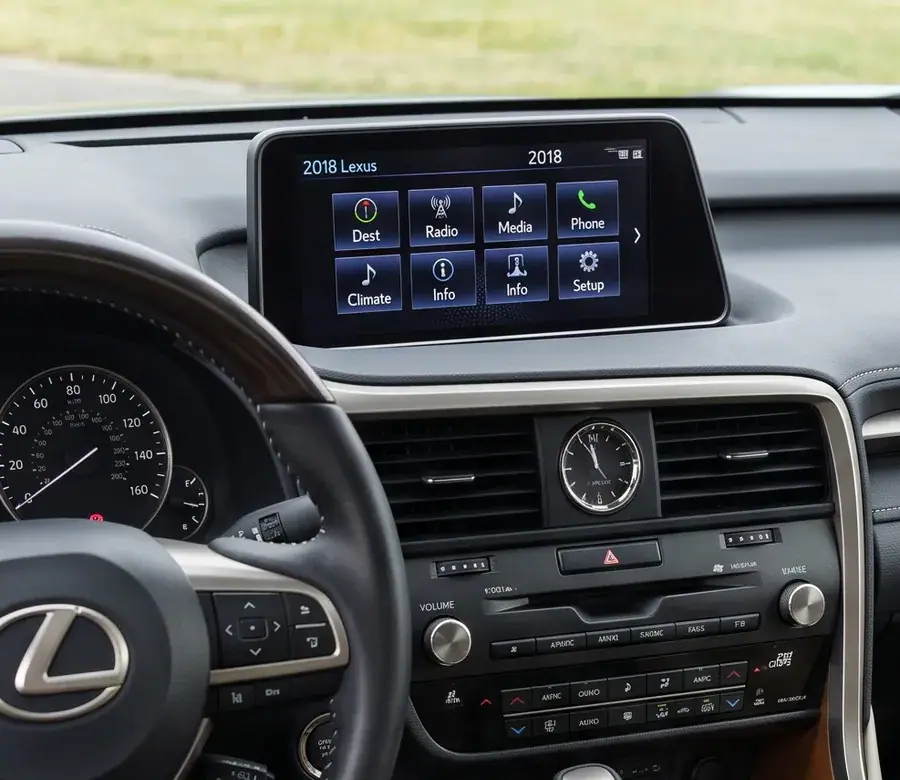
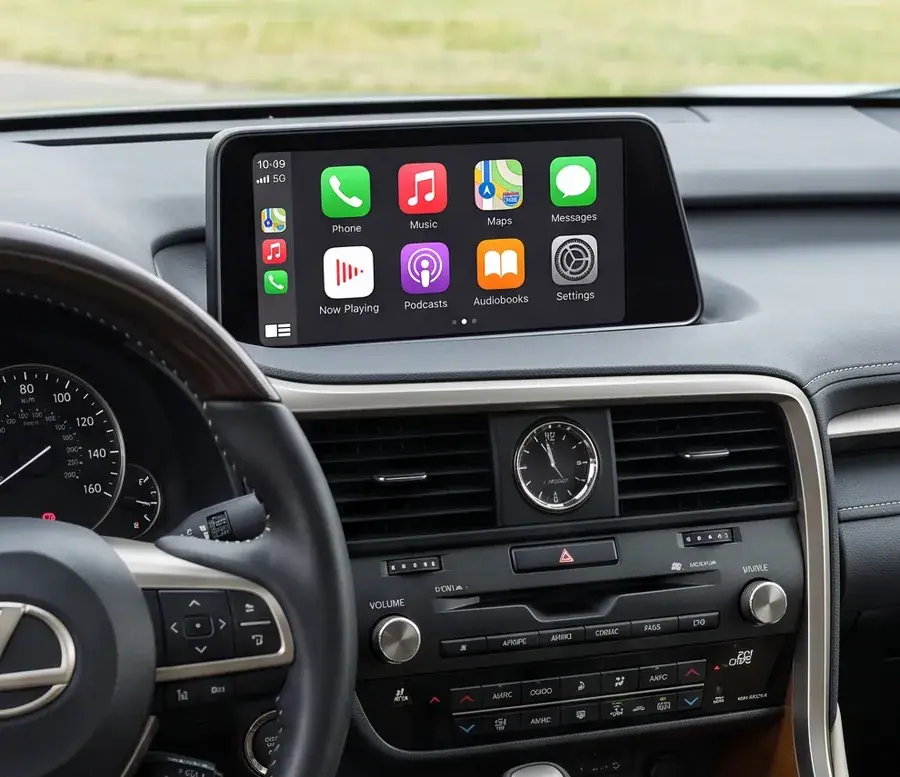
Lexus runs two infotainment generations, and 2015 belongs to both
Most sourcing mistakes on Lexus are not pricing mistakes. They are generation mistakes. Lexus split its infotainment hardware in the middle of the 2015 model year, and the two platforms that straddle that line cover overlapping model names. A distributor who orders on model name alone will end up with modules that fit the car in front of them and nothing else.
The full platform list is set out below, and the model years come directly from the fitment data published on the individual module pages.
| Platform | Model years | Models covered | Module |
|---|---|---|---|
| Lexus gen 1 | 2013–2015 | IS, CT | LE-1 |
| Lexus gen 2 | 2015–2020 | IS, CT, RX, LX, GS, ES, LS | LE-2 |
The IS and the CT appear in both rows. That is not a duplication error — it reflects a real overlap year in which the same model name can be found with two different head units depending on the trim and the build date. For anyone holding stock, this is the single highest-return detail on the page: a buyer who sends a VIN and a photo of the head unit main menu before ordering will almost never receive a module they cannot fit, while a buyer who orders on model name alone will.
Buyers who also carry the Toyota sister-brand range should note that Toyota is catalogued separately, with TO-1 covering the MPV and SUV line (Sienna, Alphard, Prado, Tundra, 2014–2018) and TO-2 covering the sedan and crossover line (Highlander, RAV4, Camry, Crown, 2014–2018). The two marques share design lineage, not a shared harness, and each platform is ordered under its own part number.
What actually breaks when a module is fitted to the wrong generation
The failure is rarely dramatic. The screen powers on, the module boots, and the installer gets a picture — then the fault appears downstream in ways that generate returns.
- No wake from the CAN bus. The head unit sleeps and does not wake on the module's request, so the installer has to cycle the ignition on every start. The customer reports a dead product.
- Reversing camera does not switch. The trigger line the module listens for is not the one this generation broadcasts, so the camera image stays live over the CarPlay video instead of cutting back to the factory view.
- Steering-wheel volume keys do nothing in CarPlay. The factory keypad keeps working for the original menu, but the control protocol differs between generations, so the same physical buttons do not reach the CarPlay layer.
- Audio routes to the wrong amplifier. Some Lexus generations feed the centre console while others feed the factory amplifier, and a module that assumes the wrong path produces a silent install or a call that only one side of the conversation can be heard on.
Each of these is a fitment error, not a defective unit. That distinction matters commercially: a distributor who ordered the wrong platform cannot fix it with firmware, and the stock is dead weight until it is sold into the correct generation.
What to ask a supplier before the first purchase order
The questions that separate a manufacturer from a trading intermediary are specific and technical. Ask for the physical head units the module is bench-tested against — the answer should name units and connector types, not claim compatibility with a marque in general. Ask which physical units are on the test bench for the LE-2 and whether both of them are represented. Ask what the top field failure mode is and what the return rate is; a factory that quotes a figure and names the cause is a factory that has measured it.
Because these are platform-specific parts, the fitment list should be published per module rather than as a single catalogue-wide claim. The full compatibility list is organised by brand and platform, and each entry states model years explicitly, so a buyer can match a VIN against it without guessing. Fitment confirmation is also available on the individual Lexus module pages, where the gen 1 and gen 2 platforms are listed separately with their model years.
Why the chipset and the operating system decide the return rate
Factory infotainment systems in this segment are built on embedded platforms, and the module is built to sit alongside them rather than to replace them. It runs embedded Linux rather than a consumer mobile operating system, which means it does not accumulate the background cache and app state that makes Android-based head units progressively slower over a few years of daily use. For a distributor, that difference is not cosmetic: it removes an entire category of age-related complaint from the warranty conversation.
Processing runs on an automotive-grade Sunplus chipset from Taiwan, the component class used for factory in-car infotainment in this segment. Smoothness on an LVDS link to a factory screen is decided by the silicon and the timing handling, not by how much headroom an operating system has. A module built on that component base holds the link where a commodity chipset with a marginal LVDS driver does not, and that is where field returns are actually generated.
The physical integration is what keeps the install reversible. The harness plugs into the factory connector behind the centre trim, no wires are cut, and the factory screen, the dashboard controller, the steering-wheel buttons and the factory reversing camera all remain functional. That matters to a buyer in two ways: the install is fast at the counter, and a car that has been fitted can be returned to standard configuration without cutting the dashboard. Both reduce the labour cost that usually decides whether an installation shop takes on a retrofit programme at all.
5GHz dual-band WiFi inside a Lexus cabin
The wireless link runs on dual-band WiFi, carrying both 2.4GHz and 5GHz. Both bands are needed inside these cabins, because they fail in opposite directions.
2.4GHz propagates further and holds a link through more obstruction, which makes it the band that survives a metal head unit housing and a dashboard full of wiring. But it is also the band crowded by nearby phones, Bluetooth peripherals and in-car Wi-Fi hotspots, and congestion shows up as stutter in video playback.
5GHz is where the bandwidth sits. It carries the video stream with headroom to spare and is far less congested, but it is stopped more readily by distance and by intermediate surfaces. A car parked in a multi-storey structure illustrates the problem: the concrete deck attenuates 5GHz while 2.4GHz still passes, and a link that depends on one band alone drops in exactly the places where customers park.
Running both bands and selecting between them is what makes the link hold in a lift, an underground car park and a roadside stop. Latency on a maintained 5GHz link stays low enough that the on-screen response tracks the phone, which is the practical test an installer will apply before accepting a module.
Order terms, MOQ tiers and payment
Wholesale terms are structured so that a first order and a production programme are both workable. Stock modules start at 10 pieces with mixed models accepted in the same order, which is the entry point for an installer network testing demand before committing to a single platform.
| Order type | Quantity | Lead time | Notes |
|---|---|---|---|
| Stock modules | From 10 pcs | 7–15 days | Mixed models accepted in one order |
| Private label | 500 pcs per model | 15–20 days | Logo, packaging and manual |
| Full OEM | 1000 pcs per model | 15–20 days | Firmware configuration per programme |
Samples ship in 7–15 days by DHL or FedEx express, and the sample cost is deductible from the first large-volume order. Standard payment terms are 30% deposit with the 70% balance before shipment by T/T; PayPal is accepted for samples and small orders. In the Toyota sister-brand range the same terms apply, with the Toyota module pages listing platform and model-year fitment for TO-1 and TO-2.
Because platforms are parts rather than commodities, the way a first order is assembled decides how much of it sells. The wholesale terms page sets out how a mixed opening order is built across platforms, and why a narrow first order tends to lose sales in the following month more than it saves in the opening one.
Confirming fitment before an order is placed
The fastest way to protect stock is to move the identification step upstream. A photograph of the head unit main menu plus the model year resolves almost every Lexus question, because the two generations show visibly different interface layouts. Where a VIN is available, it settles the remaining ambiguity directly. Fitment questions sent with a vehicle list and target quantities are answered within 12 hours on business days, with a platform recommendation, the applicable MOQ and landed-cost options.
For a specific platform already known, the gen 2 module specification and fitment detail are published on the LE-2 module page, covering IS, CT, RX, LX, GS, ES and LS for 2015–2020.
Official platform and compatibility references
Apple's own CarPlay support documentation is the authoritative reference for what the wireless and wired CarPlay experience provides on a phone, and for the requirement that the vehicle supports CarPlay at all — which is exactly the gap a retrofit module fills. It is worth reading alongside any supplier conversation, because it separates what the module adds from what the phone provides.
Apple CarPlay support documentation sets out the system requirements and the feature set. For the vehicle side, Lexus official documents the model range and its in-car technology, which is the reference for establishing which generation a given model year received.
Can a Lexus be retrofitted with CarPlay without replacing the screen?
Yes. The module connects to the factory harness behind the centre trim and the original screen stays in place. The dashboard controller, steering-wheel buttons and factory reversing camera remain functional, and no dashboard trim is damaged.
Is one Lexus module compatible with both the IS and the LX?
No. The IS for 2013–2015 sits on the gen 1 platform and the LX for 2015–2020 sits on gen 2. They use different harness connections, so the module has to match the generation, not the model badge.
Which module covers a Lexus RX from 2017?
The gen 2 module, covering RX for 2015–2020. Model year alone is not sufficient for IS or CT vehicles because of the 2015 transition — a head unit photograph or a VIN confirms it.
Does the factory reversing camera still work after the install?
Yes. The factory camera and aftermarket reversing cameras are both supported, and the trigger line for the target generation switches the display back to the camera view in reverse.
How long does a sample take to arrive?
Samples ship in 7–15 days by DHL or FedEx express, and the sample cost is deductible from the first large-volume order. Standard terms are 30% deposit with the 70% balance before shipment by T/T, with PayPal available for samples and small orders.
Fitment on a specific Lexus can be confirmed before any order is placed — send the model year with a photograph of the head unit main menu through the contact page. We reply within 12 hours on business days with a platform recommendation, the applicable MOQ and delivery options.
Need the Module From This Guide?
Wholesale from 10 pcs (mixed models OK), samples in 7–15 days (DHL/FedEx express). Fitment confirmation within 12 hours.
Request Pricing Check FitmentRelated Resources
- CarPlay Collections — browse by marque family (German, British, Italian, Japanese, luxury)
- CarPlay Fitment Checker — find the module for your car
- CarPlay Decoder FAQ — 34 answers on compatibility, install and wholesale
- CarPlay Retrofit Buying Guide — platform identification & selection
- Wholesale, Private Label & OEM Program — MOQ, lead times, payment terms
- All installation & technical guides