
Published 2026-10-08 · DIYCarPlay Engineering Team
Same Car, Two Audio Systems: Why a CarPlay Retrofit Module Has to Match the Factory Amplifier
A CarPlay retrofit module is a plug-and-play decoder that sits between a factory head unit and the OEM screen that head unit already drives. The module receives the wireless signal from a phone, renders it as the video and audio the original panel expects, and hands it to the factory display through the original video link. Everything on the car that was not the screen stays exactly where it was.
Video is the part everybody looks at: resolution, frame pacing, colour. Audio is the part that quietly decides whether an order was right. Two cars of the same model and year can carry different factory audio systems, and the module has to be specified against the audio variant in the car rather than against the body style.
What the factory audio path actually is
A factory head unit built anywhere between 2006 and 2025 does three separate jobs. It decodes the video signal for the panel in the dashboard, it runs the vehicle menus and settings, and it drives the audio. On many platforms the amplifier is not inside the head unit at all — it is a separate module in the luggage bay or under the rear seat, feeding door speakers on their own low-impedance wiring.
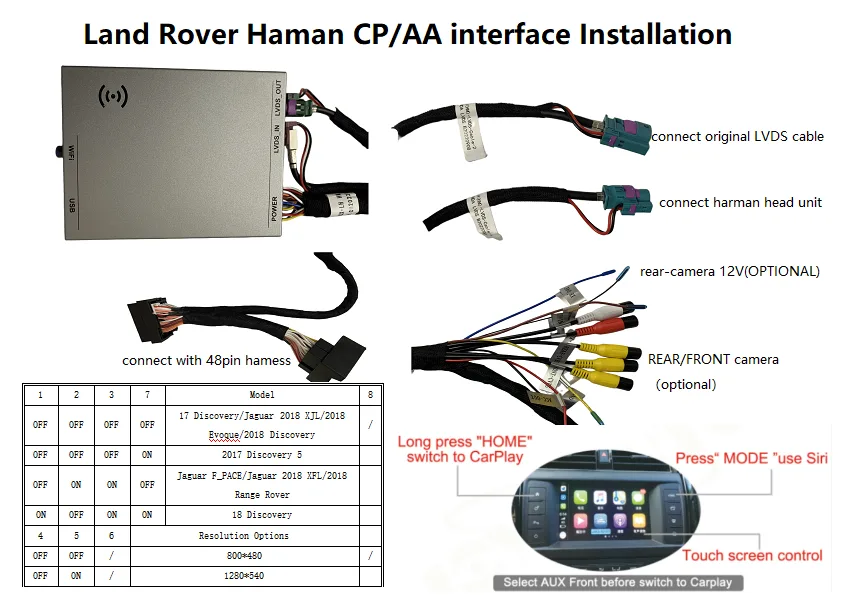
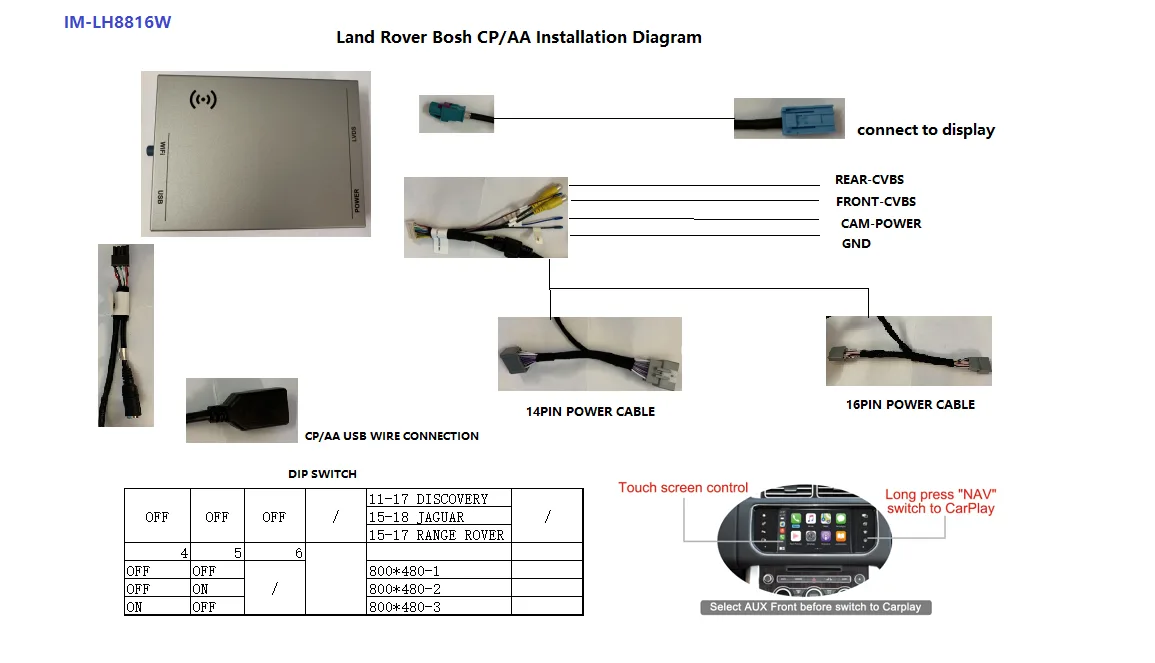
A retrofit module is added at the video link, not at the audio link. The original LVDS cable comes out of the back of the panel and goes into the module; the module's own cable goes back into the panel. Power, ground and reverse detection arrive through the platform harness. Nothing in that path touches the speaker wiring, which is why the factory amplifier, its stored settings and the original door speakers keep working after the retrofit.
That is also why the sound after a retrofit is close to the original rather than better or worse. The module delivers video and a digital audio stream; the head unit still owns volume curve, fader balance, equaliser and speaker mapping. The tuning the car left the factory with is the tuning that is still in the car.
Two cars, same model, different audio
Where it turns complicated is variants. The same model year can be delivered with more than one factory audio system, and the head unit firmware, the connector pinout and the amplifier all differ between them. Land Rover is a routine example: the same console can arrive with a Harman head unit or with a Bose head unit, each with its own interface board behind the trim and its own harness. The Land Rover and Jaguar fitment pages list which module covers which audio variant for each generation.
The visible difference is a badge on the amplifier cover. The difference that matters for ordering sits further back: the interface behind the trim and the configuration table printed on the install diagram. Switch settings differ between audio variants of the same car, so a module configured for the wrong one produces a car that powers up, shows a picture and then behaves oddly on volume or on the phone.
Ordering by model year alone is the most common reason a retrofit batch comes back. The correction is procedural rather than technical — the audio variant gets read off the amplifier or head-unit label before the module variant is fixed on the order, and the label gets photographed for the file.
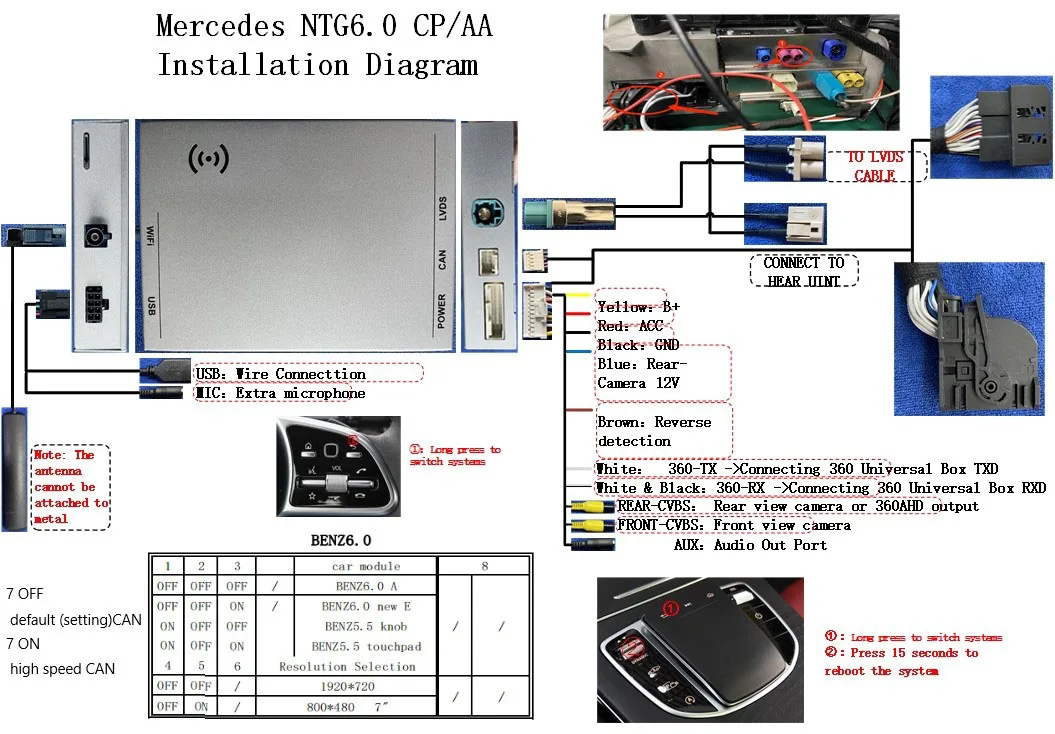
The same discipline applies on other platforms. On Mercedes NTG6.0 the wiring diagram marks an audio out port alongside the LVDS and CAN connections and lists an extra microphone as an option, so whether the car left the factory with a microphone fitted changes what the installer connects. The Mercedes-Benz fitment data is organised by head unit generation for that reason.
Embedded Linux audio versus an aftermarket Android head unit
An aftermarket Android head unit brings a general-purpose operating system into the car, one built to run third-party apps and keep running them for years.
Audio is where that architecture shows its age first. The unit negotiates codec paths, keeps app processes resident and re-reads equaliser presets; add a navigation run and the audio path is competing with everything else for the same budget. The failure mode is not a crash. It is response that gets slower and a menu that takes an extra beat to appear, which a driver reads as the whole system being unreliable.
A Linux embedded image on an automotive-grade chipset has no app store and no resident app list. The audio path is fixed when the image is built, so there is no cache to accumulate and no background process table to grow. The same reasoning explains why a Mercedes or BMW factory head unit from 2013 can still feel responsive today — those units also run embedded Linux rather than a general-purpose phone operating system.
| Point of difference | CarPlay retrofit module (Linux embedded) | Aftermarket Android head unit |
|---|---|---|
| Factory screen | Stays in the car; the module drives the original panel. | The original panel comes out. |
| Operating system | Fixed-purpose embedded Linux image with no app store. | General-purpose Android; apps installed by the owner over time. |
| Audio path | Factory amplifier and door speakers untouched. | New amplifier and speaker set; equaliser presets reset. |
| Long-term behaviour | No cache growth, no resident app processes. | Background activity builds up over the years. |
Where the chipset matters
Smoothness in an embedded Linux image comes from the hardware doing the work rather than from the system being given more room to work in. These modules run on an automotive-grade Sunplus chipset, qualified across the temperature and vibration range a parked car sees in summer and winter, with video decode and audio handling in fixed hardware.
For a buyer the practical question is what the chipset lets a supplier promise about behaviour over a production run. It is a checkable part family rather than a marketing adjective, and it is the reason a module can be specified with stable firmware across a year of orders instead of being re-tuned every few months.
Why the 5GHz band decides the audio as well as the picture
Video and audio travel together on the same link, so link quality decides both. Dual-band WiFi is the relevant part of the specification here: 2.4GHz and 5GHz are both available, and which one carries the stream matters most in the places cars actually sit.
In a multi-storey car park, a concrete deck between phone and car cuts 2.4GHz hard, and the same band is crowded with unrelated access points on every deck. 5GHz has more room and fewer neighbours, so the picture stops breaking up and the audio stops clicking at the same moment. The reverse case holds too — at longer range with clear line of sight, 2.4GHz propagates further — which is the reason both bands are kept rather than one.
What the driver notices is low latency and a picture that stays up, not a benchmark figure. What an installer notices is that the module reconnects on its own after the phone drops a band, instead of needing a cable pulled or a menu reset.
Calls, microphones and Bluetooth
When a call arrives on a phone paired through CarPlay, the call audio moves to the car's own microphone and the car's own speakers over Bluetooth. That hand-off is standard platform behaviour rather than something a module decides, and Apple's CarPlay support pages describe what a driver can expect on both wired and wireless connections: Apple's CarPlay compatibility and connection guidance.
The hands-free side of it is an ordinary Bluetooth profile — the same mechanism any phone uses in any car — which is worth stating plainly because it settles a common question. The hands-free profile list on Wikipedia's Bluetooth profile reference covers what each profile is for.
Two consequences matter for an installer. The microphone the car was built with is the one used, so the cabin does not gain a second microphone unless an extra one is fitted deliberately. And call audio never runs through the decoder module, so a module fault does not take the car's microphone down with it.
A five-point check before a module variant is fixed on an order
- Read the audio option off the amplifier or head-unit label, not off the model year.
- Match the interface variant against the install diagram, which lists the audio systems it covers.
- Set the configuration switches for that audio variant before the trim goes back on.
- Confirm whether a factory microphone is fitted, and whether an extra microphone is required.
- Record head unit generation and audio variant on the order line, so a repeat order matches the first one.
For orders that span several platforms and audio variants, the wholesale programme covers mixed-model stock, private label per model and full OEM firmware. A quotation names the platform and the audio variant on every line, which is what stops a repeat order from arriving with the wrong variant in the box. Fitment for a specific car can be checked first on the vehicle fitment finder.
Frequently asked questions
Does a retrofit module change how the car sounds?
No. The module supplies video and a digital audio stream; the head unit keeps volume curve, fader balance, equaliser and speaker mapping, and the factory amplifier and door speakers stay in the circuit.
Can one module cover two audio variants of the same model?
Generally not. Where a platform is offered with more than one factory audio system, each variant has its own interface and its own configuration settings, so they are listed as separate modules. The fitment data names which is which.
Will a premium factory sound system still work after the retrofit?
Yes. Because the module is added at the video link and not at the audio link, the amplifier, its wiring and its stored settings are not disturbed.
Which microphone is used for phone calls?
The one fitted to the car. Call audio moves to the vehicle microphone and speakers over Bluetooth; an extra microphone is an option on some platforms rather than a replacement for the original.
What has to be confirmed before an order is placed?
Head unit generation, audio variant, whether a factory microphone is fitted, and the target market and packaging for the run. Those four answers determine the module, the harness and the price.
Send us your target vehicle list, quantities and target market through the inquiry form. You will receive a quotation within 12 hours, including volume tiers and lead times for the platforms you named.
Need the Module From This Guide?
Wholesale from 10 pcs (mixed models OK), samples in 7–15 days (DHL/FedEx express). Fitment confirmation within 12 hours.
Request Pricing Check FitmentRelated Resources
- CarPlay Collections — browse by marque family (German, British, Italian, Japanese, luxury)
- CarPlay Fitment Checker — find the module for your car
- CarPlay Decoder FAQ — 34 answers on compatibility, install and wholesale
- CarPlay Retrofit Buying Guide — platform identification & selection
- Wholesale, Private Label & OEM Program — MOQ, lead times, payment terms
- All installation & technical guides