
Published 2026-10-16 · DIYCarPlay Engineering Team · 10 min read
Same Badge, Two Platforms: Sourcing Aston Martin CarPlay Modules Across AS-1 and AS-2
Aston Martin is an unusual sourcing problem. The brand's parc is small, the resale value of every car is high, and the factory infotainment was hand-finished rather than built to a cost target. For a distributor or installer, that combination means fitment has to be settled before anything is ordered, because a returned module from a European workshop costs far more to ship back than a module that was matched to the right platform in the first place. Aston Martin ran two factory infotainment platforms across overlapping model years: AS-1 covers the DB11 of 2016–2019, and AS-2 covers the Vantage of 2018–2020. The two look similar from the driver's seat and behave differently on the bench. The modules described here connect to the vehicle's own wiring behind the factory head unit and put Apple CarPlay on the factory display, leaving the original screen, the original menus, the steering-wheel controls and the factory reversing camera exactly where they were.
Why Aston Martin Is a Different Buying Decision
Most sourcing decisions in this product category are made on volume. Pick the platform with the deepest parc, order the module, and the economics sort themselves out. Aston Martin inverts that. Total annual sales across the whole marque are a fraction of what a single Japanese platform sells in a month, so the argument is not unit price — it is landed cost per correctly matched unit and how few returns the distributor can afford to book.
Three things drive that. First, the overlapping year ranges mean a buyer cannot order by model year alone; a 2018 car can be either platform. Second, the customer profile is unforgiving: a DB11 owner who finds the car returned to stock, or loses the factory camera, is not a repeat customer. Third, workshop time on these cars is billed at a rate that makes a diagnostic hour more expensive than the module. That is why the fitment conversation matters more here than the price list, and why the full platform breakdown is set out in the table used throughout this guide.
Two Platforms, Two Modules
The AS-1 platform covers the DB11 for model years 2016–2019. The AS-2 platform covers the Vantage for model years 2018–2020. The Aston Martin decoder range is built around exactly these two variants, and the fitment data is drawn from the corresponding product pages rather than from a general model list.
| Vehicle | Model years | Platform | Module |
|---|---|---|---|
| DB11 | 2016–2019 | Aston Martin infotainment (DB11) | AS-1 |
| Vantage | 2018–2020 | Aston Martin infotainment (Vantage) | AS-2 |
The overlap in years is the trap. A 2018 or 2019 car is inside both ranges, and only the head unit generation distinguishes them. A distributor who sorts an inbound vehicle list by registration year alone will eventually order the wrong variant, and the failure mode is quiet: the module powers up, the connector mates, but the display stays on the factory menu because the LVDS handshake never completes.
The wider fitment picture across marques — including where Aston Martin sits among the other luxury platforms — is set out on the vehicle compatibility page. Buyers assembling a mixed-brand catalogue should work from that page rather than from individual brand pages.
Identifying the Platform Before Ordering
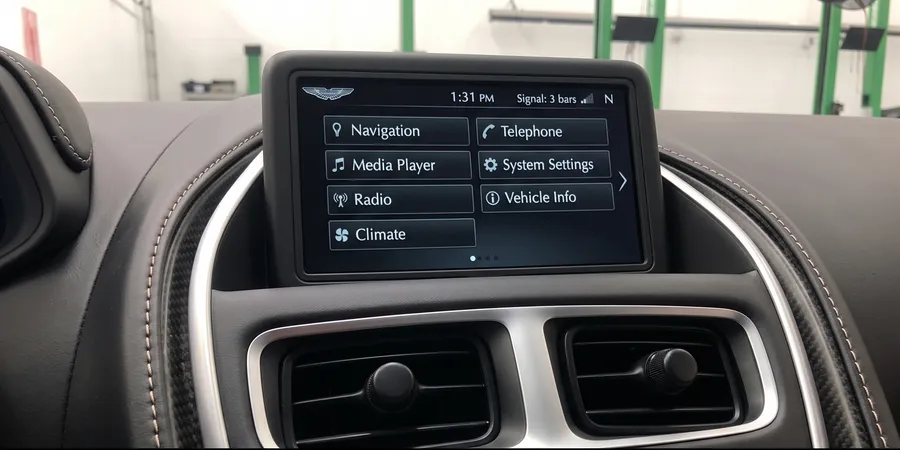
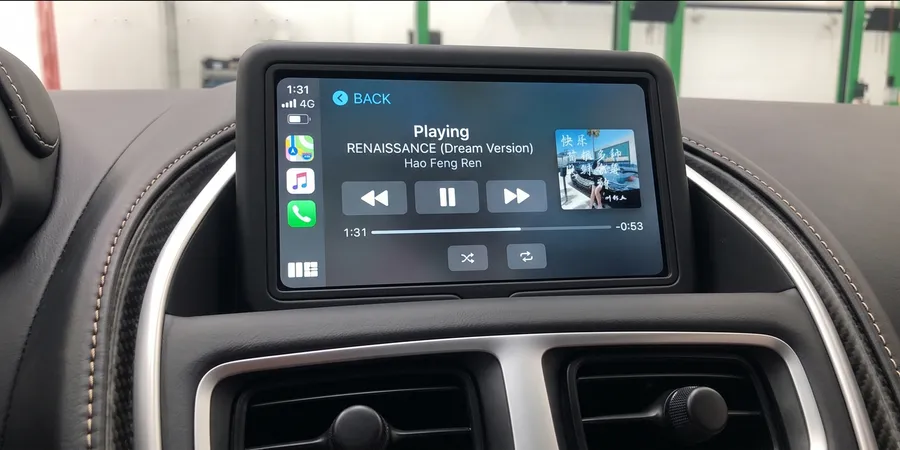
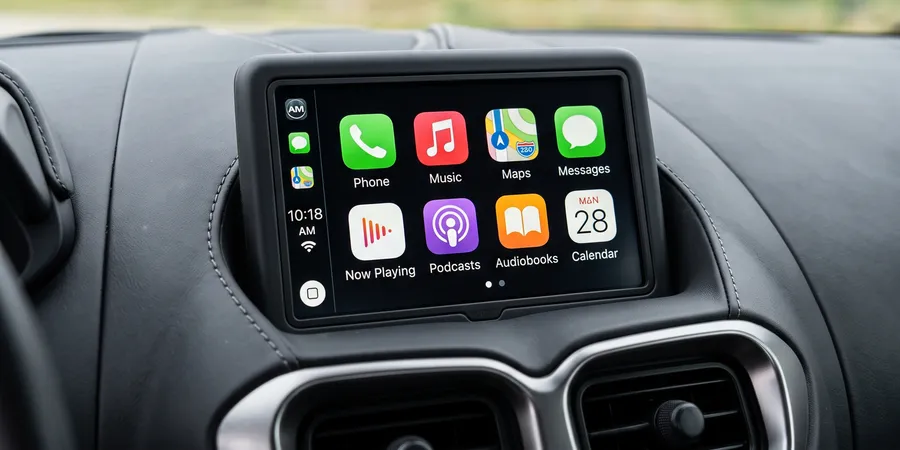
Two checks settle it. The first is the navigation map version on the factory system, the second is the menu layout itself, which is visible in the two photographs at the top of this page: AS-1 presents a rectangular grid of labelled tiles, while AS-2 presents a radial arrangement of circular icons around a central home button.
Neither check is difficult, but both require the car in front of the installer. For a distributor taking a container of modules before the vehicle list has been confirmed, the practical sequence is straightforward — collect a dashboard photograph per unit, confirm the platform against the two rows in the table above, and label each module by variant before it is packed. Once the label is right, the packing error rate drops to effectively nothing, because the label is what stops an AS-1 and an AS-2 from being boxed together and sent to the same customer.
For a fuller method that generalises beyond this marque, the CarPlay retrofit buying guide walks through head-unit identification and platform selection across all supported vehicle groups.
What the Install Leaves Unchanged
The Aston Martin fitment is a plug-and-play harness that connects behind the factory head unit. No wire is cut, no solder joint is made, and no permanent modification is left behind, so the vehicle can be returned to stock by removing the harness. That reversibility is the argument that closes the conversation with an owner who is worried about resale value.
What stays on the car after the install is the longer list. The factory display is the original panel, not a replacement. The controller and its physical keys keep their factory functions. The steering-wheel controls continue to operate the audio system. The factory reversing camera path stays alive, and aftermarket reversing cameras are supported as well. The real installation cases section shows the same camera position and console trim before and after, which is the fastest way to show a sceptical customer that nothing was removed.
Inside the module, the system is Linux in embedded form on an automotive-grade Sunplus chipset made by Taiwan-based Sunplus. That choice is what keeps a unit installed for years without the slowdown that accumulates on general-purpose consumer systems, where background processes and cached data build up over time. It is worth noting that several of the factory systems these modules are fitted to also run on Linux for the same reason, so the module behaves like the equipment it is being added to rather than like a different category of device.
Wireless Performance on Dual-Band WiFi
Wireless CarPlay runs over dual-band WiFi, with both 2.4GHz and 5GHz available to the link. The two bands behave very differently in a car, and the difference matters more on these vehicles than on a city hatchback.
2.4GHz carries further and penetrates obstacles better, but it is also the band that fills up in exactly the environments Aston Martin owners drive through — underground car parks with hundreds of phones and access points on the same channel, and dense urban blocks. 5GHz is the quieter band and carries noticeably more throughput, which is what holds picture quality steady and keeps touch response immediate when the phone is in the same band as a congested 2.4GHz environment. Supporting both means the link settles on the band with headroom rather than fighting for a crowded one.
Stability over a long drive is the other half. A wired connection cannot drop; a wireless link can, if the antenna placement is poor. This is why antenna position inside the dash is treated as part of the product rather than an install detail, and why the module is specified with the factory screen, controller and steering-wheel controls retained rather than a bare panel being introduced into the dash. Reference points for how the two systems are specified are available on the Apple CarPlay support page, and the marque's own model line-up on the Aston Martin website is useful when a buyer is confirming which variants a customer actually owns.
Ordering Terms, MOQ and Lead Times
Aston Martin volume is small enough that most first orders are mixed. Stock decoders start at 10 pieces with mixed variants accepted in the same order, which is the practical entry point for a distributor testing the market, and volume tiers apply at 100, 500 and 1000+ pieces. Private label — own branding, packaging and manual — starts at 500 pieces per model. Full OEM firmware customisation, covering boot logo, interface layout and default language, starts at 1000 pieces per model.
Samples take 7–15 days by DHL or FedEx express, and the sample cost is deductible from the first large-volume order. That deduction is the reason a two-variant sample is worth the courier cost on this marque: one unit of each platform, taken to two vehicles, settles the fitment question before a container is committed. Private label lead time is 15–20 days for 500 pieces or more. The full commercial terms, including the broader MOQ structure across all brands, are published on the wholesale programme page.
Payment is 30% deposit with the balance settled against a copy of the bill of lading, by T/T or PayPal. Quotations are returned within 12 hours. Warranty is 12 months with firmware updates included, which matters for a marque where the customer expects the module to be as reliable as the equipment it is fitted to.
One practical point for distributors: this is not a marque to carry as a single-variant line. The compatibility data covers more than 300 vehicle models and series across the brands in the catalogue, and the most efficient approach is usually to take the Aston Martin variants alongside the high-volume platforms rather than as a standalone shipment. Questions on mixed configurations are answered in the decoder FAQ section.
Frequently Asked Questions
Which Aston Martin generations are covered?
The AS-1 and AS-2 platforms, which in practice covers Aston Martin vehicles built between 2016 and 2020 — the DB11 and the Vantage. Any vehicle outside that list should be sent in as a photograph of its unit for confirmation before ordering.
Can model year alone determine the platform?
No. The two ranges overlap between 2018 and 2019, because the platforms were phased in over the same period. The navigation map version or the menu layout is the reliable indicator.
Is the installation reversible?
Yes. The harness connects behind the factory unit with no cutting and no soldering, so the vehicle can be returned to stock. The factory display, controller, steering-wheel controls and reversing camera all continue to work as before.
What operating system runs inside the module?
Linux in embedded form on an automotive-grade Sunplus chipset, with dual-band WiFi at 2.4GHz and 5GHz. No general-purpose mobile operating system is involved, and the factory display is never replaced.
Is a sample worth ordering before a container?
On this marque it is. The two-platform overlap is precisely the problem a sample resolves, and the sample cost comes off the first large-volume order.
What are the payment terms?
30% deposit, balance against a copy of the bill of lading, by T/T or PayPal. Private label from 500 pieces per model, Full OEM from 1000 pieces per model.
Start With the Vehicle List, Not the Price
On a low-volume marque like this one, the arithmetic that matters is returns avoided, not pieces per dollar. Send the target vehicle list with a dashboard photograph per unit, confirm AS-1 versus AS-2 against the two rows above, and the remainder of the order is straightforward. Fitment confirmed before dispatch is the cheapest variable in the whole transaction.
Send the vehicle list, quantities and target market through the inquiry form. A quotation follows within 12 hours, with volume tiers, lead times and the variant split for the platforms named.
Need the Module From This Guide?
Wholesale from 10 pcs (mixed models OK), samples in 7–15 days (DHL/FedEx express). Fitment confirmation within 12 hours.
Request Pricing Check FitmentRelated Resources
- CarPlay Collections — browse by marque family (German, British, Italian, Japanese, luxury)
- CarPlay Fitment Checker — find the module for your car
- CarPlay Decoder FAQ — 34 answers on compatibility, install and wholesale
- CarPlay Retrofit Buying Guide — platform identification & selection
- Wholesale, Private Label & OEM Program — MOQ, lead times, payment terms
- All installation & technical guides