
Published 2026-10-12 · DIYCarPlay Engineering Team · 11 min read
CarPlay for BMW: Sourcing the Right Module Across CIC, NBT and EVO
CarPlay for BMW is decided by the head unit generation, not the model year badge. A decoder module that speaks to a CIC bus will not drive an EVO head unit, and a harness cut for the F30 will not reach the same connector on an X5. The range below covers 300+ vehicle models and series from model years 2006 to 2025, mapped to the three module families that cover the marque.
The commercial question behind that mapping is straightforward for importers: which module family carries the volume, what does the harness connect to, and how much rework does a mismatch create at the workshop bench. Sizing those three things before the purchase order is placed is what separates a profitable BMW programme from a container that sits in a warehouse.
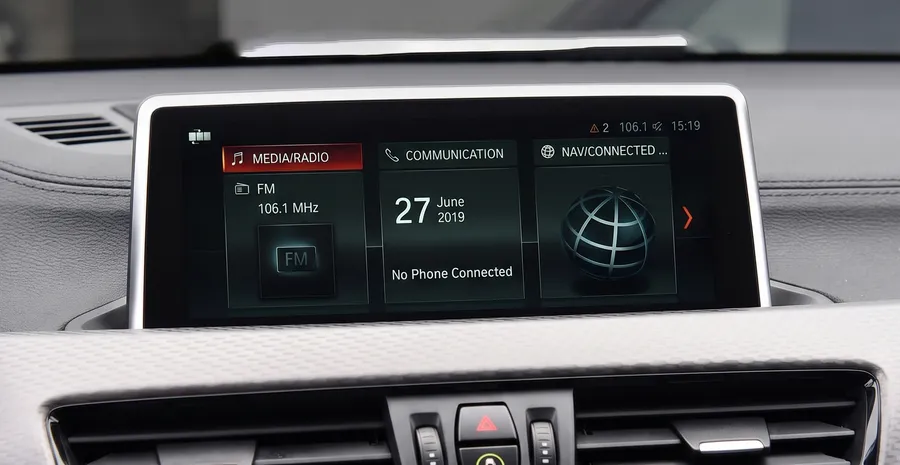
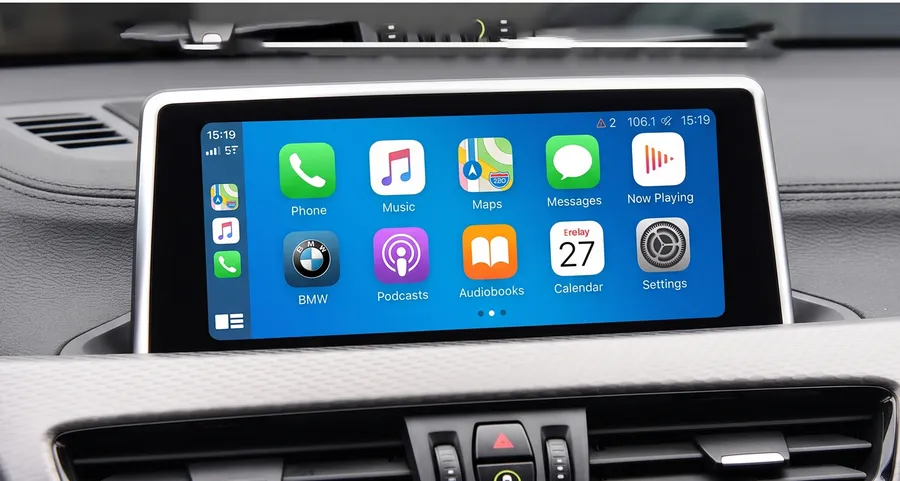
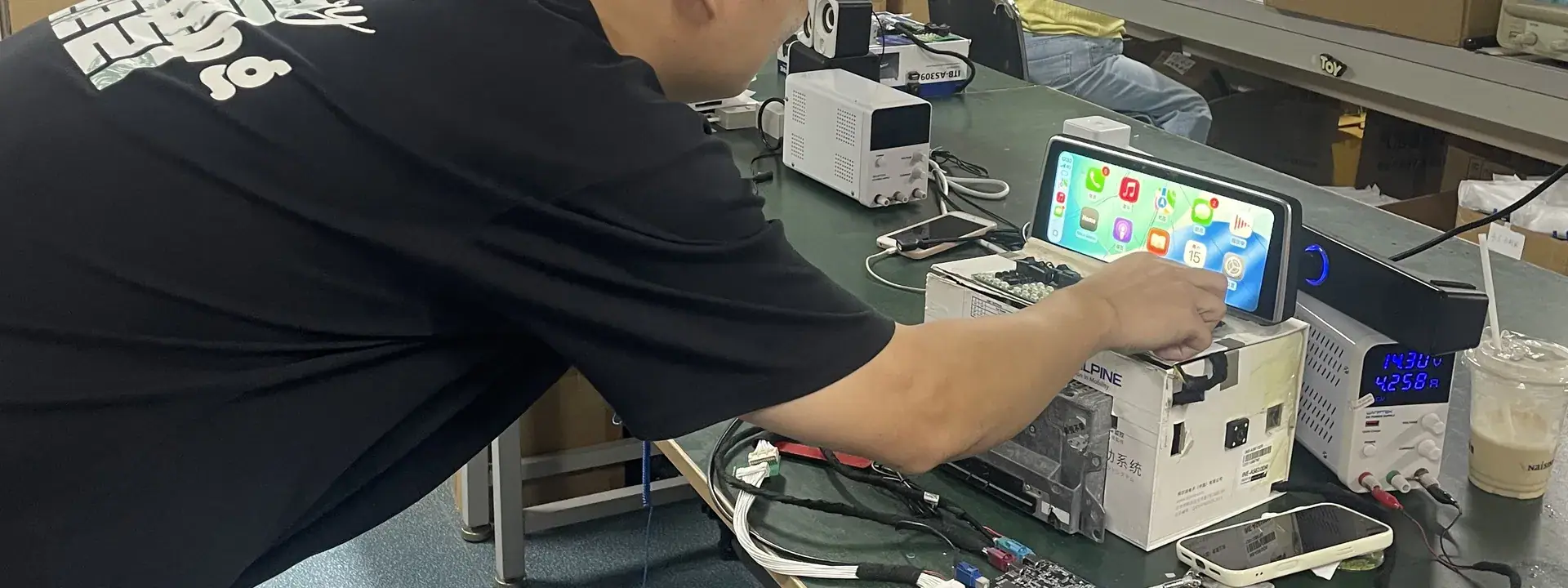
BMW head unit generations decide which module a car needs
BMW moved infotainment systems three times across the range covered by these modules, and each move changed the bus the decoder has to talk to. The Car Information Computer, known as CIC, ran on the earlier architecture. The Next Big Thing, abbreviated NBT, replaced it across most of the range from 2012 onward. EVO, sold in the parts trade as ID5 and ID6, is the later generation still fitted to current cars.
Generation boundaries matter because the diagnostic port location, the LVDS cable routing and the video timing handshake all differ between them. A module that passes bench test on an NBT head unit will not necessarily wake correctly on CIC, since the CAN wake-up message differs. The differences are set out in detail on the CIC, NBT and EVO comparison page, and the identification procedure for checking an individual car before ordering is on the head unit identification guide.
For a distributor, the practical consequence is that fitment should be quoted by chassis code rather than by marketing name. An F30 and an F80 3 Series are sold under the same model family but straddle the NBT to EVO boundary, so a list written as "3 Series" produces returns. A list written as chassis codes produces a shipment that fits.
BMW fitment by module generation
The table below groups the covered chassis by module family. Year ranges indicate the span in which the module applies to that chassis; individual cars should still be checked by VIN before a sample order is confirmed.
| Module family | Head unit | Model years | Representative chassis |
|---|---|---|---|
| CIC | Car Information Computer | 2008–2014 | 1 Series E87; 3 Series E90/E91/E92/E93; 5 Series E60/E61; X1 E84; X5 E70; MINI R55/R56/R60 |
| NBT | Next Big Thing iDrive | 2012–2016 | 1 Series F20/F21; 3 Series F30/F31/F34; 5 Series F07/F10/F11; X5 F15/F85; MINI F56 |
| EVO | NBT EVO, ID5 and ID6 | 2015 onward | 1, 2, 3 and 4 Series from 2016; 5 and 6 Series from 2017; 7 Series from 2015; X3, X4, X5 and X6 from 2017 |
The three families carry different volumes. CIC covers the oldest and now largely retired chassis, which still matters where a distributor is clearing 2008 to 2013 stock. NBT covers the largest single block of used-car inventory across Europe. EVO covers the newest supported cars and is the family that will absorb repeat orders as fleets turn over.
Module-specific fitment lists, wiring diagrams and specification tables are published for each family under the BMW module index, and any chassis not listed there can be run through the vehicle fitment finder before an order is placed.
What the plug-and-play harness actually connects
Each BMW module family ships with a harness built for that generation's connector layout. Installation means unplugging the factory display cable, seating the harness in the head unit's LVDS socket and routing the CAN tap to the diagnostic port. No wire is cut, no dashboard trim is modified beyond the trim panel that must come off to reach the head unit, and the factory screen itself is not replaced.
That last point is the part importers should brief their install partners on carefully. An aftermarket head unit means removing the OEM display, adapting or losing the original amplifier, and re-tuning the vehicle's coded modules for a screen the car was never built around. A harness-based retrofit leaves the display, the iDrive controller, the steering-wheel buttons and the factory amplifier in place, so the installation labour is measured in hours rather than days.
Reverse camera retention is part of the same routing decision rather than an add-on. The reverse trigger is read from the CAN tap already in the harness, so the factory camera image switches in normally when the gear selector enters reverse. The camera and its wiring stay untouched, which also means the fitment list stays valid for cars with an aftermarket camera already fitted.
Workshop-side preparation is light. A T20 driver, a trim-removal pick set and a torque screwdriver are enough for most CIC and NBT installations. EVO head units sit deeper behind the dash carrier, so allowing an extra hour on those cars avoids a return trip that would cost more than the module did.
Why the operating system and chipset decide the return rate
The parts that generate warranty claims in this category are rarely the display. They are the modules that run warm in a parked car, that lose their network link in a multi-storey basement, or that need a power cycle after a week of standing. Those failure modes trace back to two decisions: what the module runs, and what silicon runs it.
These modules run Linux on an automotive-grade chipset from Sunplus in Taiwan. That choice carries weight in a specific way. Android-based alternatives accumulate background processes and cached data, and a unit left in a vehicle for months gradually becomes slower until it is restarted. An embedded Linux build runs a fixed task set, so behaviour on day one and behaviour on day four hundred stay the same.
BMW's own head units across these generations are Linux-based as well, which is why cars a decade old with the original screen can still feel responsive. A Linux decoder module sits in the same category of behaviour rather than introducing a different one.
The chipset matters because thermal load follows processing work. Firmware for the LVDS timing and the CAN handshake runs continuously once the car is moving, and a module that runs cooler has more headroom in a sealed dashboard in a hot climate. That headroom is what keeps the return rate down over a year of shipping, rather than only through the first quarter.
Dual-band 5GHz WiFi and what it means in a real car park
Wireless CarPlay has to survive an environment no office network does: a concrete basement with a lift, a street with four access points on the same channel, a caravan park with a saturated 2.4GHz band. These modules carry dual-band WiFi, transmitting on 2.4GHz and 5GHz together.
The two bands fail differently. 2.4GHz reaches further and passes through obstructions, which makes it the more resilient of the two in a basement. 2.4GHz is also crowded, and interference shows up as delay in video and audio that arrives out of sync. 5GHz carries far more bandwidth and sits on channels that most household and public networks leave alone, so the picture stays sharp and the audio stays in step.
Running both bands is what makes the link hold up when a customer drives somewhere they did not expect trouble. The module moves to the clearer band and the handover is handled in software, so the driver sees a stable screen rather than a stalled one.
What a BMW wholesale quotation should itemise
A quotation for a BMW programme is only useful if it separates the module families, because a blended unit price across CIC, NBT and EVO hides which family is carrying the margin and which is carrying the returns. The structure below is the one to ask each supplier to break out, with the standard terms stated for comparison.
| Term | Standard structure | What to check in the quotation |
|---|---|---|
| Stock MOQ | 10 pcs, mixed models allowed within the minimum | Whether CIC, NBT and EVO count as mixed models in one shipment |
| Private label | 500 pcs per model | Whether artwork approval is included in the lead time |
| Full OEM | 1000 pcs per model | Firmware UI, boot logo and language pack revision control |
| Sample lead time | 7–15 days by DHL or FedEx express | Whether one sample per module family is included or charged separately |
| Production lead time | 15–20 days for 500+ pcs | Whether the clock starts after artwork sign-off or after deposit |
| Payment | 30% deposit, 70% against a copy of the bill of lading | Which payment methods are accepted and in what currency |
| Quotation | Within 12 hours | Whether the response includes the fitment mapping for the submitted vehicle list |
Stock terms are the right way for a first container. Ten pieces with mixed models allowed lets a distributor test all three BMW families on real cars before committing to a single generation, which is the main risk in a BMW programme. Private label from 500 pieces per model is the point at which branding becomes worth the tooling cost, and a Full OEM firmware programme starts at 1000 pieces per model.
The sample fee is deductible from the first large-volume order, so a sample carried out ahead of a stock order is not a separate sunk cost. Payment runs on a 30% deposit with the balance settled against a copy of the bill of lading, by T/T or PayPal. Lead times of 7 to 15 days by DHL or FedEx for samples and 15 to 20 days for production orders of 500 pieces or more should appear in writing on the quotation rather than in a later email. The wholesale programme page sets out the same tiers in full.
Common questions from BMW buyers
Can one module cover CIC, NBT and EVO at the same time?
No. The three families use different buses, different video timing and different connector layouts, and each is supplied as its own module. A distributor stocking BMW normally carries more than one family, which is what the mixed-model allowance at the stock minimum is intended to support.
Does the retrofit keep the original screen and steering wheel controls?
Yes. The factory display, the iDrive controller and the steering-wheel buttons all stay in place and continue to work as originally fitted. Nothing on the screen is replaced, and no dashboard trim is cut.
What happens to the factory reverse camera?
It keeps working. The reverse trigger is taken from the CAN tap inside the harness, so the factory camera image appears when reverse is selected. Both the factory camera and an aftermarket camera already fitted to the car are supported.
Does a wireless module work in an underground car park?
Dual-band 5GHz WiFi is what makes this practical. 5GHz carries the bandwidth for a stable picture where 2.4GHz is congested, and the second band maintains the link where signal is weak. Both bands run together rather than switching manually.
How is the correct module confirmed before an order?
By chassis code and head unit generation, checked against the fitment table above or through the fitment finder. Model names alone are not reliable across the NBT to EVO boundary, where several cars sharing a model name straddle two generations.
Which BMW modules should a first container include?
NBT usually carries the largest share of used-car inventory in the target market, CIC matters where older stock is still being cleared, and EVO is the family that grows as fleets turn over. The stock minimum of 10 pieces with mixed models allowed is set low enough to test all three before scaling up.
Apple maintains the current list of vehicle requirements for CarPlay on its CarPlay support page, which is the reference worth checking first when a vehicle list is disputed. BMW's own model and head unit background is on the BMW corporate site.
Send the target vehicle list with the chassis code and head unit generation for each entry, plus the quantities being planned, through the inquiry form. We map every entry to the correct module family, come back within 12 hours with the fitment, MOQ tier and lead time that apply, and can ship one sample per family first. Samples take 7 to 15 days by DHL or FedEx, and the sample cost comes off the first large-volume order.
Need the Module From This Guide?
Wholesale from 10 pcs (mixed models OK), samples in 7–15 days (DHL/FedEx express). Fitment confirmation within 12 hours.
Request Pricing Check FitmentRelated Resources
- CarPlay Collections — browse by marque family (German, British, Italian, Japanese, luxury)
- CarPlay Fitment Checker — find the module for your car
- CarPlay Decoder FAQ — 34 answers on compatibility, install and wholesale
- CarPlay Retrofit Buying Guide — platform identification & selection
- Wholesale, Private Label & OEM Program — MOQ, lead times, payment terms
- All installation & technical guides