
Published 2026-11-20 · DIYCarPlay Engineering Team · 8 min read
One Code, Two Customers: Sourcing the HO-1 Honda Accord CarPlay Decoder for Cars That Already Have CarPlay and Cars That Do Not
The Honda code that already has CarPlay, and why it still ships
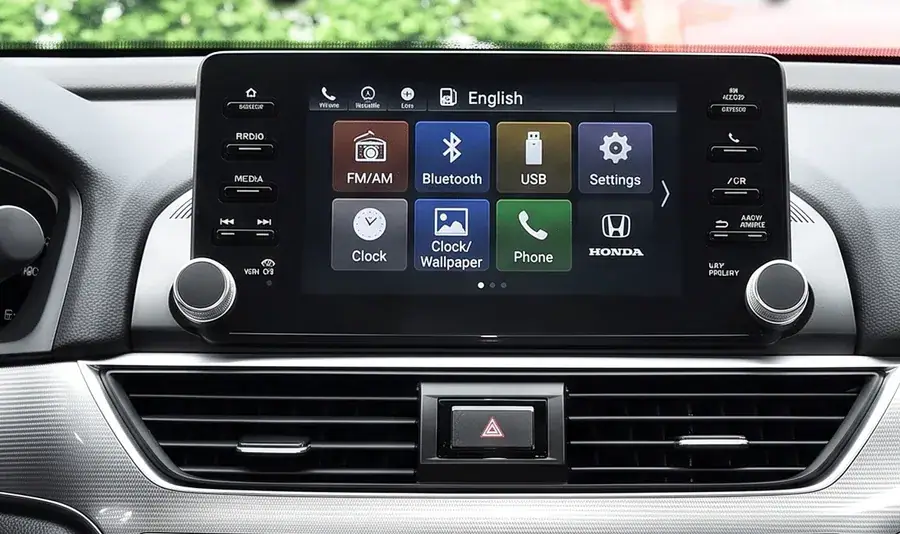
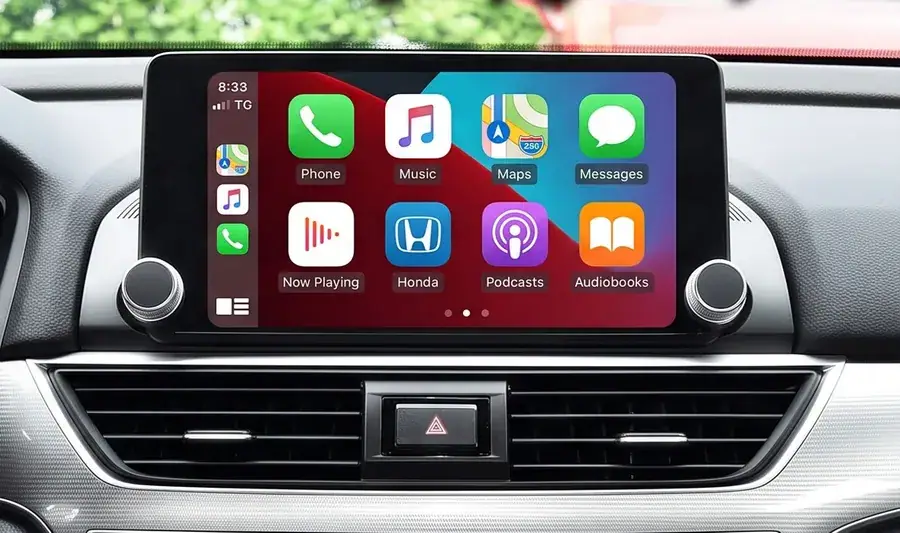
Most wholesale buyers approach a CarPlay retrofit catalogue expecting the factory system to be empty — a car with no smartphone mirroring at all, where a decoder supplies the feature from nothing. The tenth-generation Honda Accord breaks that expectation. Here the factory head unit already runs CarPlay on the higher trims, and the module's job is quieter and more specific: it converts a wired factory experience into a wireless one, and it brings CarPlay to the base trim that never had it. One platform code, HO-1, covers both jobs across the 2018–2022 Accord and its INSPIRE sibling. Understanding that split is the whole purchase decision for this marque.
This distinction matters commercially. A buyer who stocks HO-1 for "cars without CarPlay" will mislabel half the cars it fits, quote the wrong benefit to the installer, and field avoidable returns when a customer discovers the factory system already had a wired version. A buyer who understands the two demand types can market the same part to two channels without holding two references.
What HO-1 actually fits
The HO-1 entry is deliberately narrow. It is a single platform code in the catalogue, covering one generation of one car line plus its closely related sedan. The fitment line reads as follows in the source data, written the way a purchase order should carry it.
| Platform code | Head unit | Model names | Model years | What the module adds |
|---|---|---|---|---|
| HO-1 | Honda Display Audio, 10th-generation generation | Accord (10th gen) / INSPIRE | 2018–2022 | Wireless CarPlay on 8-inch cars that had it wired; CarPlay and Android Auto on the 7-inch LX that had neither |
For context on why the code matters more than the badge: across the full catalogue, 50 model names appear under more than one platform code, and 10 model names have identical year windows under those codes. A name and a year alone therefore cannot always close an order. Honda is the simpler case — one code, one generation — but the discipline of confirming the head unit first is the same one that prevents the expensive mistakes elsewhere in the range.
Two buyers, one reference
The 2018–2022 Accord was sold with two centre screens. Car and Driver's model-year coverage records that all cars got a touchscreen in either a seven-inch or an eight-inch size, but Apple CarPlay and Android Auto were reserved for the larger system. That single specification splits the retrofit market in two.
- The 8-inch cars — Sport, EX, EX-L and Touring from 2018, and the wider range from 2021. These already run wired CarPlay from the factory. The customer is not asking for a feature; the customer is asking to stop plugging in a Lightning cable every trip. The module overlays wireless CarPlay on the existing screen and keeps the original interface available underneath.
- The 7-inch LX cars from 2018 to 2020. This screen has hard buttons and knobs and no smartphone integration. Here the module genuinely supplies CarPlay and Android Auto where none existed, projecting onto the factory display through the original video link.
Both groups accept the same HO-1 harness and the same decoder. The difference lives in the sales conversation and in the expectation set at the point of sale. A distributor serving a market with a high share of fleet-spec LX cars is really buying an "add CarPlay" story. A distributor serving higher trims is buying a "cut the cable" story. The part number is the same; the listing copy should not be.
Apple's own CarPlay guidance describes the three connection patterns a car can offer — USB only, both USB and wireless, or wireless only — and notes that the phone is paired through the car's Wi-Fi and Bluetooth once wireless is supported. That is a useful authority to cite when explaining to a buyer why a car that "already has CarPlay" can still be a legitimate retrofit customer. Wired and wireless are different product experiences on the same factory screen.
How the unit installs, and what it leaves alone
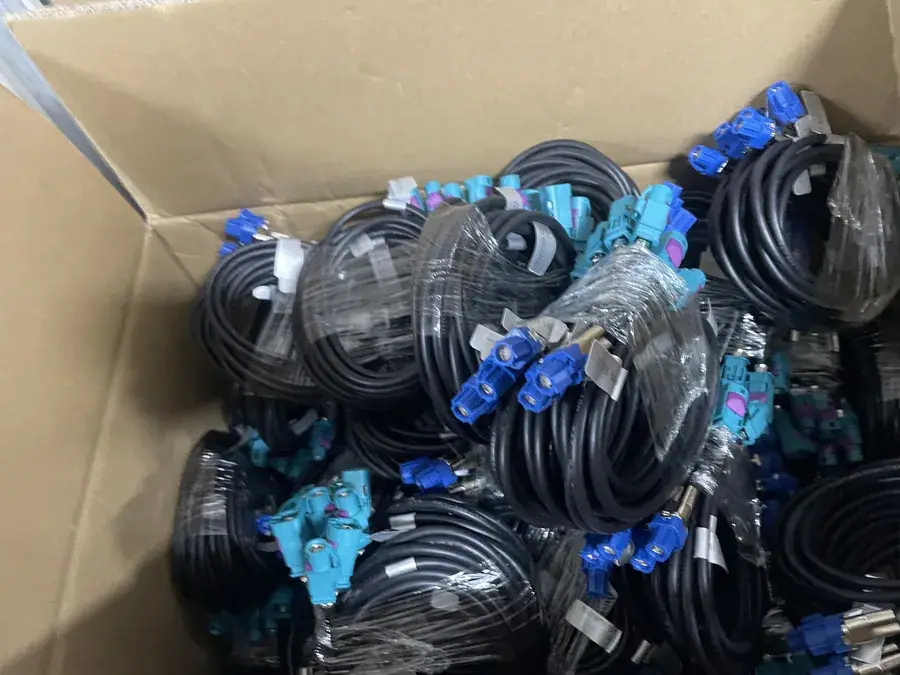
The HO-1 kit is a vehicle-specific harness and a decoder that sits behind the factory head unit. The harness taps the display link for video and touch, draws power from the head-unit connector so no separate feed is run to the fuse box, and reads the reverse trigger from the factory loom. Nothing is cut, nothing is soldered, and no CAN bus programming is performed. The installation is plug-and-play in the literal sense: connectors on the harness mate with connectors already in the car.
Because the original head unit keeps driving its own display, the physical controls survive. The volume and tuning knobs either side of the screen, the steering-wheel buttons and the factory reversing camera all remain in circuit. The camera keeps its original priority: select reverse and the factory image with its dynamic guidelines takes over the screen regardless of what the module is showing. This is the outcome a wholesale buyer is really purchasing — not a new screen, but the absence of a dashboard teardown and the complaints that follow one.
The decoder runs on an embedded Linux platform rather than a phone-derived operating system. That choice removes the app-cache and memory behaviour that makes a screen-based unit slow after a few years; the interface stays responsive because it is not accumulating background data. Processing is handled by an automotive-grade Sunplus chipset from the Taiwanese supplier, selected for stability in the vehicle temperature range rather than for peak benchmark figures. Wireless CarPlay runs over dual-band 2.4GHz and 5GHz WiFi, with the 5GHz path carrying the screen traffic in the crowded urban and underground-parking environments where the 2.4GHz band is most congested.
Why the head unit, not the trim name, closes the order
The 7-inch and 8-inch distinction is a trim-level fact and it is visible from the outside of the car, which makes Accord unusually easy to qualify. Most platforms are not so kind. Menu layouts are shared across generations, a badge can sit on several head units, and the same model name can hide two different wiring schemes. The same discipline that reads the screen size on an Accord is the one that reads a version screen or a menu on a marque where the trim does not tell the story.
For a purchasing team, that translates into one rule worth writing into the order template: record the head unit generation, not just the model. On this platform the head unit is Display Audio in one of two screen sizes; on others it is a named generation. Either way, the field that prevents a wrong shipment is the one describing the electronics.
Commercial terms for a wholesale order
Stock orders start at 10 pcs, and mixed head-unit generations can be combined in the same shipment — useful when a distributor is not yet sure whether the local demand will skew toward the LX cars or the higher trims. Private label begins at 500 pcs per model, and Full OEM firmware customisation at 1000 pcs per model. Samples ship in 7–15 days by DHL or FedEx express, and production runs of 500 pcs or more take 15–20 days. The sample cost is deductible from the first large-volume order.
Payment is by T/T, with a 30% deposit and the 70% balance settled against a copy of the bill of lading. Quotations return within 12 hours and include the volume tiers and lead times for the platforms named in the enquiry. Coverage across the full range is 300+ vehicle models and series from 2006 to 2025; HO-1 is one line inside that range, and a deliberately tight one.
Frequently asked questions
Does every tenth-generation Accord need this module?
No. The 8-inch cars already carry wired CarPlay from the factory, so the module is a wireless upgrade. The 2018–2020 LX with the 7-inch screen is the version that gains CarPlay where none was fitted.
Will the factory screen and controls still work?
The screen stays in place and the original head unit keeps driving it. The physical knobs, steering-wheel controls and factory reversing camera remain connected, and the camera still takes priority in reverse.
Why use a decoder instead of replacing the display?
Replacing the screen means losing the factory camera and climate integration unless extra adapters are added, and it introduces a phone-derived platform that accumulates cache over time. The decoder keeps the original system and projects onto the screen that was already fitted.
Can different head-unit generations ship together?
Stock orders from 10 pcs accept mixed generations in one shipment. The harness is what varies by car, so a buyer can test local demand before committing to a single reference at 500 pcs or 1000 pcs.
What is the lead time for a sample?
7–15 days by DHL or FedEx express. The sample cost is deducted from the first large-volume order, and testing on the exact car the order is intended for is the fastest way to confirm the fit.
Send us your target vehicle list, quantities and target market through the inquiry form. You will receive a quotation within 12 hours, including volume tiers and lead times for the platforms you named.
Need the Module From This Guide?
Wholesale from 10 pcs (mixed models OK), samples in 7–15 days (DHL/FedEx express). Fitment confirmation within 12 hours.
Request Pricing Check FitmentRelated Resources
- CarPlay Collections — browse by marque family (German, British, Italian, Japanese, luxury)
- CarPlay Fitment Checker — find the module for your car
- CarPlay Decoder FAQ — 34 answers on compatibility, install and wholesale
- CarPlay Retrofit Buying Guide — platform identification & selection
- Wholesale, Private Label & OEM Program — MOQ, lead times, payment terms
- All installation & technical guides