
Published 2026-10-11 · DIYCarPlay Engineering Team · 10 min read
CarPlay for Nissan and Infiniti: Sourcing the Right Module Across NI-1 and NI-2
A plug-and-play CarPlay decoder module adds wired and wireless CarPlay to a Nissan or Infiniti that left the factory without it, while the original display, the dashboard controller, the steering-wheel buttons and the factory reversing camera all stay in place. Coverage extends across 300+ vehicle models and series from 2006 to 2025, and the Nissan / Infiniti range divides into two module platforms — NI-1 for 2009–2018 and NI-2 for 2013–2019 — which is the single fact that decides what a distributor stocks.
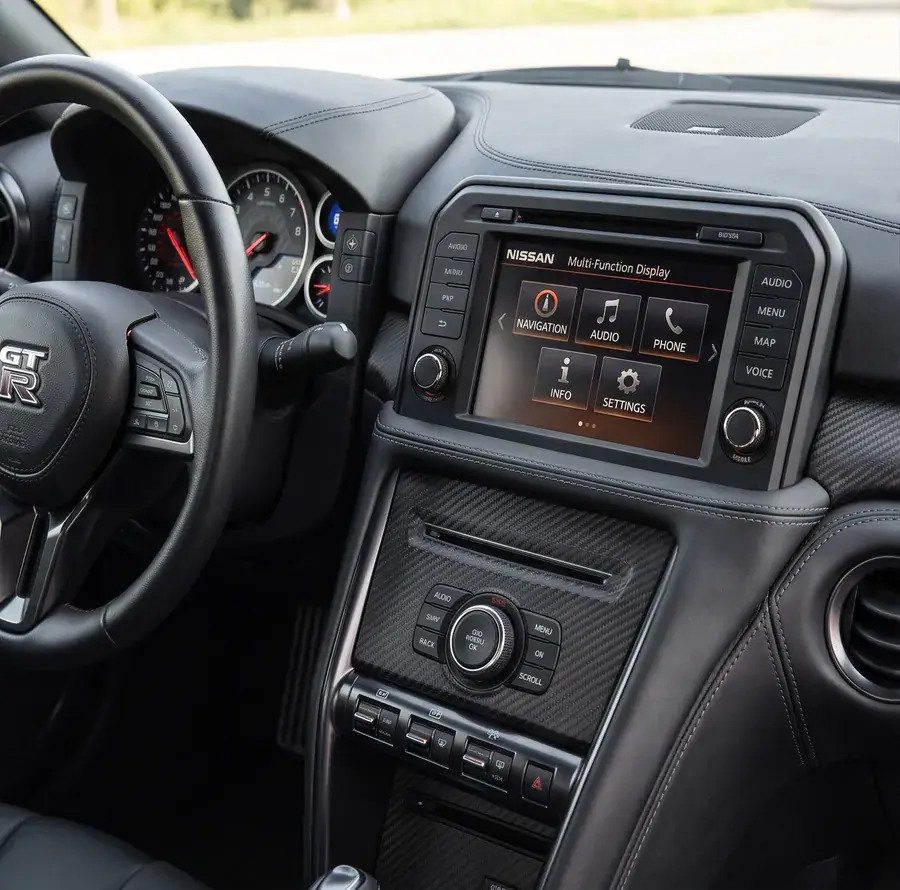
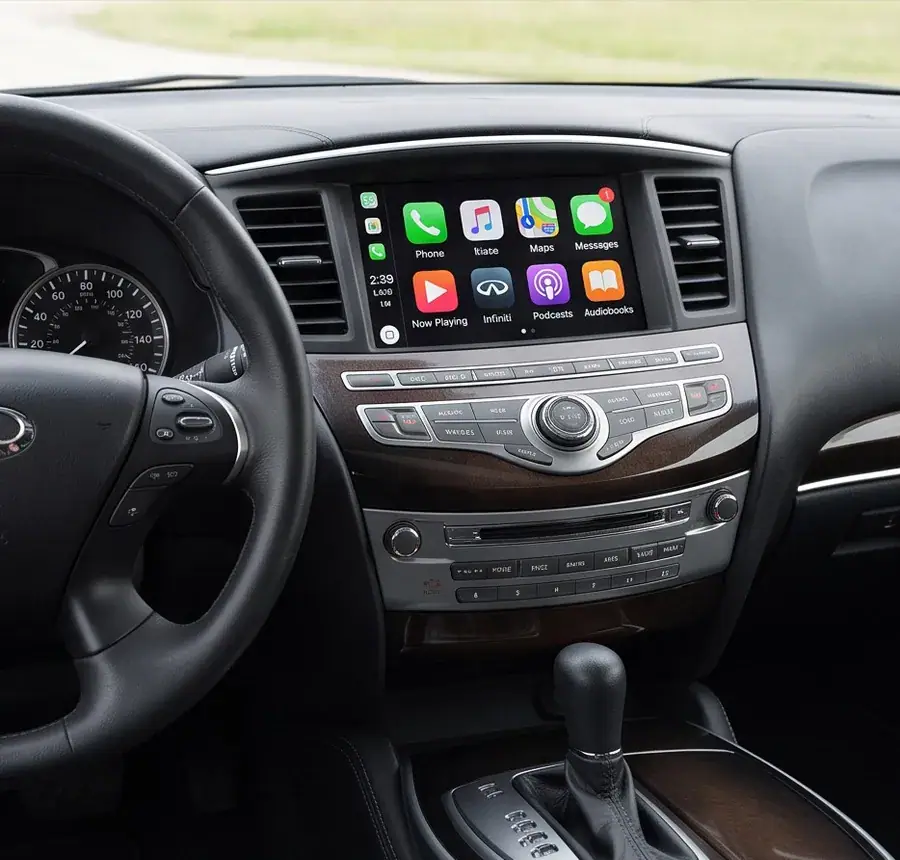
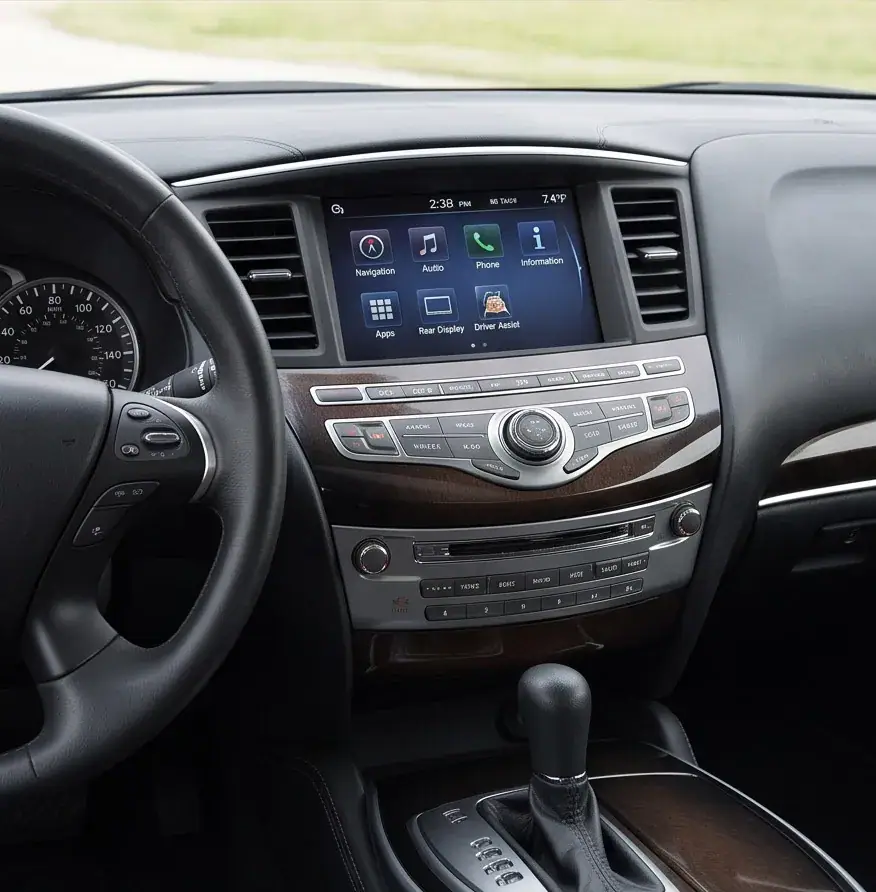
Nissan and Infiniti run two infotainment generations that overlap
Most sourcing errors on this marque are not pricing errors. They are generation errors. Nissan and Infiniti phased their infotainment hardware in over the same period, and the two platforms that straddle the boundary carry overlapping model names. A buyer who orders on model name alone ends up with modules that fit the car standing in front of them and nothing else in the order.
The Nissan and Infiniti decoder range covers both platforms, and the model years come straight from the fitment data published on each module page:
| Platform | Model years | Models covered | Module |
|---|---|---|---|
| Nissan / Infiniti infotainment (rev 1) | 2009–2018 | GT-R, QX50, QX60, QX70, QX80, Patrol | NI-1 |
| Nissan / Infiniti infotainment (rev 2) | 2013–2019 | QX50, QX60, QX70, QX80, Patrol | NI-2 |
The QX50, QX60, QX70, QX80 and the Patrol appear in both rows. That is not a duplication error — it reflects a genuine overlap window in which the same model name can be found with two different head units depending on trim level and build date. Buyers holding stock should treat this as the highest-return detail on the page: a customer who sends a VIN and a photo of the head unit main menu before ordering will almost never receive a module they cannot fit, while a customer who orders on model name alone eventually will.
Model year is not a substitute for identification. Because the two generations were phased in across the same years, a 2015 Patrol can carry either head unit depending on when it was built and which specification level it has. The menu layout and the navigation map version on the screen are the reliable indicators, not the year on the registration document.
What each platform adds, and what it leaves alone
Both platforms sit behind the same architecture: a harness that connects to the factory head unit rather than a device that replaces it. Once fitted, the module adds wired and wireless Apple CarPlay, wired and wireless Android Auto, wired and wireless Huawei HiCar, and screen mirroring over AirPlay or Miracast. The factory reversing camera, whether original or aftermarket, continues to work as it did before.
The distinction between NI-1 and NI-2 is physical rather than functional. The two revisions differ in the connector pinout and the LVDS timing the harness has to present, which is why one harness will not seat correctly in the other generation. Feature delivery across the two is otherwise identical, so a distributor carrying both platforms is not carrying a different product — only a different connector set.
Installation takes 30 to 60 minutes and modifies nothing
A Nissan or Infiniti retrofit is a plug-and-play harness installation. The head unit is pulled, the harness connects to the factory socket and the LVDS video connector, and the module is secured behind the trim. There is no wire cutting, no soldering and no permanent alteration to the vehicle. A technician familiar with the platform typically completes the work in 30–60 minutes, and the car can be returned to stock by reversing the same steps.
That reversibility matters commercially, not just technically. Installers who move from permanently cutting screens to a harness-based retrofit report that the decision is made at the quote stage rather than in the bay, because nothing about the car is permanently changed and no panel is damaged. For a distributor, that removes the main source of customer hesitation and reduces the dispute rate that comes from damaged trim.
Platform choice is where return rates are won or lost
The reliability question a buyer should ask is not about the phone. It is about what happens to the module over years of service, and the answer is decided by two engineering choices made at the platform level.
The first is the operating system. These modules run embedded Linux rather than a general-purpose mobile platform, and the practical consequence is that there is no background cache layer accumulating over months of use. A system installed in a vehicle is rarely power-cycled cleanly, sits in temperatures that stress consumer electronics, and is left running in a parked car in summer. Systems with a managed cache degrade in that environment. Embedded Linux does not accumulate that state, so a unit fitted at 40,000 kilometres behaves the same as one fitted at zero.
The second is the chipset. These modules use an automotive-grade Sunplus chipset made by Taiwan-based Sunplus Technology, the same class of silicon used across the OEM head units these platforms already ship with. Smoothness here is a property of the hardware rather than something borrowed from spare system resources, which is why it holds at the extremes of temperature that a parked vehicle reaches.
For a distributor, this is the difference between a warranty claim rate measured in single digits per thousand units and one measured in double digits. The vehicle fitment checker exists to confirm the platform match before an order is placed, and a head unit photo sent before ordering is the fastest way to eliminate the largest category of avoidable returns.
Wireless performance depends on the band, not the marketing
Wireless CarPlay on these modules runs over 5GHz dual-band WiFi, combining a 2.4GHz and a 5GHz radio. The two bands behave very differently in the environments these cars are actually used in.
2.4GHz travels further and penetrates obstructions better, which makes it the band that survives a multi-level concrete car park with a signal-optimised antenna already fitted. It is also the band most exposed to interference, because phones, Bluetooth accessories, key fobs and other vehicles all compete in the same crowded spectrum. 5GHz offers considerably more bandwidth and sits in far less crowded spectrum, which is what carries high-resolution video and audio streams without contention.
Operating both radios, with the higher band handling throughput-heavy traffic, is what makes the connection hold up in the conditions that generate most support calls. Antenna placement matters as much as the radio itself, and modules fitted inside a heated rear screen or under a roof console will underperform regardless of the chipset inside. Install guidance normally covers this, and it is worth checking that the supplied instructions address it for the specific platform.
Wholesale terms for distributors and installers
Stock orders start at 10 pcs with mixed models permitted, which lets a first order cover both platforms without committing to volume on either. Volume tiers apply at 100, 500 and 1000+ pcs. Private label — logo, packaging and manual — starts at 500 pcs per model. Full OEM firmware customisation covering boot logo, UI layout and default language starts at 1000 pcs per model.
| Tier | Quantity | What is included | Lead time |
|---|---|---|---|
| Samples | 1–2 pcs | Any platform, express shipping | 7–15 days by DHL / FedEx |
| Stock wholesale | From 10 pcs | Mixed models permitted | 7–15 days |
| Private label | From 500 pcs per model | Your logo, packaging, manual | 15–20 days for 500+ pcs |
| Full OEM | From 1000 pcs per model | Boot logo, UI layout, default language | Quoted per programme |
Sample cost is deductible from the first large-volume order. Payment terms follow the same structure across every tier: 30% deposit with the 70% balance due before shipment by T/T, with PayPal accepted for samples and small orders. Full export documentation accompanies every shipment. The wholesale and OEM programme page sets out the same tiers in detail, and pricing on both platforms is confirmed on request — a fitment list and a quote are usually returned within 12 hours.
Warranty on both platforms runs 12 months with firmware updates included, which matters for a product line where the head unit generation is fixed but the phone platforms are not. Each unit ships with a manual and a video installation guide, and every module is bench-tested against a real head unit of the target generation before dispatch rather than against a simulator.
Two authoritative references worth checking
Apple's official CarPlay compatibility documentation covers the current requirements for wired and wireless CarPlay, including the iPhone versions supported and how wireless pairing behaves. It is the reference to consult when a customer's phone is the variable rather than the car, and it is maintained by Apple: Apple Support — CarPlay compatibility.
For model-year and platform background, the manufacturer's own product pages are the more reliable source than aftermarket summaries, since they describe the configurations each market actually received: Nissan Global. Where a regional market has different infotainment equipment from another, that difference is the reason a fitment list needs to be confirmed against the specific vehicle rather than assumed.
Questions distributors ask before a first order
Which Nissan and Infiniti models can be upgraded?
The NI-1 and NI-2 modules cover most Nissan and Infiniti vehicles built between 2009 and 2019, including the GT-R, QX50, QX60, QX70, QX80 and Patrol. Where a vehicle is not listed, a photo of the head unit screen is enough to confirm fitment. Broader coverage across 300+ vehicle models and series from 2006 to 2025 sits outside this brand range.
Can the two generations be told apart before ordering?
Yes. The navigation map version and the menu layout on the factory screen identify the generation. The build year alone is unreliable because Nissan and Infiniti phased the units in across overlapping years.
Does the retrofit affect the original functions?
No. The harness connects behind the factory head unit. The OEM screen, the dashboard controller, the steering-wheel buttons and the factory reversing camera all continue to operate, and the car can be returned to stock by removing the harness.
How are samples and payment handled?
Samples ship in 7–15 days by DHL or FedEx express, with the sample cost deductible from the first large-volume order. Standard terms are 30% deposit with the 70% balance before shipment by T/T, with PayPal accepted for samples and small orders.
What is the minimum order?
Stock orders start at 10 pcs with mixed models permitted, so both platforms can be covered in a single first order. Private label starts at 500 pcs per model and Full OEM firmware customisation at 1000 pcs per model. The decoder FAQ covers the remaining commercial questions.
Nissan and Infiniti buyers are welcome to send a VIN or a head unit photo with the model year, and a fitment confirmation with pricing comes back within 12 hours. Request a quote — or ask for two evaluation samples, one NI-1 and one NI-2, to verify both platforms before committing to stock.
Need the Module From This Guide?
Wholesale from 10 pcs (mixed models OK), samples in 7–15 days (DHL/FedEx express). Fitment confirmation within 12 hours.
Request Pricing Check FitmentRelated Resources
- CarPlay Collections — browse by marque family (German, British, Italian, Japanese, luxury)
- CarPlay Fitment Checker — find the module for your car
- CarPlay Decoder FAQ — 34 answers on compatibility, install and wholesale
- CarPlay Retrofit Buying Guide — platform identification & selection
- Wholesale, Private Label & OEM Program — MOQ, lead times, payment terms
- All installation & technical guides