
Published 2026-10-09 · DIYCarPlay Engineering Team
CarPlay for Porsche: Sourcing the Right Module Across CDR 3.0, PCM 3.1 and PCM 4.0
Porsche carparks built between 2010 and 2024 fall into three head unit generations — CDR 3.0, PCM 3.1 and PCM 4.0/5.0 — and each one needs a different CarPlay decoder module. A wholesale buyer who treats them as a single product will ship the wrong unit to roughly half the order.
That is the single most common failure in this category. The Porsche badge says nothing about the head unit underneath, and the three generations overlap in model years, so a 2013 Cayenne and a 2013 Boxster need different modules. Sizing the range correctly is a stock problem before it is a technical one.
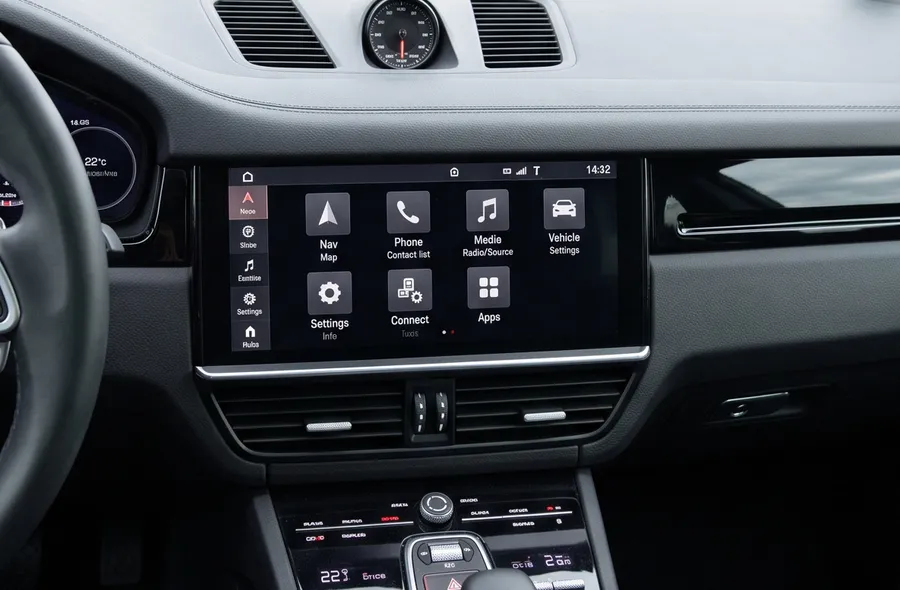
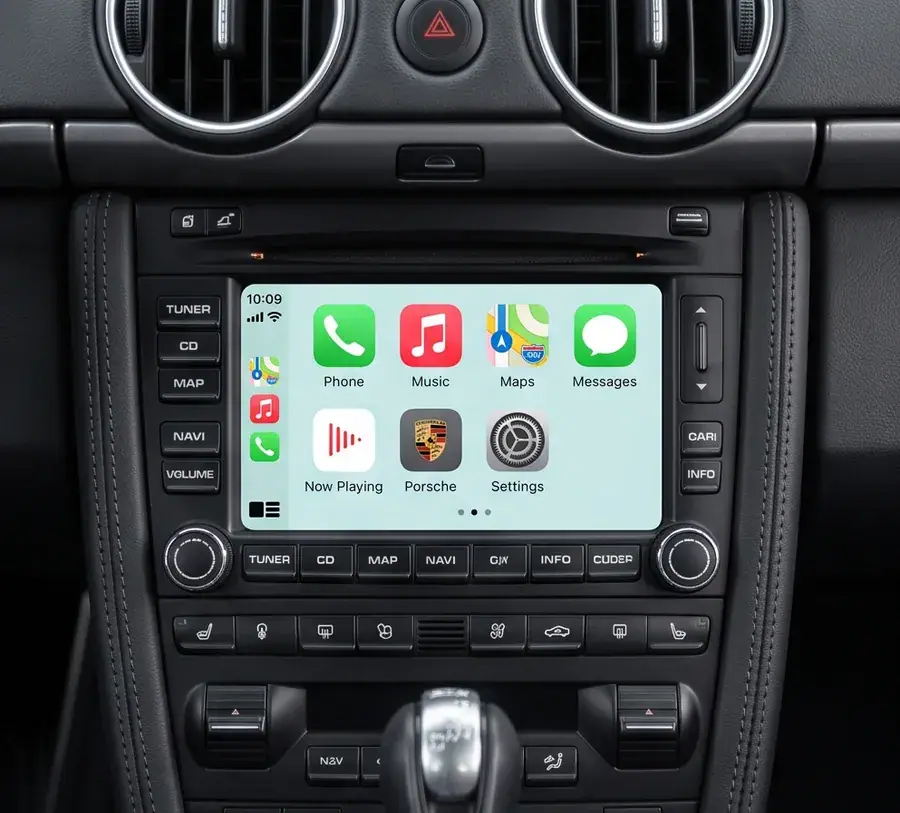
Which Porsche head unit generations a buyer has to stock
Porsche used three distinct infotainment platforms across the model years this category covers. The map below is what a distributor needs before a first purchase order; the vehicle fitment finder covers the wider range across more than 300 vehicle models & series.
| Head unit generation | Model years | Typical models | Decoder module |
|---|---|---|---|
| CDR 3.0 | 2010–2016 | Boxster, Cayman, 911 | CDR 3.0 module |
| PCM 3.1 | 2010–2016 | Cayenne, Panamera, Macan, 911 | PCM 3.1 module |
| PCM 4.0 / 5.0 | 2017–2024 | Boxster, Cayman, 911, Macan, Panamera | PCM 4.0 / 5.0 module |
Model year alone is not a usable identifier. Porsche phased these units in over overlapping years, so the same build year can appear with CDR 3.0 in one car and PCM 3.1 in the next. The head unit generation is what decides the module, and it is read from the map version or the menu layout on the screen rather than from the VIN or the build year.
Three separate builds also mean three separate stock lines. They are not interchangeable, they do not share a harness, and a distributor carrying all three is carrying three inventory positions rather than one. The full breakdown per platform is on the Porsche decoder page, which lists what each module covers and where the harness connects.
What the module actually does on a Porsche
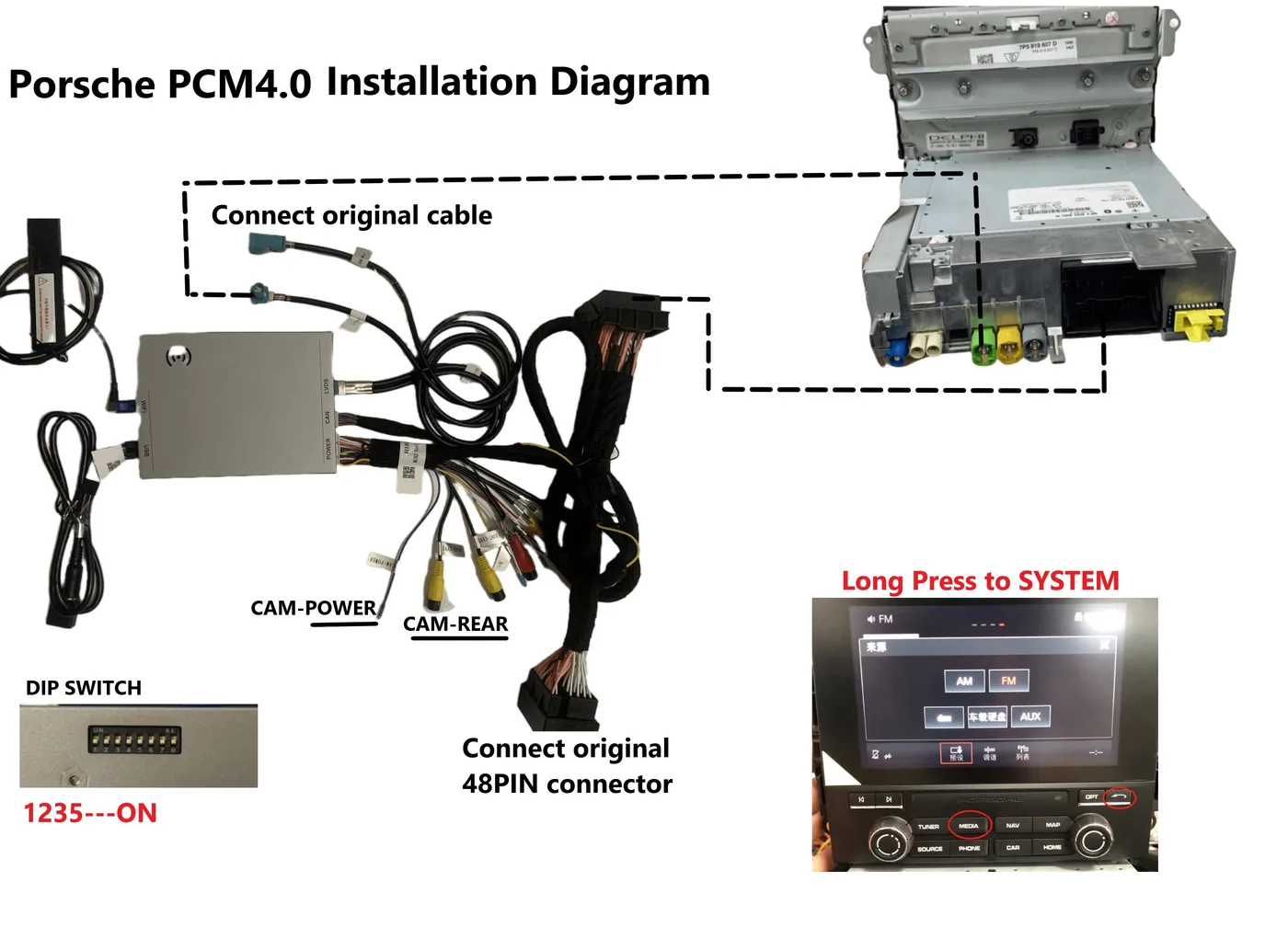
The module sits behind the head unit and joins the factory connector. The original LVDS cable is moved from the factory display to the module, and the module passes the video and digital audio stream back to the same panel. Nothing on the dashboard is removed or replaced: the screen, the centre console controller, the steering wheel buttons and the reversing camera all remain the ones the car left the factory with.
On PCM 4.0 the connection is made at the 48-pin connector behind the head unit, with a separate lead for reverse detection and one for the camera feed. The setting that matters is entered by long-pressing the source button on the factory panel, which is why no dashboard trim has to be modified to reach it. The DIP switch on the module body carries the per-generation configuration, so the same hardware ships with different switch positions depending on which platform it is fitted to.
Why the platform mix decides the return rate
Most warranty claims in this product line are not hardware failures. They are configuration mistakes: a module set for PCM 3.1 fitted into a PCM 4.0 car, or a harness packed into the wrong carton. Both produce a black screen and both look identical to the customer, which means both arrive back at the distributor as a defective unit.
Three design choices reduce that. The system is Linux embedded rather than Android, so there is no application cache to accumulate and no background process to slow the interface down after months of use. The chipset is an automotive-grade part from Taiwanese supplier Sunplus, which is the same class of silicon the factory head units themselves run on. And the wireless link is dual-band 5GHz WiFi, combining 2.4GHz and 5GHz so the connection holds on a multi-level concrete car park where a single-band unit drops.
For a distributor, that combination matters commercially. A stable unit that stays in a car for years does not come back, and a Linux-based module that does not degrade over time keeps the same fault rate in year three as in week one.
What changes between the three generations in practice
Beyond the connector, the generations differ in ways a distributor can verify on a bench before a customer ever sees the car. CDR 3.0 carries the smallest of the three panels and routes through a single physical button bank around the display, so the harness has to reach a tight centre-console opening and the button circuits are joined at that block. PCM 3.1 units vary more between model years, and the module has to be set to match the specific car rather than the generation alone, because Cayenne and Panamera versions of the same head unit generation are not always wired the same way.
PCM 4.0 and 5.0 are the simplest install of the three: a 48-pin connector behind the head unit, a camera lead, and a reverse-detection lead that tells the module when to switch the display. The setting is confirmed by long-pressing the source button on the factory panel, and the module's DIP switch carries the generation configuration, which means a distributor can verify the correct configuration at the bench in a few minutes rather than learning it on a customer's driveway.
The practical consequence for a mixed first order is that each platform should be bench-checked against a head unit of its own generation before it ships. A PCM4 setting tested against a CDR 3.0 console will pass a power-on check and fail on video, which is precisely the failure mode that generates an avoidable return. The OEM and ODM programme page covers how private label and full firmware programmes affect the units being tested.
How a wholesale order is structured
Porsche demand is rarely a single-platform order. A European distributor covering both the 2010–2016 and 2017–2024 cohorts needs mixed stock, which is what makes the 10-piece entry tier useful here rather than a token minimum.
| Term | Standard structure | What it means for a Porsche order |
|---|---|---|
| Stock MOQ | 10 pcs, mixed models allowed | Covers CDR 3.0, PCM 3.1 and PCM 4.0 in one first shipment |
| Private label | 500 pcs per model | Logo on device, packaging, manual and warranty card |
| Full OEM | 1000 pcs per model | Custom firmware branch, boot logo, language packs |
| Sample lead time | 7–15 days, DHL/FedEx express | Sample cost is deductible from the first large-volume order |
| Volume lead time | 15–20 days for 500+ pcs | Artwork approval time included for private label |
| Payment | 30% deposit, 70% against B/L copy | T/T; PayPal accepted for samples and small orders |
| Quotation | Within 12 hours | Quotation names the generations covered, not just the unit price |
A quotation that does not name which head unit generations it covers is not comparable to another that does. The lead time starts from cleared payment rather than from the enquiry, which matters when a delivery window has already been promised to a customer. The wholesale programme page sets out the same structure in full, and the buyer's guide to the retrofit market covers how to size the category before committing.
Reference points for the generations
The compatibility requirements Apple publishes for CarPlay are the baseline every retrofit has to meet, and they are documented on the Apple CarPlay support page. Porsche's own model line-up is the second reference point when a distributor needs to confirm which platform a specific car shipped with, and the head unit itself remains the only reliable source — the specification sheets describe model availability, not the unit fitted to an individual car.
Frequently asked questions
Can one module cover all three Porsche head unit generations?
No. CDR 3.0, PCM 3.1 and PCM 4.0/5.0 are separate hardware platforms with separate harnesses and separate configuration. A single shipment can contain all three, but each one has to be specified by generation.
Does the retrofit keep the original Porsche screen?
Yes. The factory panel stays in the car and keeps its original resolution and size. The module sits behind the head unit and feeds the existing display, so nothing on the dashboard is swapped out.
Are the steering wheel and console controller still usable?
Yes. The button circuits are joined rather than cut, so the original steering wheel controls and the centre console rotary controller continue to operate the car as delivered, and the factory reversing camera keeps its automatic behaviour.
How is the correct generation confirmed before ordering?
Read the map version or the menu layout on the factory screen. Build year and trim level are both unreliable because the generations overlap. Where a distributor cannot confirm it, a photograph of the head unit is enough to settle the question before any units are shipped.
What does a first order look like for a new distributor?
Stock starts at 10 pieces with mixed models allowed in a single shipment, which is the practical way to test which of the three generations actually moves volume in a given market. Private label runs start at 500 pieces per model and Full OEM firmware programmes at 1000 pieces per model.
Send the target vehicle list with the head unit generation for each entry and the quantities being planned. A quotation comes back within 12 hours with module fitment, MOQ tiers, lead times and the payment terms that apply — start with the inquiry form and the Porsche platforms in your market.
Need the Module From This Guide?
Wholesale from 10 pcs (mixed models OK), samples in 7–15 days (DHL/FedEx express). Fitment confirmation within 12 hours.
Request Pricing Check FitmentRelated Resources
- CarPlay Collections — browse by marque family (German, British, Italian, Japanese, luxury)
- CarPlay Fitment Checker — find the module for your car
- CarPlay Decoder FAQ — 34 answers on compatibility, install and wholesale
- CarPlay Retrofit Buying Guide — platform identification & selection
- Wholesale, Private Label & OEM Program — MOQ, lead times, payment terms
- All installation & technical guides