Published 2026-10-06 · DIYCarPlay Engineering Team
CarPlay Module OEM and ODM: What Full Customisation Actually Changes in the Product
A carplay module OEM programme is the deepest level of the retrofit supply chain, and the difference between a firmware change and a hardware revision decides whether such a programme is worth running at all. This guide sets out what changes at each level, what a distributor should verify before committing inventory, and where custom orders most often go wrong.
The terminology is used loosely across this industry. Some suppliers treat "OEM" as a synonym for printing a customer logo on retail packaging, which is private label work rather than product development. A genuine OEM programme changes the product itself: the boot sequence, the interface language set, the behaviour on vehicle wake-up, and in some cases the board itself. Buyers who do not separate those two meanings end up paying for a packaging job while believing they have secured a product advantage.
What separates stock, private label and Full OEM
Three levels exist, and the practical difference between them is the degree of change to the product and the commitment required to trigger it. The wholesale programme page publishes all three thresholds rather than a single "from" figure that moves after enquiry.
| Level | What actually changes | Commitment | Lead time |
|---|---|---|---|
| Stock modules | Nothing. Existing firmware, existing packaging | From 10 pcs, mixed models allowed in one order | Ships in 7–15 days |
| Private label | Logo on device and packaging, manual, warranty card | 500 pcs per model | 15–20 days |
| Full OEM | Firmware branch plus hardware revision where required | 1000 pcs per model | Quoted per programme |
Most distributors who are new to the category start at 10 pcs across several models. That entry point is deliberately cheap: it establishes which head unit generations actually sell in a given market before any tooling or firmware work is funded. A distributor who commits 1000 units per model on the first order is betting on demand that has not been measured yet.
What Full OEM firmware customisation actually changes
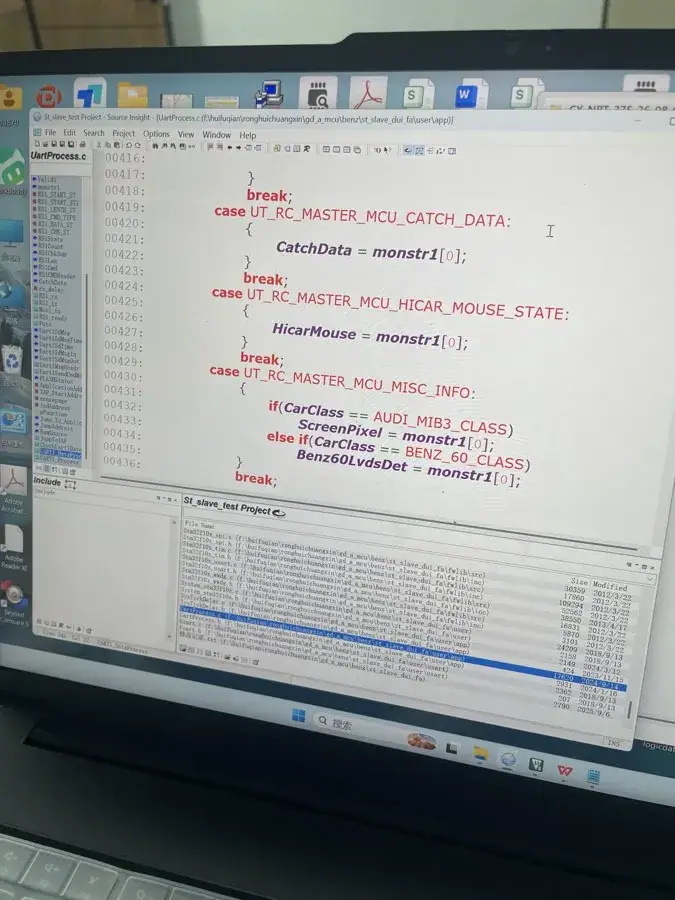
Firmware customisation is the part of an OEM programme that carries the lowest technical risk and the shortest lead time. It changes software behaviour without touching the board, which means no tooling, no new tooling cost, and no hardware re-qualification.
The changes that distributors actually ask for tend to be specific and unglamorous:
- Boot behaviour. Whether the module presents CarPlay directly on ignition or returns to the factory system first. This is a preference issue driven by how a particular vehicle's drivers use the car.
- Interface language set. A distributor selling into several markets needs the interface in the languages those markets use, rather than the factory default set.
- Pairing flow. The on-screen steps a driver follows on first connection, including how the module announces itself on the factory display.
- Update policy. Whether a distributor's branded units update over the air, and who is responsible for the firmware version running in the field.
None of these require new silicon. They are configuration branches held on the same automotive-grade platform, and the module still runs a fixed embedded Linux system with no application layer — which is what keeps a branded unit behaving identically to a stock unit after a year of daily use.
Hardware revision is a different commitment entirely
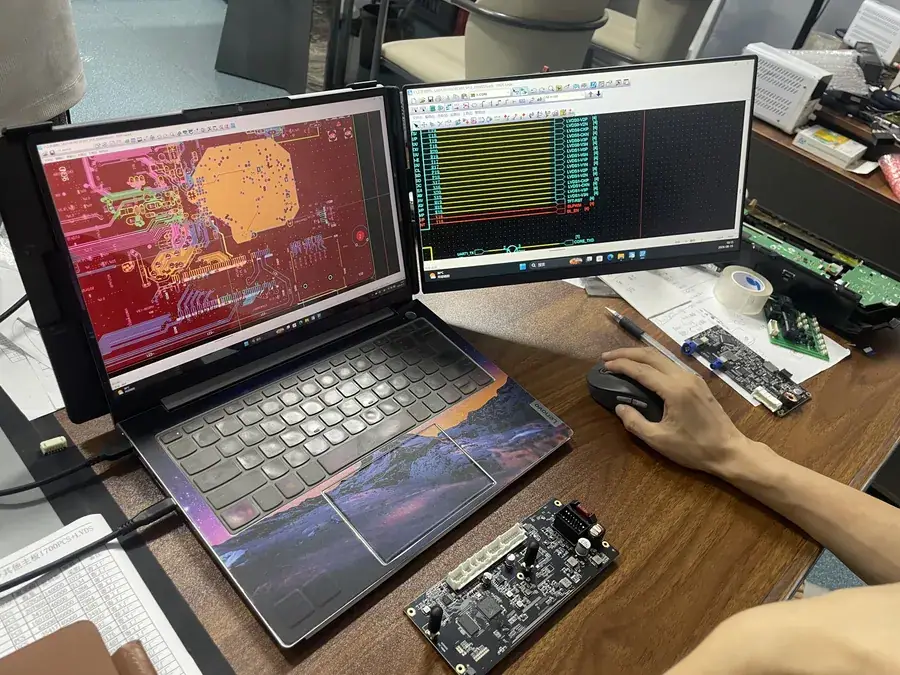
Where a distributor asks for something the existing board cannot do — a different video output, a connector change, an added interface — that becomes a hardware revision rather than a firmware branch, and the commercial character of the programme changes with it.
A hardware revision carries costs that a firmware change does not: new tooling, a fresh build and burn-in cycle, and a re-verification of the electrical behaviour on the vehicle bus. It also changes the lead time from a quoted number into a scheduled one, and it makes the 1000 pcs per model threshold a practical floor rather than a commercial preference, because the fixed cost of the revision has to be spread across enough units to be sensible.
The honest test a distributor can apply is simple: does the requested change need a new board, or only new code? Requests that stay in software can be quoted and delivered inside a normal production window. Requests that alter the board should be scoped as an engineering project with its own timeline, quoted separately, and validated on a sample before volume production begins.
What gets verified before any custom programme ships
Customisation does not change what a unit has to survive. It is still fitted behind a factory head unit, on a vehicle bus, in a car that is driven daily in variable conditions. The verification sequence that applies to a stock module applies unchanged to an OEM one.
The checks that catch the most problems are specific rather than generic:
- CAN wake-up — if the module does not wake with the ignition, the customer gets a dead factory screen.
- Reverse trigger — a module that back-feeds the video path at the wrong moment damages the picture the driver expects when reversing.
- Display timing — driven at the factory timing for that specific head unit generation, not at a generic setting.
- Controller protocol — the rotary controller or touch interface exercised through the menu, including return to the factory system.
- Audio routing — two-way audio confirmed, since a microphone path that only works in one direction produces echo complaints rather than obvious failures.
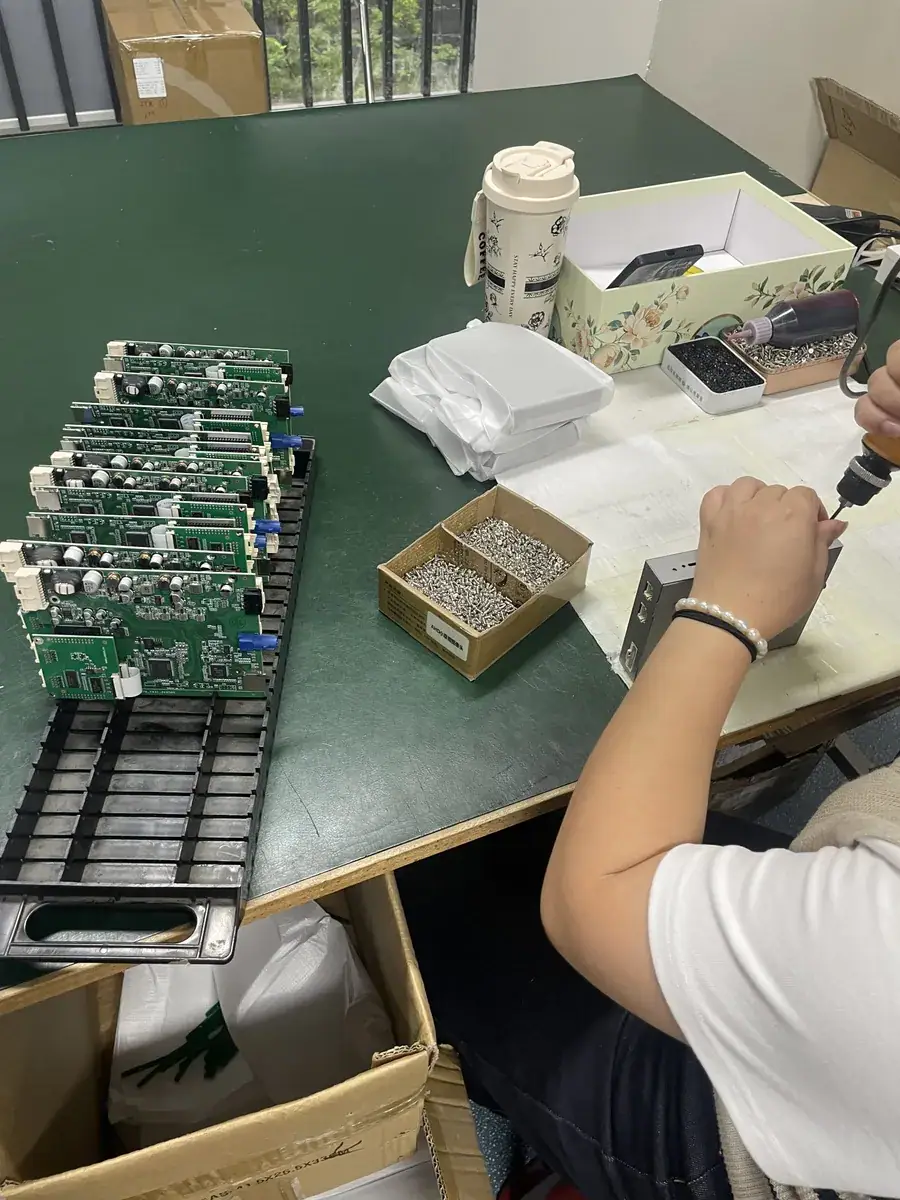
Each unit is bench-tested against a real head unit of the target generation before packing. A custom programme does not get a reduced test regime because the order is larger.
Why the platform underneath limits how much customisation is sensible
The reason a bespoke firmware branch is practical at all is that the operating system underneath is fixed. The modules run an embedded Linux configuration — a purpose-built system with no application layer and no cache accumulation of the kind an Android-based head unit develops over time.
That matters commercially, not just technically. A distributor selling an OEM-branded unit is making a support promise to its customers, and the failure mode that generates support tickets is a unit that slows down over months. On a fixed embedded system the behaviour after a year is close to the behaviour on day one, so the aftersales load stays proportional to the number of units sold rather than growing with the age of the fleet.
Smoothness comes from the silicon rather than from allocated system resources, because the Linux layer is fixed. The modules use an automotive-grade chipset from Sunplus, a Taiwanese supplier building for sustained in-vehicle operation across temperature and voltage ranges. The same reasoning applies to the wireless link: phone mirroring is a continuous video transfer, so the modules support dual-band WiFi using both 2.4GHz and 5GHz, with the 5GHz band carrying the stream where conditions allow.
This is also why premium factory infotainment systems stay fluid after years of service — their computers are fundamentally Linux machines. Keeping the original OEM screen rather than fitting a replacement panel is what allows the same operating system class to remain in charge of the display. Apple's CarPlay support documentation sets out the connection requirements a module has to satisfy, and the CarPlay entry on Wikipedia covers the platform history relevant to retrofit work.
How to decide whether a custom programme is warranted
A distributor who has not yet established which head unit generations sell in their market should not commission an OEM branch. The fitment data is not obvious from the outside, because head units were phased in mid-model-year across overlapping platforms — the Mercedes range alone spans NTG1 through NTG5.5 and MBUX, each needing its own module. The full module catalogue lists what exists today; the fitment finder maps a specific vehicle to it.
The order of operations that tends to work: establish demand at 10 pcs with mixed models, identify the two or three generations that actually move volume, then decide whether the customisation requested is a firmware branch or a hardware revision. Only the second of those justifies committing 1000 units per model.
Payment terms follow the same structure. Stock and sample orders run on 30% deposit with the 70% balance due before shipment by T/T, with PayPal and Trade Assurance accepted for samples and smaller quantities. A custom programme adds a milestone rather than a new payment method: the deposit covers engineering and firmware work, and the balance falls due once the agreed sample has been verified and production is released.
Common questions
What is the difference between private label and Full OEM?
Private label changes how the product presents: logo on the device, packaging, manual and warranty card, starting at 500 pcs per model. Full OEM changes the product itself — firmware branch, and hardware revision where the request requires it — starting at 1000 pcs per model.
Is a Full OEM programme suitable for a first order?
Usually not. The fixed cost of a hardware revision needs to be spread across enough units to be sensible, which is why the threshold is 1000 pcs per model rather than a stock-level figure. Most distributors establish demand at 10 pcs with mixed models first.
Can custom firmware be updated after delivery?
Modules ship with the current firmware for their head unit generation, and a branded programme can have its update policy defined as part of the specification. The policy is agreed before production rather than after.
Does a custom programme lengthen lead time?
A firmware branch stays inside a normal production window. A hardware revision is quoted and scheduled as a separate engineering item, because tooling and re-verification cannot be compressed into a standard lead time.
Is the factory screen still retained after customisation?
Yes. Customisation changes software behaviour behind the head unit, not the display itself. The original factory screen, menu, steering-wheel controls and reversing camera continue to work, which is the basis of the plug-and-play retrofit this product category depends on.
Request a quotation
Send the target vehicle list, the head unit generations you need, quantities and your target market through the inquiry form. A quotation follows within 12 hours, stating which requests are firmware changes, which require a hardware revision, and the volume tier each one falls into.
Need the Module From This Guide?
Wholesale from 10 pcs (mixed models OK), samples in 7–15 days (DHL/FedEx express). Fitment confirmation within 12 hours.
Request Pricing Check FitmentRelated Resources
- CarPlay Collections — browse by marque family (German, British, Italian, Japanese, luxury)
- CarPlay Fitment Checker — find the module for your car
- CarPlay Decoder FAQ — 34 answers on compatibility, install and wholesale
- CarPlay Retrofit Buying Guide — platform identification & selection
- Wholesale, Private Label & OEM Program — MOQ, lead times, payment terms
- All installation & technical guides