Published 2026-10-26 · DIYCarPlay Engineering Team · 16 min read
The Car That Borrowed Its Electronics: Sourcing Rolls-Royce Modules for the 2006–2018 Phantom, Ghost and Wraith
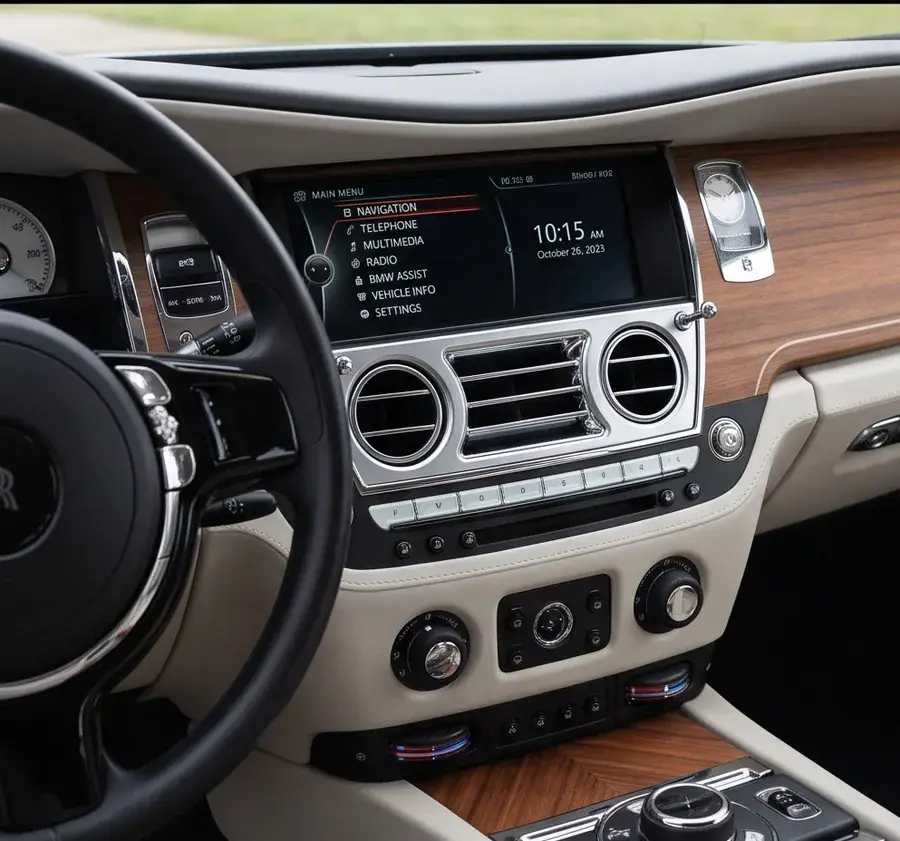
Rolls-Royce is the only marque in the catalogue whose factory infotainment was developed by a different car manufacturer, and that fact decides the whole commercial question on this brand. Rolls-Royce Motor Cars has been a wholly-owned subsidiary of the BMW Group since 2003, and the cars built under that ownership carry a BMW-derived iDrive head unit rather than a Rolls-Royce-designed one. BMW acquired the brand and naming rights for Rolls-Royce cars from Rolls-Royce plc in July 1998, and took on full responsibility for the marque at the start of 2003 when the Goodwood plant opened with the new Phantom. The Ghost, Wraith and Dawn that followed carried the same architecture forward. The lineage shows on the dashboard itself: the factory iDrive menu on a Phantom still lists BMW Assist among its entries.
That inheritance creates a sourcing problem no other brand in this catalogue presents. A buyer who assumes that a Rolls-Royce head unit is a Rolls-Royce head unit will quote the wrong platform code, because the display hardware in a 2009 Phantom is an iDrive generation that arrived in a different vehicle with a different connector and a different video timing. The modules that cover this marque are named for what they plug into, not for what they are fitted to: RO-CIC, RO-NBT and RO-EVO cover a BMW-derived head unit across three consecutive iDrive generations, and each one terminates into a harness built for the Rolls-Royce dashboard rather than the BMW panel it shares its electronics with.
There is a second divider on this brand, and it falls inside a model year rather than at the edge of one. Apple's published list of CarPlay-compatible vehicles places every Rolls-Royce entry from the 2020 model year onward — Phantom, Ghost, Wraith, Cullinan, Dawn and Spectre all appear from 2020 or later, with no 2019 entry for any of them. The cars covered by these three platform codes run from 2006 to 2018. Between those two blocks sits a gap in which the factory system changes over from BMW-derived hardware to something that has native phone integration, and the year a customer quotes is not enough to work out which side of that line the car is on.
BMW's own corporate history records the arrangement that produced the first half of that gap: the marque was held entirely by Volkswagen until the end of 2002, and BMW took on full responsibility for Rolls-Royce Motor Cars along with all rights, with the Goodwood plant scheduled to build new models from the start of 2003. The electronics came with the cars.
Why the platform code carries a different name on this marque
Every other marque in this catalogue has its own platform codes, named after the head unit generation and the vehicle it fits. Rolls-Royce is the exception, and the reason is in the corporate history rather than in the electronics. When a distributor receives an enquiry for a CarPlay module for a Ghost, the first question that has to be answered is not which model it is. It is which decade the car was built in, because a 2010 Ghost and a 2017 Ghost share a badge and share a body shape but sit on different iDrive generations.
The three codes that cover this marque are laid out against those generations, and they run in sequence rather than in parallel:
| Platform code | Head unit generation | Models | Years | Notes for the buyer |
|---|---|---|---|---|
| RO-CIC | BMW CIC based | Phantom | 2006–2012 | Earliest iDrive generation in the range |
| RO-NBT | BMW NBT based | Phantom / Ghost / Wraith | 2009–2015 | Covers the first years of the Ghost and the Wraith |
| RO-EVO | BMW EVO based | Phantom / Cullinan / Spofec | 2015–2018 | Extends to the first Cullinan and to the Spofec-converted cars |
The Rolls-Royce fitment page carries the same three codes against the models each one covers, and the vehicle fitment finder walks the full list in three steps. Coverage across the whole catalogue spans 300+ vehicle models and series across model years 2006 to 2025, but on this marque the useful detail is narrower than that figure suggests: three codes, one marque, and a nameplate set that starts with the Phantom and widens as the range grows.
Two features of that table catch out buyers who order from the badge. First, the model names overlap between codes rather than dividing cleanly — the Phantom appears in all three rows, because a single model name spans a decade in which the electronics moved twice. Second, the introduction of the Ghost in 2010 and the Cullinan in 2018 both land inside code ranges, so a nameplate tells a buyer very little about the generation it runs on. The workshop identifies the car from the head unit, and the buyer identifies the code from the head unit.
The 2020 line is the one that decides whether a module is needed
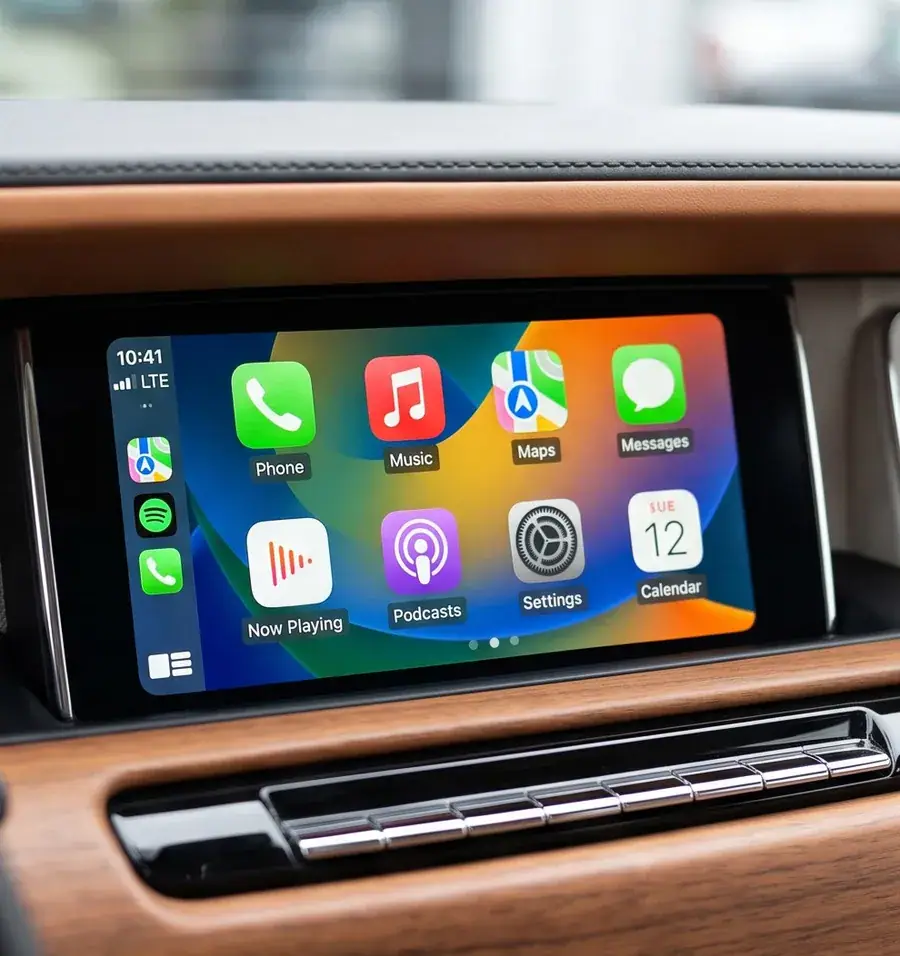
Apple publishes the list of vehicles that support CarPlay, and on that list every Rolls-Royce nameplate appears from the 2020 model year onward: Phantom from 2020, Ghost from 2020, Wraith from 2020, Cullinan from 2020, Dawn from 2020 and Spectre from 2023. There is no 2019 entry for any of them. Apple's published list of CarPlay-compatible vehicles is the reference to check when a customer asks whether a car already carries phone integration, and for this marque it draws a single clean line at 2020. The same reference explains how a phone connects to a car that does support CarPlay, including the wireless pairing sequence, in its CarPlay support page.
That line matters commercially because the two sides of it need opposite products. A 2020 or later Phantom arrives with phone integration built into the dashboard, and a module fitted to it adds nothing the customer did not already have. A car built between 2006 and 2018 arrives with a BMW-derived iDrive unit, and the factory menus listed above — navigation, telephone, multimedia, radio, vehicle information — are the menu of a system that was never given CarPlay. On those cars the retrofit module is not an upgrade. It is the only route to the interface the customer has seen in every other car they own.
The gap between the two is narrow and it is where the returns come from. A customer who describes a 2019 Phantom and a 2020 Phantom with the same words sends an enquiry that a badge-based catalogue cannot resolve. The one-year spread either side of 2020 is also where the used-car market concentrates this marque, because the early-2020 cars entered the market as lease returns and off-lease stock at the same time as the last of the pre-CarPlay cars.
What the installation actually involves
The claim most often made loosely in this industry is that a retrofit is plug and play, and on this marque the phrase needs a precise definition, because two different products share it. One category serves cars that already carry wired CarPlay in the factory head unit and adds wireless capability over a USB connection. The other serves cars whose factory infotainment has no CarPlay at all, where the module has to interface with the vehicle's own bus and video lines behind the dashboard. Every Rolls-Royce covered by these three codes belongs to the second category.
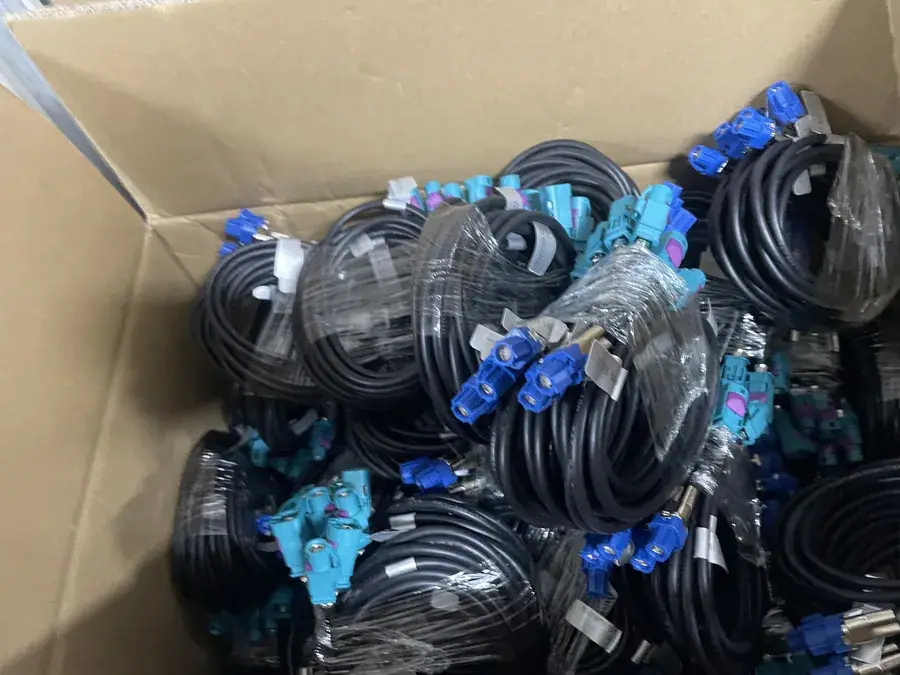
For that category the correct claim is narrow and verifiable: the module connects to the factory harness behind the head unit, the factory screen stays in the dashboard, the original menu remains reachable, the steering-wheel controls and the factory reversing camera continue to work, and nothing on the car is cut or replaced. The way to check that a supplier means the same thing is to ask which diagnostic or coding step, if any, is required after installation. For a non-coding retrofit the answer is none, and the answer for a Rolls-Royce should also be none, because the factory iDrive menu has to remain selectable after the module is fitted.
The trim specification on this marque makes that last point more concrete. The menu photographed above lists navigation, telephone, multimedia, radio, vehicle information and settings as separate entries, each selected with the console controller, on a display that sits above the air vents rather than in the instrument binnacle. That is a BMW-derived layout and it stays a BMW-derived layout after the retrofit: the same entries, the same controller, the same display, with the CarPlay interface layered on top and the original menu one button away. A retrofit that removed the display or took the controller out of circuit would change what the car is, which is the opposite of what the product claims to do.
What holds the failure rate down on this marque
The failure rate in this category is decided on the test bench rather than in the customer's car. Each unit is powered up on a rig replicating the target head unit generation: the harness is seated, the module negotiates over the vehicle CAN bus, the display is driven at the factory video timing, and the iDrive controller is exercised through the menu. A unit that does not complete that sequence does not get packed.
The specific checks that matter on a BMW-derived head unit are worth naming, because they are the ones a generic test rig does not cover. Reverse trigger has to be confirmed against the factory reversing camera, since the trigger line on these dashboards is shared with other body functions. Wake-up over the CAN bus has to be confirmed, because a module that does not wake with the ignition leaves the driver with a dead display. The display timing has to be held across temperature, because an iDrive panel driven slightly outside its native refresh window produces a picture that scrolls or tears rather than failing outright. And the audio path has to be routed in both directions, so that the factory amplifier and the factory speaker set remain the ones doing the work.
Two properties of the module itself do more for the return rate than any amount of testing. The operating system is Linux in an embedded configuration, which has no cache accumulation to degrade over the years a car stays in service — the failure mode that an Android-based head unit eventually develops does not apply to an embedded system that never grows a background task queue. And the processor is an automotive-grade chipset from Sunplus, so the smoothness comes from the hardware doing the work rather than from the operating system allocating more resources. On a car that spends its life parked in summer heat and started in winter cold, the choice of the processor is the difference between a unit that is still working in year six and one that comes back on warranty.
The wireless side matters more here than on a domestic hatchback, for a reason that is about the vehicle rather than the phone. A 5GHz dual-band connection, using 2.4GHz and 5GHz so the link can move to the cleaner band when conditions allow, keeps the picture stable in a multi-storey car park or an underground structure where the 2.4GHz band is congested by everything else in the building. The Wi-Fi Alliance sets out why that band split is worth having in a dual-band product: devices "can use the less crowded 5 GHz band for high performance applications, and the 2.4 GHz band for basic needs", and its Wi-Fi generational technology reference is the technical note behind that split. On a large saloon or an SUV with a long cabin run the difference is more visible than on a compact car, and it is a specification worth putting in writing rather than describing as fast.
What a first order looks like, and what it costs
The commercial terms on this marque are the same as on the rest of the catalogue, and they are quoted in writing rather than negotiated per enquiry. Stock starts at 10 pieces with mixed models allowed, which on this marque means a single opening order can carry more than one platform code without a separate platform commitment. Private label starts at 500 pieces per model, where the logo, the packaging and the manual all carry the distributor's own branding. Full OEM firmware customisation starts at 1000 pieces per model.
Samples ship in 7 to 15 days by DHL or FedEx express, and the sample cost is deducted from the first large-volume order. That deduction is the reason a two-variant sample is worth the courier cost on this marque: a customer with a Phantom and a Ghost needs both harness variants verified against the actual cars, because the pre-2020 and post-2020 cars are the ones that decide whether the module is wanted at all. Production lead time for orders of 500 pieces or more is 15 to 20 days. Payment is 30% deposit with the balance settled against a copy of the bill of lading, by T/T, with PayPal accepted for samples and small orders. Quotations come back within 12 hours of a complete enquiry, with the platform codes, the volume tier and the lead time named for every vehicle on the list.
Two commercial points are specific to a badge that carries another car's electronics. The first is that the platform code should be agreed before the quantity is, because a distributor who quotes a mixed-model order across Phantom, Ghost and Wraith needs to know which codes are being shipped to which nameplate, and that mapping is the workshop's photograph, not the badge. The second is that the pre-CarPlay cars are the ones worth chasing and the 2020-on cars are the ones worth leaving alone: sending a module to a customer whose 2021 Phantom already has phone integration is a return, and the sale that follows it is harder than the first one.
Identifying the head unit before the quotation
Three checks separate the three codes, and a workshop can run all of them in a few minutes with the trim panel still on.
- The menu layout. The iDrive-derived generation runs the main menu with navigation, telephone, multimedia, radio, vehicle information and settings listed as separate entries on a display driven by the console controller. That layout is what identifies the generation, and it is the frame a workshop should photograph.
- The centre stack itself. A display set into the dashboard above the air vents, with the rotary controller on the console, is the layout shown in the photograph. A buyer working from the model name alone cannot distinguish the three codes from this, because the Phantom appears under all three.
- The model year on the VIN plate. This is a cross-check, not a substitute. The nameplate does not identify the generation, because the Phantom appears under all three codes, and the 2020 line on Apple's list identifies when the factory system changes but not which code a pre-2020 car carries.
The photograph of the head unit is the item that resolves the order. A dealer who sends a picture of the centre stack and the menu screen can be quoted against the right code the same day, and a dealer who sends the model name and the year can be quoted against the wrong one just as quickly.
Frequently asked questions
Does a Rolls-Royce have CarPlay built in?
From the 2020 model year onward, yes — Phantom, Ghost, Wraith, Cullinan, Dawn and Spectre all appear on Apple's list of CarPlay-compatible vehicles from 2020 or later. Cars built between 2006 and 2018 carry a BMW-derived iDrive head unit with no phone integration, which is the group these modules cover.
Can I use the same module in a BMW and a Rolls-Royce?
No. The electronics are related but the harness is not interchangeable, because the display connector, the video timing and the dashboard termination differ between a BMW panel and a Rolls-Royce one. Each platform code on this marque is built for the Rolls-Royce dashboard it fits.
Which models does the RO-NBT code cover?
Phantom, Ghost and Wraith for model years 2009 to 2015. The RO-CIC code covers Phantom for 2006 to 2012, and the RO-EVO code covers Phantom, Cullinan and Spofec for 2015 to 2018.
Does the retrofit keep the original controls working?
Yes. The factory screen stays in the dashboard, the factory iDrive menu remains selectable, the steering-wheel controls and the rotary console controller stay in circuit, and the factory reversing camera continues to work. No wire is cut and no diagnostic coding step is required.
What is the minimum order and how long does it take?
Stock starts at 10 pieces with mixed models allowed, so several platform codes can be covered in one opening order. Samples ship in 7 to 15 days by DHL or FedEx, and production orders of 500 pieces or more take 15 to 20 days. Quotation is returned within 12 hours of a complete enquiry.
What are the payment terms?
30% deposit with the balance settled against a copy of the bill of lading, by T/T. PayPal is accepted for samples and small orders. The sample cost is deducted from the first large-volume order.
Send the vehicle list, not the badge
A quotation on this marque is only as good as the head unit information behind it. Send the model name, the model year and a photograph of the centre stack and the menu screen for each vehicle on the list, and the platform codes come back named against each one, with the volume tier and the lead time attached.
The fitment checker will confirm which platform codes cover a given vehicle, and the same platform code determines the harness that ships with it. Where a customer has a 2020 or later car, that answer will be that the factory system already handles it — which is a faster answer than a return.
Send the target vehicle list, the quantities and the target market through the inquiry form, and a quotation comes back within 12 hours with the platform codes, the volume tier and the lead time named for every vehicle on the list.
Need the Module From This Guide?
Wholesale from 10 pcs (mixed models OK), samples in 7–15 days (DHL/FedEx express). Fitment confirmation within 12 hours.
Request Pricing Check FitmentRelated Resources
- CarPlay Collections — browse by marque family (German, British, Italian, Japanese, luxury)
- CarPlay Fitment Checker — find the module for your car
- CarPlay Decoder FAQ — 34 answers on compatibility, install and wholesale
- CarPlay Retrofit Buying Guide — platform identification & selection
- Wholesale, Private Label & OEM Program — MOQ, lead times, payment terms
- All installation & technical guides