
Published 2026-10-15 · DIYCarPlay Engineering Team · 9 min read
Same Years, Two Head Units: Sourcing Toyota CarPlay Modules Across the TO-1 and TO-2 Lines
Toyota is the easiest and the hardest brand in the aftermarket CarPlay business. Easy because the parc is enormous — Land Cruiser, Prado, Hilux, RAV4, Highlander, Camry, Corolla, Sienna and Alphard all sold in volume across North America, Australia and the Gulf. Hard because Toyota ran two different factory infotainment platforms through the same model years, and both are physically similar in the dashboard. A decoder ordered for the wrong line simply does not wake. These modules plug into the vehicle's own wiring behind the factory head unit and present Apple CarPlay on the factory screen, leaving the original display, the original menus, the steering-wheel buttons and the factory reversing camera exactly where they were.
Why Toyota Is a Different Sourcing Decision
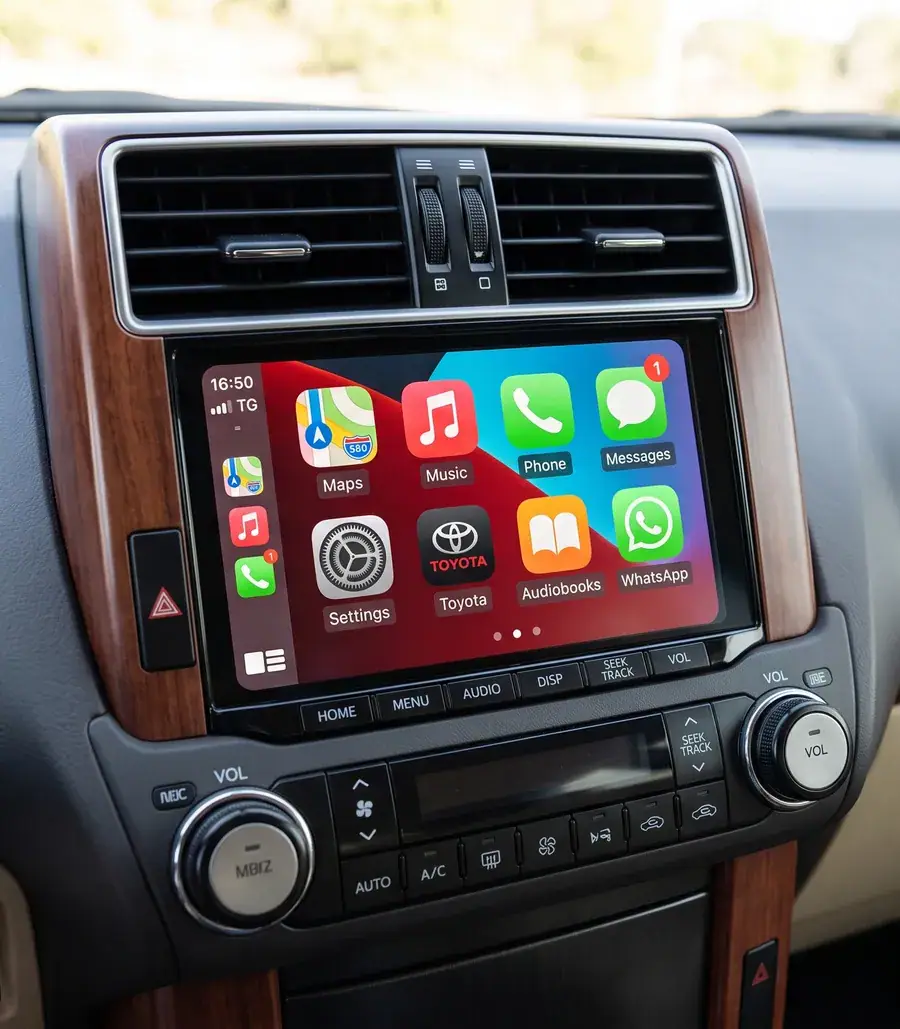
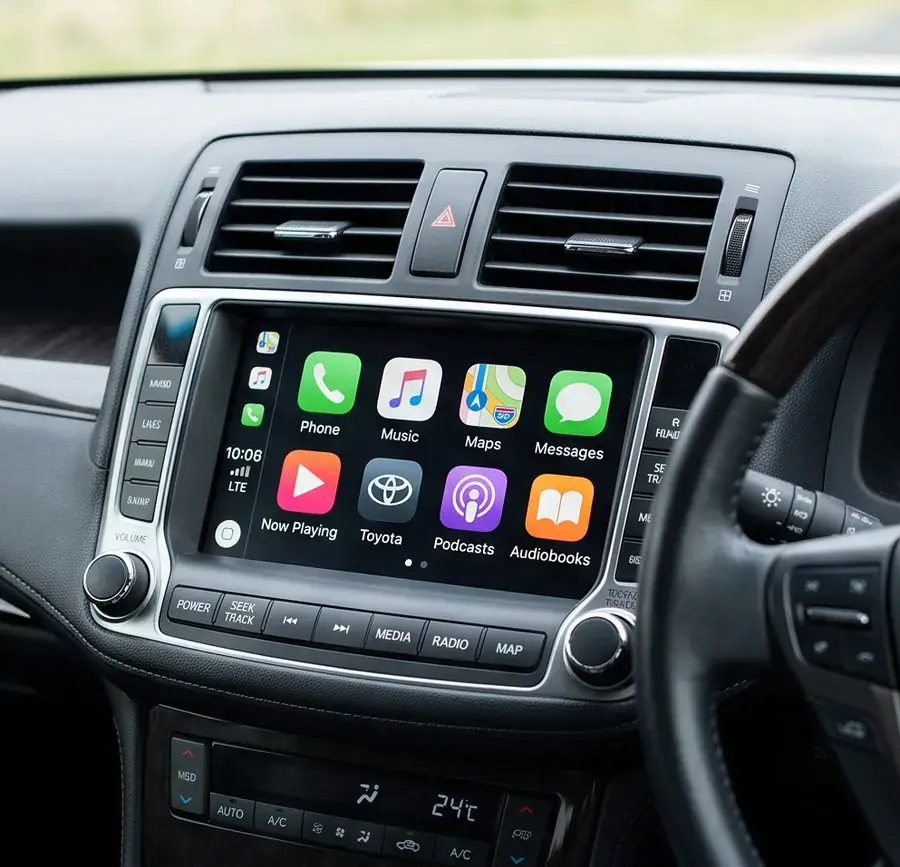
Most Japanese brands split their head units by model year, and a buyer who knows the year can order confidently. Toyota did not. The 2014–2018 generation of Toyota infotainment shipped in two parallel lines — an MPV/SUV line and a sedan/SUV line — and both were fitted inside overlapping model years. Land Cruiser 150, Prado, Hilux, Fortuner, Tundra and Sienna received one head unit; Corolla, Camry, RAV4, Highlander and Avalon received the other. The dashboard plastics, the screen size and the trim pattern can look near-identical between the two, especially on the MPV and SUV models where the surrounding switchgear is shared.
The practical consequence for a wholesaler is straightforward: the model year is not a usable ordering key for Toyota. What determines the correct module is the head unit generation itself, which shows up in the menu layout, the physical button row beneath the display and the harness connector at the rear. Ordering by year alone produces a batch where part of the shipment works and part of it comes straight back, and a returned head unit module costs far more than the module.
The Two Module Lines: TO-1 and TO-2
Two Toyota variants cover this generation. They are not interchangeable, and they differ in which body styles they were designed for.
| Module | Head unit line | Typical body styles | Model years | Rear connector |
|---|---|---|---|---|
| TO-1 | Toyota infotainment, MPV/SUV line | Land Cruiser 150, Prado, Hilux, Fortuner, Tundra, Sienna, Alphard | 2014–2018 | LVDS video out plus separate audio and reverse-trigger conductors |
| TO-2 | Toyota infotainment, sedan/SUV line | Camry, Corolla, RAV4, Highlander, Avalon, Crown | 2014–2018 | LVDS video out with a different pin layout and audio routing |
The full fitment list, including the head unit identifiers, sits on the Toyota decoder page. The two variants are listed separately as Toyota TO-1 and Toyota TO-2, each with its own fitment table, so a buyer can hand the parts desk one line instead of guessing across the whole brand.
Identifying the Head Unit Before Ordering
Three checks separate the lines reliably, and all three take under a minute on a vehicle in the yard.
Read the physical button row under the screen
The MPV/SUV line carries a horizontal row of hard keys — HOME, MENU, AUDIO, DISP, SEEK/TRACK and VOL — between the display and the climate panel, with two rotary knobs at the outer edges. The sedan/SUV line uses a narrower key set with POWER, SEEK/TRACK, MEDIA, RADIO and MAP, plus a vertical button column on the right of the display. A photograph of the centre stack is enough to tell them apart.
Check the menu layout on the factory screen
The MPV/SUV line opens on a tile-based home screen with large Radio, USB/AUX, Telephone, Vehicle Info, Setup and Settings tiles. The sedan/SUV line opens on a horizontal tab bar with HOME, AUDIO, PHONE, SETUP and INFO. The navigation map version shown under Settings is a further confirmation.
Look at the connector at the rear of the head unit
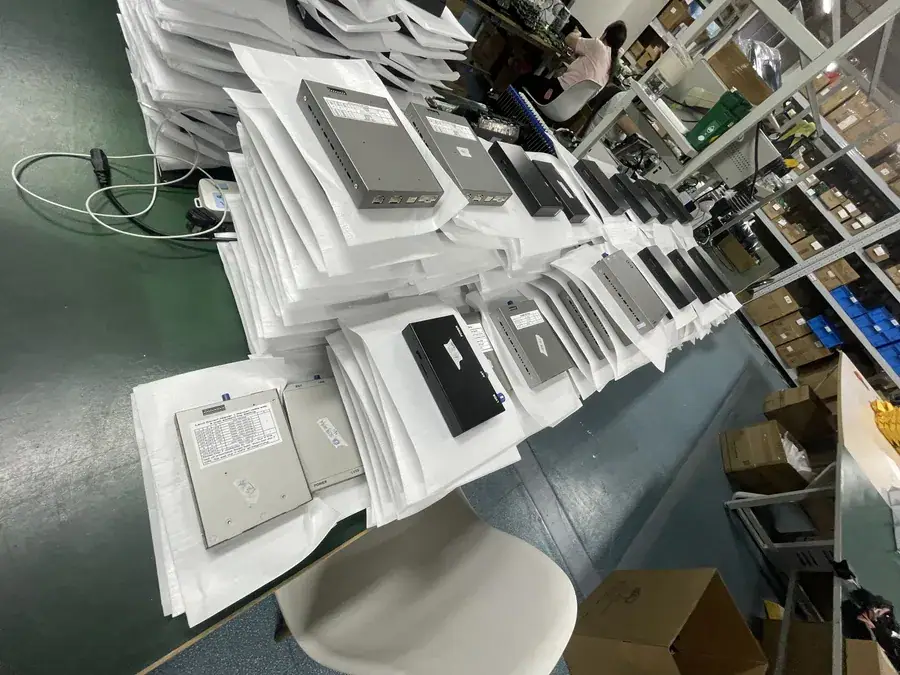
Once the trim is off, the two lines are unmistakable. Each pin carries a defined function — permanent supply, ignition sense, ground, LVDS video, audio out, reverse detection — and the pin count and ordering differ. This is the same check an installer performs at the bench, and doing it during incoming inspection catches a mis-packed carton long before it reaches a customer.
The vehicle fitment finder narrows this down from the model and year, and for mixed fleets the faster route is to send two or three dashboard photographs and get a written confirmation before the purchase order is placed.
What Plug-and-Play Means on These Vehicles
Installation is a harness behind the head unit. No screen is removed, no trim is cut, no wire is spliced. The display stays the factory panel, the factory menu is still reachable with the original key, and the climate panel, the multi-information display and the steering-wheel controls keep their original functions. On Toyota this also means the factory reversing camera continues to work, because the reverse trigger and camera supply conductors pass through unchanged.
For an importer or a chain of workshops, the commercial value is that the retrofit is reversible. A vehicle can be returned to stock in minutes, which matters for lease returns, warranty claims and resale.
Linux Embedded, Sunplus Chipset and the Return Rate
The modules run Linux in embedded form on an automotive-grade Sunplus chipset. Linux has no application cache that grows over months of use, so a unit installed in 2019 behaves the same way as one installed last month — no slowdowns, no cache-related freezes, no factory reset visits. That matters commercially: the fault categories that generate returns on this product line are almost never performance categories, and the biggest single cost in a small decoder business is reverse logistics on a working unit.
Because the unit reads the vehicle network rather than writing to it, the factory systems, the instrument cluster and the parking sensors are left alone. A Linux-based head unit from a factory that never has to negotiate an application ecosystem is also simpler to support: firmware updates ship without a support queue behind them, and the 12-month warranty period is spent on physical and connector faults instead of software troubleshooting.
Why 5GHz Dual-Band WiFi Matters on This parc
Toyota is sold heavily into markets where vehicles live in apartment car parks, underground structures and dense urban streets. In those environments 2.4GHz is crowded by nearby access points, door systems and other vehicles. Dual-band WiFi with 2.4GHz and 5GHz gives the module a cleaner band to fall back on, which is what holds the picture steady when the phone is on the other side of a concrete deck.
Both antennas must also be routed clear of metal. A pigtail tucked behind the head unit or pressed against the A-pillar loses more link stability than any amount of processing inside the module can recover. Installation guides for both variants are published, and the installation case library shows the routing used on real vehicles.
Commercial Terms for Wholesale Buyers
| Programme | Minimum quantity | What is included | Lead time |
|---|---|---|---|
| Stock wholesale | 10 pieces, mixed models allowed | Standard retail packaging, neutral carton options, harness and antennas in the box | 7–15 days by DHL or FedEx |
| Private label | 500 pieces per model | Buyer logo, custom packaging and printed manual | 15–20 days for 500+ pieces |
| Full OEM | 1000 pieces per model | Firmware customisation, boot logo, bespoke packaging | Quoted per programme |
Samples ship in 7–15 days and the sample cost is deductible from the first large-volume order. A production run of 500 pieces or more takes 15–20 days from confirmed artwork and payment. Payment is 30% deposit with the balance against a copy of the bill of lading, by T/T or PayPal. Quotations are returned within 12 hours, normally with a platform-by-platform breakdown so that both Toyota lines can be quoted in one pass.
Fitment across the whole catalogue covers 300+ vehicle models and series from 2006 to 2025, so a Toyota order can be consolidated with a mixed-vehicle programme rather than shipped separately per brand.
Questions Buyers Ask Before Ordering
Can the wrong Toyota variant be returned or exchanged?
Wrong-variant returns are the single most expensive mistake on this brand, because the module is undamaged and resellable but not to the buyer who sent it back. Identification by menu layout and button row takes about a minute, and written fitment confirmation is provided before any purchase order is processed.
Does the retrofit affect the factory reversing camera?
No. The reverse trigger and camera supply conductors pass through the harness unchanged, so the original camera and its guidelines behave exactly as before.
Can the original Toyota menu still be reached?
Yes. The factory key brings the original interface back at any time, so drivers are not locked out of the vehicle's own settings.
What operating system runs inside the module?
Linux in embedded form on an automotive-grade Sunplus chipset, with dual-band WiFi at 2.4GHz and 5GHz. It is not an Android unit, and the factory screen is never replaced.
Is a sample worth ordering before a container?
For Toyota, yes — the two-line problem is the reason. A sample of each variant taken to two vehicles settles the fitment question at the cost of one courier trip, and the cost comes off the first large-volume order.
What are the payment terms?
30% deposit, balance against a copy of the bill of lading, by T/T or PayPal. Private label at 500 pieces per model and Full OEM at 1000 pieces per model.
Start With the Fitment Question, Not the Price
Toyota volumes reward buyers who get the variant right the first time. Send the vehicle list and the dashboard photographs, confirm TO-1 versus TO-2 per unit, and the rest of the order is arithmetic. Toyota's own coverage of CarPlay-equipped models is documented on Apple's CarPlay support page, and the platform history behind both head units is documented on Wikipedia's Toyota entry — useful when a buyer's list mixes market-specific variants.
Send us your target vehicle list, quantities and target market through the inquiry form. You will receive a quotation within 12 hours, including volume tiers and lead times for the platforms you named.
Need the Module From This Guide?
Wholesale from 10 pcs (mixed models OK), samples in 7–15 days (DHL/FedEx express). Fitment confirmation within 12 hours.
Request Pricing Check FitmentRelated Resources
- CarPlay Collections — browse by marque family (German, British, Italian, Japanese, luxury)
- CarPlay Fitment Checker — find the module for your car
- CarPlay Decoder FAQ — 34 answers on compatibility, install and wholesale
- CarPlay Retrofit Buying Guide — platform identification & selection
- Wholesale, Private Label & OEM Program — MOQ, lead times, payment terms
- All installation & technical guides