
Published 2026-10-30 · DIYCarPlay Engineering Team · 13 min read
The Year on the Platform Label Is Not the Year on the Car: Reading Each Model Line's Own Fitment Window
Why a Platform Code Carries a Year Label That Does Not Fit Every Car Under It
A wholesale buyer reads a fitment sheet line by line. The line says a platform code, a model name and a year range, and the range looks like the answer to the question that actually matters: is this car covered or not. On most of the catalogue that range is exact. On a substantial part of it the range belongs to the platform, not to the car on the list.
The distinction is not cosmetic. A platform code is one hardware generation that the manufacturer carried across a spread of nameplates, and the code's own year label is the envelope that all of those nameplates were fitted into. Individual nameplates entered that platform at different dates and left it at different dates. A buyer who treats the envelope as a per-nameplate fitment will ship a module for a car that had already moved to the next generation, or refuse a module for a car that had not yet moved.
Across the full catalogue of 39 platform codes, 38 label a start year that is the earliest start of any model line beneath them. That is what makes the label an envelope rather than a coincidence. It is a reliable summary of the platform and an unreliable summary of any single car.
Where the Numbers Actually Sit
Every nameplate listed under a code carries its own year range. Measured against the label on the code above it, those ranges come in three shapes, and the shapes behave differently when an order is placed against them.
| Shape | What the line looks like | What it means for an order |
|---|---|---|
| Exact | The nameplate range equals the code range | The label can be quoted directly |
| Late start | The nameplate begins years after the code does | Cars built before that date belong to the previous code |
| Early end | The nameplate ends years before the code does | Cars built after that date belong to the next code |
| Narrow on both ends | The nameplate sits inside the code range on both sides | Both edges of the label are unusable for this line |
Of the 76 platform-and-model combinations in the catalogue, 38 carry a nameplate range that matches the label above them exactly, and 38 do not. Of those 38, nineteen start later than the label, seven end earlier, and twelve are narrow at both ends. Ten combinations differ from the label by three years or more, which is far enough to produce a returned unit rather than a disappointed customer.
The matching half is concentrated where the platform was built for one nameplate in the first place. Codes covering a single car line, which is most of the catalogue, have nothing to hide: the label and the line say the same thing.
The Case That Costs the Most: One Code, Three Nameplates, Three Different Windows
The BMW CIC code is labelled 2008 to 2014 and covers eleven nameplates. Not one of those eleven runs the full width of the label.
| Nameplate | Its own window | Label | Where it sits |
|---|---|---|---|
| 5 Series (E60/E61) | 2008–2009 | 2008–2014 | Ends five years early |
| 1 Series (E87) | 2008–2012 | 2008–2014 | Ends two years early |
| 3 Series (E90/E91/E92/E93) | 2009–2012 | 2008–2014 | Starts one year late, ends two years early |
| 6 Series (F12/F13) | 2010–2012 | 2008–2014 | Starts two years late, ends two years early |
| 7 Series (F01/F02) | 2011–2012 | 2008–2014 | Starts three years late, ends two years early |
| X3 (F25) | 2011–2013 | 2008–2014 | Starts three years late, ends one year early |
| X5 (E70) | 2009–2013 | 2008–2014 | Starts one year late, ends one year early |
| X6 (E71/E72) | 2009–2013 | 2008–2014 | Starts one year late, ends one year early |
| Z4 (E89) | 2009–2013 | 2008–2014 | Starts one year late, ends one year early |
| X1 (E84) | 2009–2014 | 2008–2014 | Starts one year late |
| MINI (R55/R56/R60) | 2008–2012 | 2008–2014 | Ends two years early |
A 2013 BMW 3 Series is not a CIC car. It falls in the CIC window on the label, but the 3 Series line itself left the platform at the end of 2012, and a 2013 example on the NBT platform took a different unit. A buyer working from the code label alone would ship a CIC to that car, and the customer would find a screen that does not respond to the loom behind it.
The 5 Series is the sharper edge of the same problem. Its CIC window closes after 2009 while the label runs to 2014, a gap of five years at the far end of the envelope. Anyone who buys a "CIC, 2008 to 2014" unit intending to cover a 5 Series E60 built in 2012 is ordering against a label that does not describe the car.
Why the Same Platform Splits Its Own Nameplates
The narrowing is not a data-entry error and it is not a marketing convenience. It reflects how a manufacturer actually retires a platform across a range of nameplates.
A single hardware generation is rarely retired across every car it was fitted into at the same moment. Model lines go out of production at different times, and each one hands over to the next generation on its own schedule. On a sedan that ends production in 2012 and an SUV that continues to 2014, the shared platform is carried for two extra years by the survivor, and the platform's label follows the survivor.
Two effects follow, and they push in opposite directions at the two ends of the label. Where a nameplate entered late, the label's early years describe an earlier generation that the same code never served. Where a nameplate ended early, the label's late years describe a car that had already moved on. A single flat range cannot describe both, which is why the platform code carries a label and the fitment sheet carries the lines.
On the Audi side the same shape appears on a different scale. The MMI 3G code is labelled 2009 to 2018 across five nameplates, and only one of them, the A4, A5, Q5, S4 and S5 line, runs the full width. The A1 and Q3 line starts in 2012, and the A6, A7 and Q7 line together with the A8 both start in 2012 and close in 2016, leaving two years of label on each end with no car behind it.
Where This Meets the Paperwork
Two other forces push in the same direction, and they compound the problem rather than cancel it out.
The first is that the same model name can sit under more than one platform code. There are 50 model names in the catalogue that appear under two or more codes, and for 10 of them the year windows of the codes are identical, which means the year genuinely cannot separate them and only the nameplate and the hardware will. For the other 40, the windows differ, and the difference is often a single year at the handover, which means the year looks like it settles the question and does not.
The second is the calendar itself. A model year is a sales label, and the cars sold under it were built across a span of months that crosses the point where a platform changed over. This is why a build plate on the door frame and the parts catalogue settle the code where the model year cannot.
Apple's own list of CarPlay-equipped vehicles is the reference for the other side of this: it names the model years that left the factory with CarPlay already fitted, and it is the document that tells a buyer which cars need a retrofit module at all. The Apple CarPlay support page and the list of available models between them cover the vehicles built after the factory systems gained the function, which is a different question from the one a platform code answers.
Read the fitment sheet as two layers and the two forces separate cleanly. The name layer answers which nameplate the car is. The year layer answers which generation that nameplate was on in that particular year. A buyer who quotes the platform code and the year range from the same line of the sheet is quoting the right thing for that nameplate, and the platform label is only ever the summary above it.
Turning the Sheet into an Order
For a buyer assembling a purchase list, the practical consequence is that the platform code and the model line are two separate fields on an order form, not one.
The model line carries the year range that decides the order. The platform code carries the hardware family that decides which unit ships, and it is confirmed against the car rather than derived from the year. When the two are read in the wrong order, the error is invisible on the order form: a line that says CIC, 2013, 3 Series looks entirely reasonable and describes a combination that was never built.
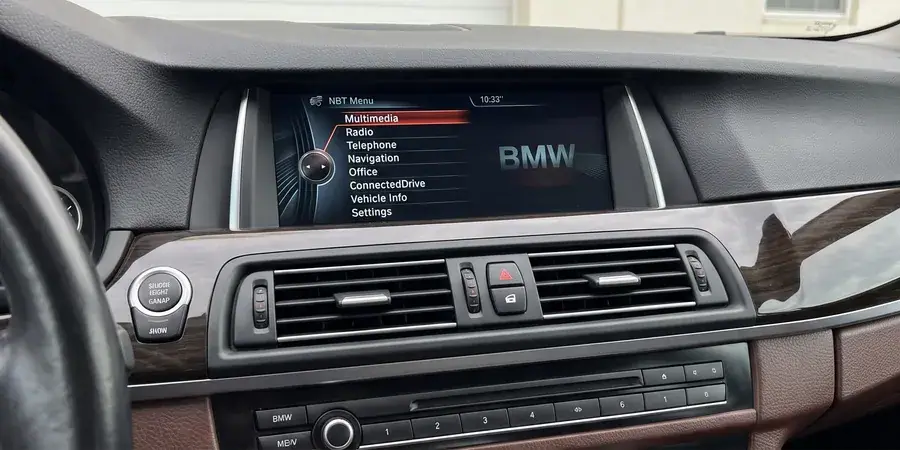
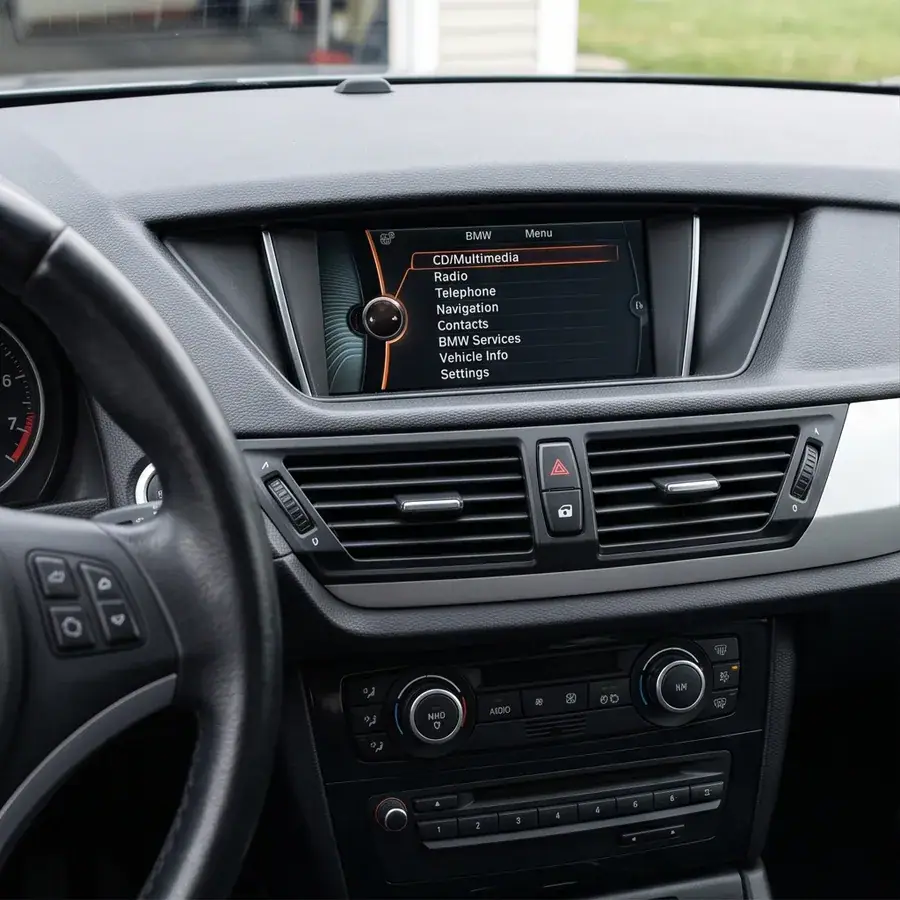
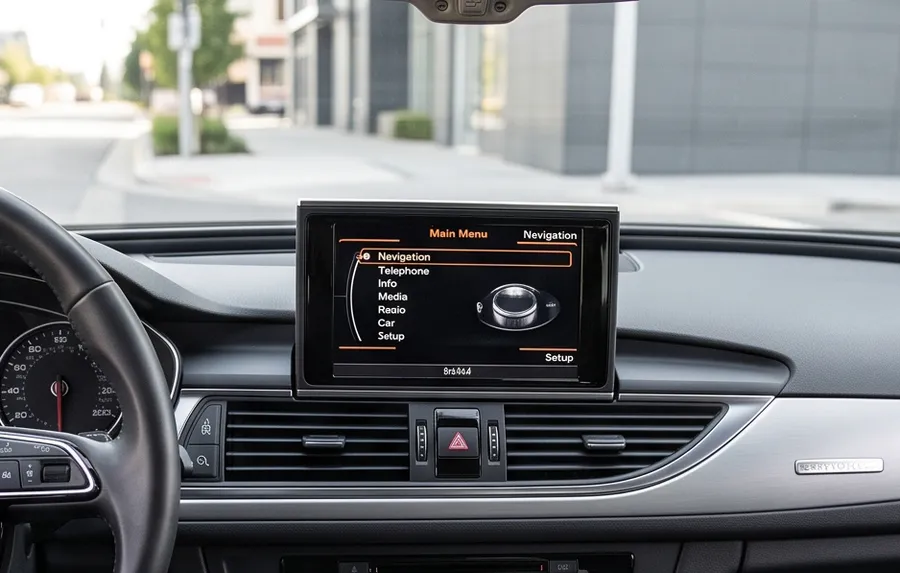
Three checks close that gap before goods leave the factory. The first is a line-by-line read of the fitment sheet, where each model name is matched against its own range rather than the code label above it. The second is confirmation of the platform on the car, by the version screen the head unit already shows or by the menu layout and the physical shape of the controller, so the code comes from the vehicle and not from the paperwork. The third is the build plate, which settles the production month for cars whose model year straddles a platform handover.
What the retrofit does to the car does not change with the platform generation. The factory screen stays in the dash, the factory head unit stays behind it, the steering wheel controls keep their functions and the reversing camera keeps working. The install is plug-and-play in the sense that matters here: the harness plugs into the factory connectors on the CAN bus and the head unit keeps its own menus, so no dashboard trim is cut and no screen is replaced. A screen photograph taken before the work is the reference that settles the code later. The generation decides which unit and which harness, not what the driver ends up holding.
Hardware selection follows the platform rather than the range. The unit runs a Linux embedded system on a Taiwanese Sunplus automotive-grade chip, which is what keeps a module that is fitted once and then left alone stable over the years it stays in the car. Wireless runs on 5GHz and 2.4GHz dual-band WiFi, so the picture arrives over the band that carries it in a multi-storey car park, and the factory display is fed from the original LVDS video path rather than replaced.
Ordering and the Terms Behind the Order
Stock starts at 10 pcs and models can be mixed in one order, which is what makes it possible to cover a short list that spans several platforms without holding stock on each. Private label runs at 500 pcs per model and full OEM firmware programmes at 1000 pcs per model. A sample takes 7 to 15 days by DHL or FedEx, and a private label run of 500 pcs or more takes 15 to 20 days. Quotations go back within 12 hours.
Payment is 30% deposit with the balance settled against a copy of the bill of lading by T/T. A sample fee is credited against the first large-volume order, which means the platform code on a sample does not have to be the final one for the sample cost to come back.
That last point is worth more than it sounds when the list crosses a platform handover. A sample shipped against a code that turns out to be wrong still carries the cost of the question, and the sample fee comes off the first large-volume order regardless. For a buyer whose list contains 50 model names that sit under more than one platform code, with 10 of them carrying identical year windows across those codes, that is the difference between a question answered in the workshop and a pallet shipped twice.
The coverage behind those terms runs across 300+ vehicle models and series for model years from 2006 to 2025, and every platform code in it carries its own line-level fitment rather than one shared year range.
Frequently Asked Questions
Is the platform code year range wrong on the fitment sheet?
No. The range on the code is correct for the platform and for the earliest and latest cars that carried it. The per-model lines below it are correct for the individual nameplates. The two describe different things, and a buyer who needs the second one has to read the line rather than the label.
Can two different codes cover the same model year?
Yes. There are 50 model names in the catalogue that appear under more than one platform code, and for 10 of them the codes cover identical year windows. The model year narrows the field in those cases without settling it.
How wide is the gap between a code label and a model line in practice?
Of the 76 platform-and-model combinations, 38 match the label exactly and 38 are narrower than it. Ten of those differ by three years or more. The widest gap among the bounded windows is the BMW 5 Series E60 and E61 line, which closes in 2009 under a code labelled to 2014.
Does the retrofit replace the factory screen?
No. The factory screen stays in the dash and the factory head unit stays behind it. Steering wheel controls, the original menus and the reversing camera all keep their functions. The platform generation decides which unit and which harness fit the car, not what the driver ends up using.
What is the fastest way to confirm the code before ordering?
A photograph of the factory screen while the version screen is open settles the platform directly from the vehicle. Where that is not possible, the build plate on the door frame fixes the production month, and the parts catalogue names the head unit part number. Both are covered in detail in the fitment and compatibility resources.
Next Step
The platform code is one field of an order, and the model line with its own year range is another. Send the list with both, or ask for the list to be checked line by line against the fitment sheet, and the platform code that comes back will be the one the car actually carries. For a vehicle-level check, use the vehicle fitment finder, then request a quotation with the codes and nameplates confirmed, and a reply follows within 12 hours.
Need the Module From This Guide?
Wholesale from 10 pcs (mixed models OK), samples in 7–15 days (DHL/FedEx express). Fitment confirmation within 12 hours.
Request Pricing Check FitmentRelated Resources
- CarPlay Collections — browse by marque family (German, British, Italian, Japanese, luxury)
- CarPlay Fitment Checker — find the module for your car
- CarPlay Decoder FAQ — 34 answers on compatibility, install and wholesale
- CarPlay Retrofit Buying Guide — platform identification & selection
- Wholesale, Private Label & OEM Program — MOQ, lead times, payment terms
- All installation & technical guides