
Published 2026-10-05 · DIYCarPlay Engineering Team
CarPlay Retrofit Kit Manufacturer: Wholesale Buyer's Guide
A carplay retrofit kit manufacturer supplies the harness-and-module combination that brings wireless CarPlay to a vehicle whose factory head unit never had it. For wholesale buyers, the decisive question is not whether the kit works — it is whether it works on the specific head unit generations your customers actually own, and whether the supplier will stand behind it.
The segment most suppliers treat as an afterthought is the one this manufacturer builds for: European and Australian cars from roughly 2006 to 2024 whose factory infotainment predates CarPlay entirely. This guide covers what to verify before you place a first order, and the four failure patterns that generate the support tickets distributors inherit.
Verify the fitment list before you order anything
A supplier who lists only "BMW" or "Mercedes" is telling you nothing. Head units were phased in mid-model-year across overlapping platforms, so two cars of the same year can carry different computers. The Mercedes range is a textbook example: the NTG generations replaced one another across W204, W212, W205 and W222, and each needs its own module rather than a universal box.
| Head unit generation | Typical models | Years | Notes |
|---|---|---|---|
| COMAND 2nd gen (NTG1) | C-Class W204, E-Class W212 pre-facelift | 2007–2012 | Separate module; not compatible with later NTG |
| COMAND 3rd gen (NTG3) | C-Class W204 facelift, E-Class W212 facelift | 2009–2015 | Different video path from NTG1 |
| Audio 20 / NTG4 | C-Class W205, E-Class W238 | 2014–2020 | Touch controller included |
| NTG5 / NTG5.5 | Across Mercedes line-up | 2017–2023 | Centre-screen based generation |
| MBUX hyperscreen (NTG6) | S-Class W222 facelift, EQS | 2021+ | Latest generation, narrower fitment |
The Mercedes-Benz fitment page lists every module against the model lines it covers, and the fitment checker walks the same data in three steps. The same granularity should be requested from any supplier. If they cannot produce it, they are not manufacturing — they are reselling, and they will not help you when a customer has the wrong car.
What "no damage to the original car" actually means
The phrase most often used loosely in this industry is "plug and play." For a wholesale buyer it needs a precise definition, because two very different products share it.
One category serves cars that already have wired CarPlay built into the factory head unit, and adds wireless capability over a USB connection. The other serves cars whose factory infotainment has no CarPlay at all, where the module has to interface with the vehicle's own bus and video lines behind the dashboard. Your customers' 2012 BMW and 2019 Mercedes belong to the second category. A catalogue that conflates the two will eventually hand you a customer who owns a car that was never eligible.
For the second category the correct claim is: the module connects to the factory harness behind the head unit, the original screen stays in the car, the original menu remains reachable, and steering-wheel controls plus the factory reversing camera continue to work. Nothing on the car is cut or replaced. Verify this by asking which diagnostic or coding step, if any, is required after installation — the answer for a non-coding retrofit is "none".
What happens on the bench before a unit ships
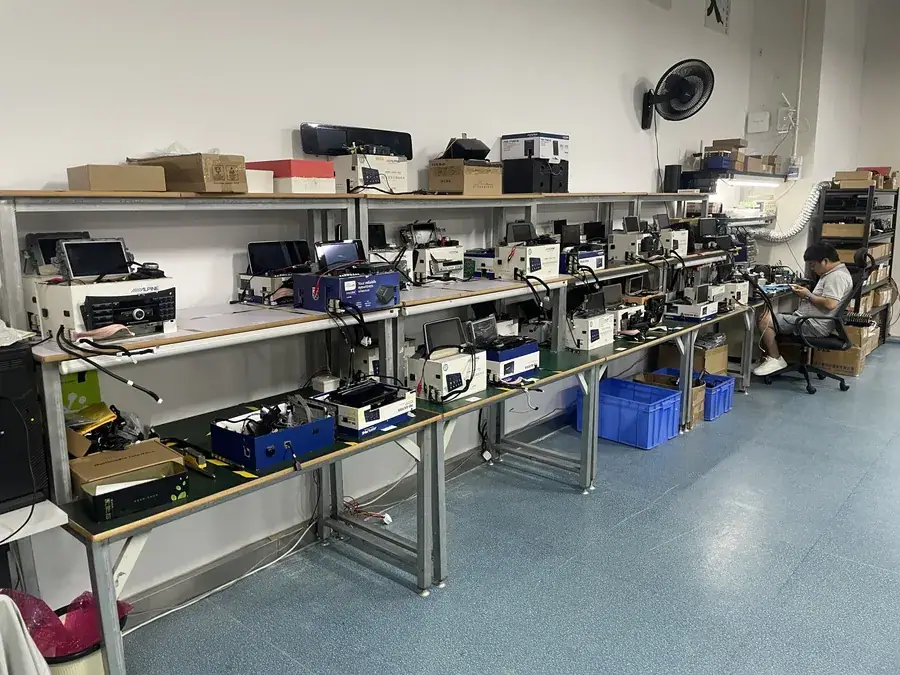
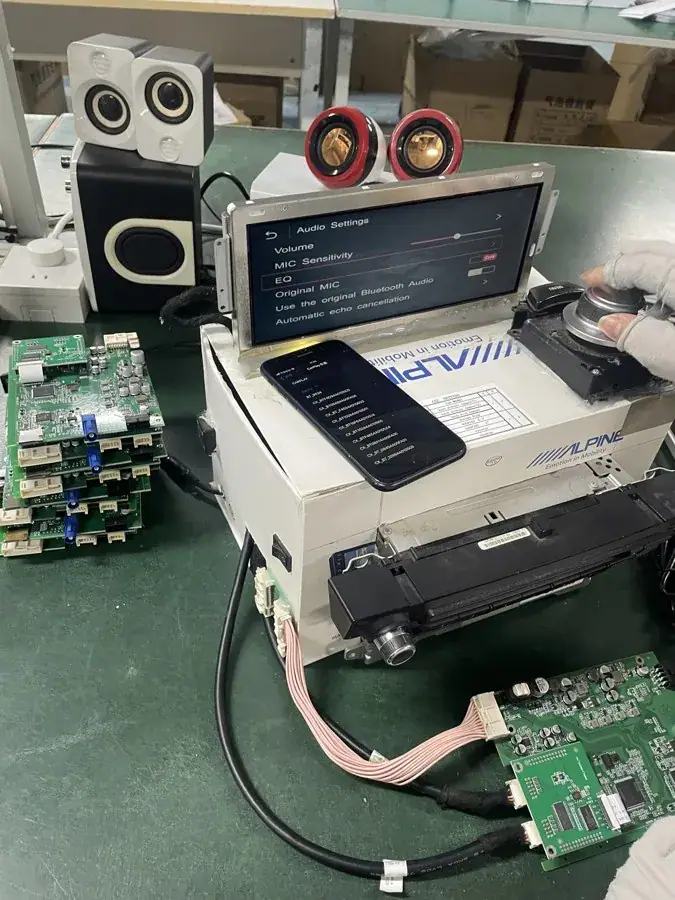
Failure rate in this category is decided on the test bench, not in the customer's car. Each unit is powered up on a rig replicating the target head unit generation: the harness is seated, the module negotiates over the vehicle CAN-BUS, the display is driven at the factory LVDS timing, and the iDrive controller is exercised through the menu. A unit that does not complete that sequence does not get packed.
The checks that catch the most problems are specific. CAN wake-up has to be confirmed — if the module does not wake with the ignition, the driver gets a dead screen. Reverse trigger has to be verified, because a module that back-feeds the display can disrupt the factory camera composite. Audio routing is checked in both directions. On the NTG4 and NTG5 platforms the controller protocol differs from NTG3, and a module built for one will show a working CarPlay screen with a dead knob — a fault that only shows up if you test the knob.
For a distributor this matters commercially. A 2% pre-shipment failure rate you catch on the bench becomes a 2% return rate you pay for twice — once in reverse logistics, once in replacement units. Bench testing is the cheapest part of the entire supply chain.
Why Linux matters more to you than to the driver
The end customer notices whether the screen is smooth. You notice what happens after eighteen months.
Modules that run Android as their user-facing layer accumulate background processes and cache over time, which is the reason some aftermarket screens feel slower after a year of daily use. The modules run Linux in an embedded configuration with no general-purpose application layer, on a Sunplus automotive-grade chipset. The smoothness comes from the hardware doing the work, not from allocating more system resources — and Linux under the hood is why premium factory systems from Mercedes, BMW and Audi also stay fluid after years of service.
For a distributor this shows up as a lower return rate. Fewer cache-related complaints, fewer software-induced fault codes to diagnose, and a module that can stay in a car for the service life of the vehicle.
Wireless stability is a hardware specification, not a feature
Wireless CarPlay has become the default expectation in Europe and Australia, and the reason some retrofit modules disappoint in the field is bandwidth. Mirroring a phone to a car display is a continuous data transfer, and congested 2.4GHz is the single most common cause of dropouts and visible stutter.
The modules support dual-band WiFi, including 5GHz alongside 2.4GHz. The 5GHz band carries the video stream with far less contention in the environments these cars actually live in — city traffic, multi-storey car parks, dense urban residential blocks. The practical result is a stable connection and a high-definition picture rather than an intermittently legible one.
When you evaluate any supplier, ask which WiFi bands the module supports. "Wireless" on its own is not an answer. This is a technical specification worth verifying before it becomes a support burden in your market.
Commercial terms to settle before the first PO
Factory pricing structures are not secret, and any supplier who treats them as negotiable on a first call is signalling something. The terms below are the ones that determine whether a distributor can actually run a business.
| Term | Standard structure | Why it matters to you |
|---|---|---|
| Stock MOQ | 10 pcs, mixed models allowed within the minimum | Lets a new distributor test several platforms without committing to volume on one |
| Private label | 500 pcs per model | Your logo on device, packaging, manual and warranty card |
| Full OEM | 1000 pcs per model | Custom firmware UI, boot logo, language packs, hardware revision |
| Sample lead time | 7–15 days, DHL/FedEx express | Sample cost is deductible from your first bulk order |
| Bulk lead time | 15–20 days for 500+ pcs | Include artwork approval time for private label |
| Payment | 30% deposit, 70% against B/L copy | Standard; PayPal accepted for samples and small orders |
| Quotation | Within 12 hours | Slow quotation is a signal about order handling |
MOQ structure deserves particular attention. A per-model minimum lets you launch a narrow catalogue cheaply; a per-order minimum across everything forces you to buy breadth you cannot yet sell. If your market is concentrated on one or two marques, ask explicitly which basis applies, and get it in the quotation rather than in a conversation.
What to request in writing before you commit
A serious supplier answers all seven of these without hesitating:
- Fitment list by head unit generation, model and year
- Whether coding, pairing or software flashing is required after installation
- Which functions are retained: original menu, steering-wheel controls, factory reversing camera, audio routing
- WiFi bands supported
- Operating system and chipset used
- Warranty terms and RMA process for failed modules
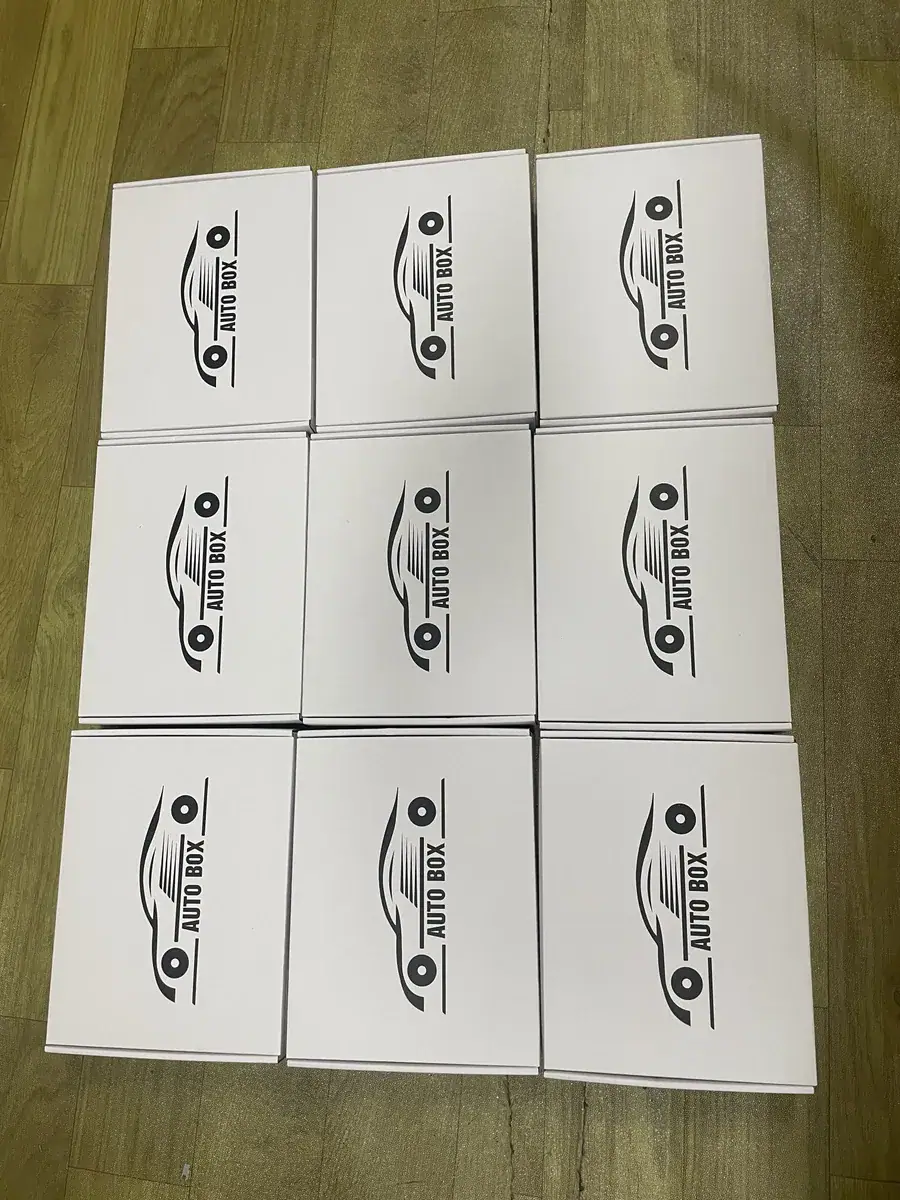
- Whether your logo and packaging are produced in-house or subcontracted
Apple's own CarPlay support documentation sets out the compatibility expectations for wired and wireless connections, and the underlying wireless protocols are documented by the CarPlay entry on Wikipedia — both are useful when a distributor relationship produces a technical dispute. For background on the head unit generations discussed above, the relevant marque documentation is the more reliable reference.
The four support tickets that dominate this product category
Across the retrofit market, most distributor support volume reduces to four causes, and three of them are eliminated before the car reaches the customer.
Wrong generation ordered. The single largest share of returns. Eliminated by fitment verification at the point of order, not afterwards.
Weak wireless performance. Eliminated by dual-band hardware, not by software settings.
Function loss after install. Usually an incomplete harness connection. Eliminated by bench-testing each unit before shipment against a real head unit of the target generation — not against a simulator.
Customer expectation mismatch. A buyer who expected the factory screen to be replaced will consider a retained screen a fault. Eliminated by honest documentation of what the product is before the order, which is why we describe the difference plainly rather than calling everything a screen upgrade.
Common questions
What is the minimum order quantity for a carplay retrofit kit?
Stock modules start at 10 pcs with mixed models allowed in a single order. Private label starts at 500 pcs per model, and full OEM firmware customisation at 1000 pcs per model.
Do I need to code or flash the module after installation?
No. The module interfaces with the factory harness and the original system remains fully available. Installation is a physical connection plus a pairing step on the car side.
Can I mix brands and models in one order?
Yes, within the 10 pcs stock minimum. This is the practical entry point for a distributor who needs to cover several platforms in one market.
What is the warranty position on failed modules?
Each unit is bench-tested before shipment, and the RMA process is set out in the quotation so your aftersales commitment to your own customers has a defined path.
Will the original reversing camera still work?
Yes. The factory camera continues to display as it did before, because the original display and head unit remain in the vehicle.
Request a quotation
Send us your target vehicle list, quantities and target market through the inquiry form. You will receive a quotation within 12 hours, including volume tiers and lead times for the platforms you named.
Need the Module From This Guide?
Wholesale from 10 pcs (mixed models OK), samples in 7–15 days (DHL/FedEx express). Fitment confirmation within 12 hours.
Request Pricing Check FitmentRelated Resources
- CarPlay Collections — browse by marque family (German, British, Italian, Japanese, luxury)
- CarPlay Fitment Checker — find the module for your car
- CarPlay Decoder FAQ — 34 answers on compatibility, install and wholesale
- CarPlay Retrofit Buying Guide — platform identification & selection
- Wholesale, Private Label & OEM Program — MOQ, lead times, payment terms
- All installation & technical guides