
Published 2026-10-21 · DIYCarPlay Engineering Team · 12 min read
Returned to the Factory: How a CarPlay Retrofit Warranty Claim Works Across Borders
A CarPlay retrofit module is a small box, which is exactly why return logistics cost more than the part. A distributor that loses money on warranty claims usually loses it on freight, customs re-entry and the weeks a faulty unit sits on a shelf before anyone can look at it. The claims process itself is simple; the expensive part is deciding what evidence to demand before a unit leaves the customer's hands.
For a supplier running on Linux embedded hardware with an automotive-grade Sunplus chipset, warranty exposure is easier to control than for many aftermarket infotainment categories, because the failure modes are narrow and reproducible. This piece walks through what a workable RMA process looks like: which failures are actually defects, what a claim needs to contain, how claims are batched, and how a returned unit is reconciled with the customs paperwork filed when it was originally imported.
What an RMA on a Retrofit Module Is Actually Covering
A module is not a sealed consumer product. It is a harness, a small board, and two antenna leads that a technician has to route correctly inside a dashboard. Warranty exposure therefore splits into three very different categories, and the process works only when they are kept apart.
- Arrival defects — dead on arrival units, missing harness branches, wrong connector variant. These should be found on the distributor's own bench, not in the customer's car.
- Manufacturing faults — a board that fails within weeks, a radio section that will not hold a link, an LVDS output that drops the picture. These are genuine claims.
- Integration faults — an antenna routed against sheet metal, a head unit variant that was never supported, a harness connected to the wrong port. These are real problems, but they are not warranty events, and conflating them is what makes a supplier's defect rate look terrible.
The third category is where margin disappears. A distributor who returns a module that was installed correctly but sold for the wrong head unit pays the freight twice: once out, once back as a non-warranty credit.
Evidence That Survives a Cross-Border Claim
A claim that arrives without documentation costs more than the unit is worth. The standard request should be short enough that an installer fills it in at the counter rather than puts it off until the weekend.
| What to request | Why it exists | Format that works |
|---|---|---|
| Module serial number | Ties the returned board to the production lot and the shipment it travelled in | Photograph of the label, batch code legible |
| Vehicle and head unit variant | Separates an integration fault from a hardware fault | Make, model, year, head unit generation |
| Symptom in one sentence | Distinguishes a no-link report from an intermittent drop-out | Written at the counter, not reconstructed later |
| Video of the symptom | The single most useful artefact on any intermittent claim | Screen recording of the failed attempt, unedited |
| Harness routing photo | Shows whether the antenna leads are clear of metal | One photo of the antenna position behind the dash |
| Status LED pattern | A module that reports its own state narrows the fault before anything ships | Note the blink pattern at power-on |
Note what is absent from that list: no request to uninstall the module. Requiring the customer to pull the module before the claim is approved guarantees that the unit comes back with the harness bent and the fault no longer reproducible.
Why the Hardware Side of the Warranty Is Narrow
The number of failure modes a retrofit module can have is bounded by its architecture, and that bound is the commercial reason some suppliers can offer a claim window their competitors cannot.
Linux embedded removes an entire class of failure
An Android-based head unit accumulates background processes, cached media and application state. Over a period of years the symptom set widens in a way that is hard to attribute to any single cause, and hard to reproduce at a bench. A Linux embedded module has no application ecosystem to accumulate. There is no cache to clear and no store to prune, which narrows the diagnostic surface rather than widening it.
The chipset decides how hard the radio has to work
Smoothness in this category is not a software achievement. It comes from the silicon running the signal chain, which is why an automotive-grade Sunplus chipset matters more here than any specification written into a product sheet. A stable 5GHz dual-band WiFi path — 2.4GHz and 5GHz both carried, with the 5GHz band preferred where the radio environment allows — is the outcome of hardware behaviour, not of tuning.
The screen stays, so there is less to fail
The module does not replace the OEM screen or the factory head unit. It plugs into the existing LVDS pair and passes video through, leaving the original screen, the original steering wheel buttons and the factory reverse camera in service. Fewer replaced parts means fewer interfaces that a warranty claim can be argued across, and it means a failed module can be swapped without disturbing the factory display at all.
The Customs Side of a Returned Unit
This is where most small distributors underestimate the cost, because it sits outside the supplier's invoice entirely.
Returned goods are not simply a parcel travelling backwards. In the United States, merchandise returned because it does not conform to its specification, or because it was determined to be defective at the time of importation, can qualify for a refund of duties under the drawback provisions of 19 U.S.C. 1313. The refund is 99 per cent of the duties, taxes and fees paid. Three practical constraints follow, and they shape how a distributor should behave:
- The claim window is short. The returned merchandise must be exported or destroyed within three years of importation. Beyond that the claim is abandoned.
- The paperwork must still exist. A drawback claim has to designate the original import entry by the same eight-digit tariff classification and the same product identifier — part number, SKU or product code. A distributor who cannot produce the entry summary at claim time cannot recover the duty, whatever the supplier promises.
- Destruction has to be declared. Exportation or destruction must be notified to customs before it happens, on CBP Form 7553, unless specifically exempted.
The process itself is now electronic. Since February 2019 every drawback claim has had to be filed in the ACE system under the modernised rules, so the paper route a distributor may have used a decade ago no longer exists.
Two further consequences deserve attention. First, the substitution standard now keys on the eight-digit tariff schedule number rather than a specific product, which gives some latitude — but only within that band. Second, goods re-entering the country as returns are not automatically duty free: re-imported returned merchandise is generally subject to new entry and, where applicable, new duty. In practice the duty recovery is partial and slow, so the sensible commercial conclusion is to design the claim process around not generating the return at all.
Batching Claims Instead of Shipping Them One at a Time
Consolidating claims into a shipment rather than sending each unit separately changes the arithmetic completely. Freight has a fixed component — collection, export handling, documentation, air waybill — that a single board does not come close to covering. A supplier that waits for three or four claims before releasing a consolidation is looking at a materially lower cost per unit than one that reacts to every ticket individually.
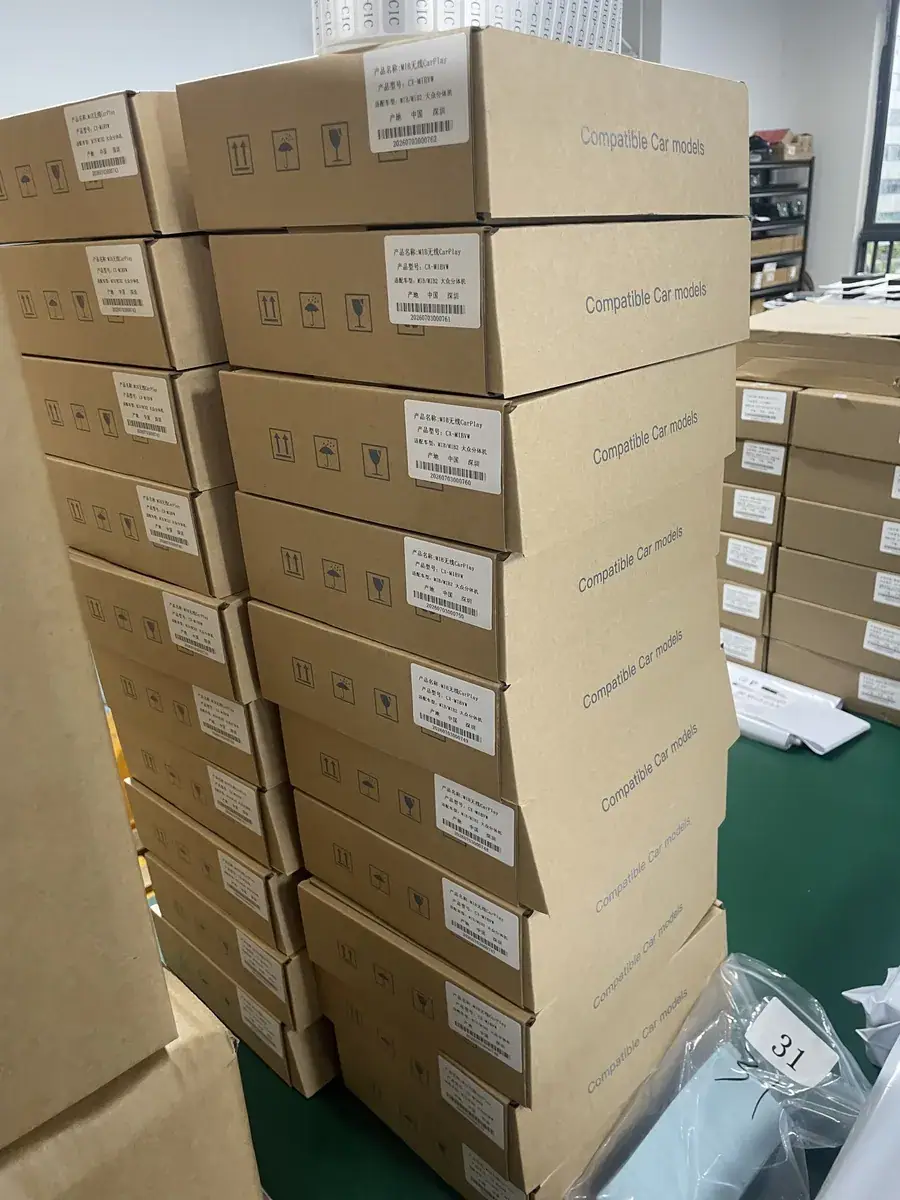
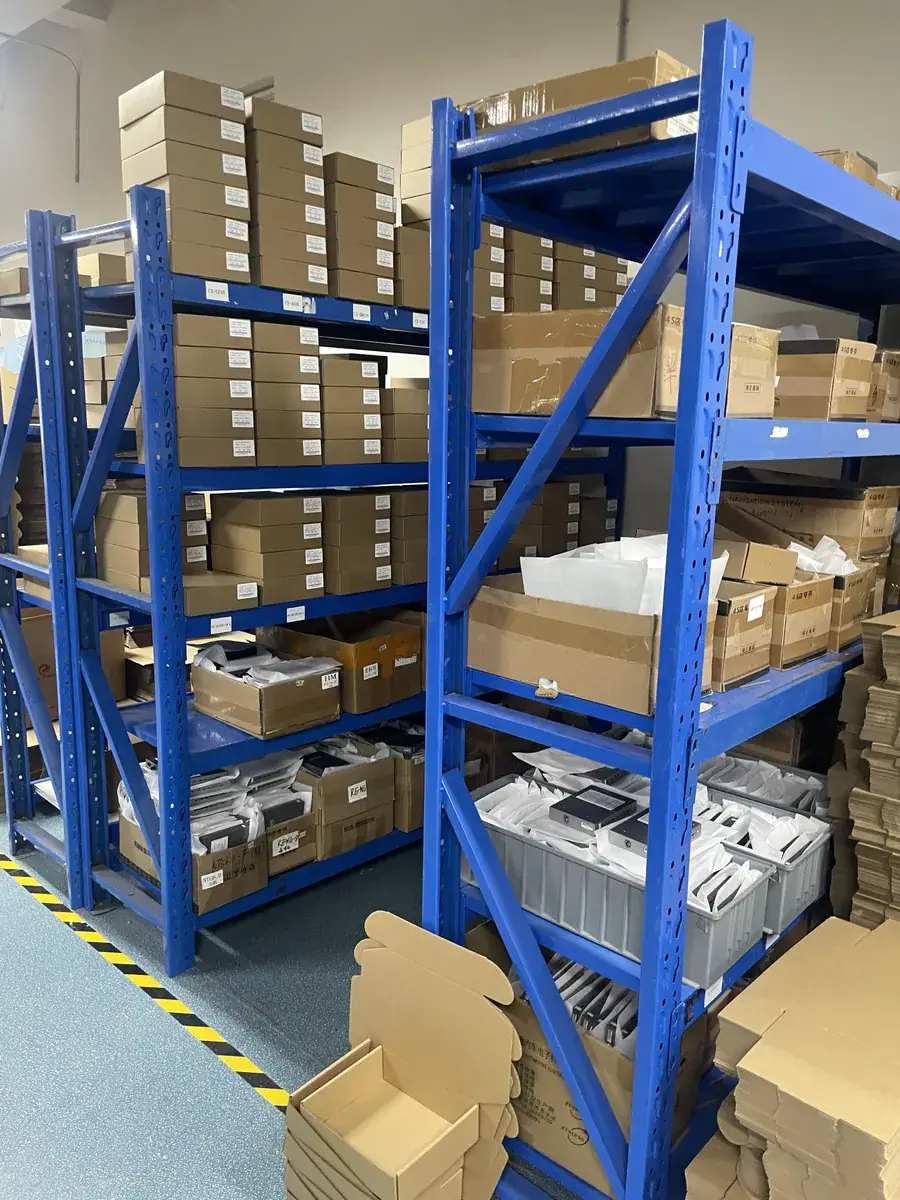
The supporting data has to be kept the same way. A lot register that records which harness variant went into which carton, and which cartons went into which pallet, is what makes a claim answerable in days rather than weeks. Without it the distributor ends up doing archaeology on their own import records, which is precisely the situation where the duty refund quietly gets abandoned.
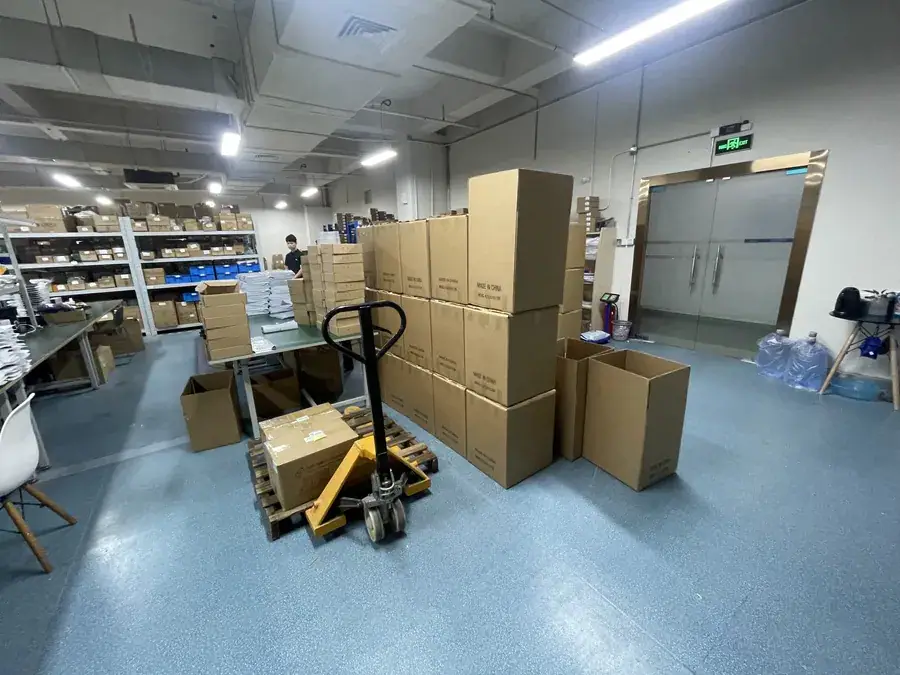
The receiving side matters just as much. A returned module should be logged on arrival with its condition recorded photographically, then routed to a bench where it is put back onto a real head unit of the target generation and tested through the same sequence a new unit passes. Faults that reproduce on the bench are closed as manufacturing claims; faults that do not reproduce are returned to the customer as integration findings, with the specific cause stated. That second outcome is the one that reduces the claim rate over the following year, because it is the only one that changes anything at the installation end.
What a Supplier Should Put in Writing
A claim window stated as "one year" and a claim window defined by what evidence is required are different products. The second one is workable, and it should be settled before a first order rather than during the first dispute. Six items carry most of the weight:
- The window itself, counted from delivery rather than from the invoice date, and stating whether it covers the harness and antennas or the module alone.
- The evidence list above, in writing, with a note of where each artefact should be sent.
- A consolidation threshold — how many claims accumulate before a return shipment is released.
- Who pays the freight in each direction, and whether a non-warranty return is credited at all.
- The bench test standard the returned unit has to reproduce before a claim is accepted as a manufacturing fault.
- What the customer is told when a fault turns out to be integration, since that answer is what stops the next claim.
A distributor who can answer those six questions before placing a first order can also model the real cost of the warranty into the landed price. One who cannot will find out during the first bad month, and will find it out through freight rather than through a claim decision.
Ordering Terms Behind the Warranty
Warranty risk is priced into the order terms, so the commercial terms should be established at the same time as the claim terms rather than negotiated afterwards.
- Minimum quantities. 10 pieces from stock with mixed models allowed, 500 pieces per model for private label, and 1000 pieces per model for full OEM firmware programmes.
- Lead time. Samples take 7 to 15 days; large-volume production takes 15 to 20 days for orders of 500 pieces and above.
- Quotation. Replies within 12 hours of a specification being sent.
- Sample cost. The sample fee is deductible from the first large-volume order.
- Payment. 30% deposit to start production, with the remaining 70% against a copy of the bill of lading. Payment is by T/T or PayPal.
Coverage extends across 300+ vehicle models and series from 2006 to 2025, spanning the head unit generations that dominate European, Australian and North American used-car parc. A supplier that quotes a claim window without quoting which head units that window applies to has not answered the question that matters, and the full vehicle compatibility list is the fastest way to settle it — the same list that resolves an integration fault in the first place.
The underlying engineering is what makes the claim volume manageable. A Linux embedded module on an automotive-grade Sunplus chipset carrying 5GHz dual-band WiFi, plumbed into the factory LVDS pair so the original screen, the original steering wheel buttons and the factory reverse camera all stay in service, has a small number of things that can fail. Suppliers who describe that hardware honestly are describing why their warranty book closes well, and why a distributor's cost per claim is a logistics number rather than an engineering one.
A first-order quote is usually the fastest way to test whether a supplier's warranty terms are real. Requests are answered within 12 hours, and the claim window, the evidence list and the consolidation threshold can all be confirmed against a specific vehicle list before any stock is committed.
Frequently Asked Questions
Does a returned module have to be uninstalled before it is shipped back?
No. A module that has been pulled out of the harness risks damage to the connector and to the LVDS cable, which turns a straightforward return into a disputed one. Photograph the installed position, then remove it.
Can duties be recovered on a module sent back for a warranty claim?
In some cases. In the United States, 19 U.S.C. 1313 allows drawback of 99 per cent of duties paid on merchandise that does not conform to its specification or was defective at importation, provided it is exported or destroyed within three years, the original import entry can be designated by eight-digit classification and product identifier, and the export or destruction has been declared on CBP Form 7553. The importer has to be able to produce those import records.
What is the most common reason a claim gets rejected?
Missing evidence rather than a genuine disagreement about the fault. The serial number, the head unit variant and a video of the symptom cover most rejections.
How long should a claim take to close?
Long enough to receive the unit, test it on a bench against a real head unit of the target generation, and record the outcome. Rushing this step is what converts an integration fault into a repeat customer complaint.
Is a private label programme covered by the same claim terms?
The claim terms are attached to the hardware, not to the label. Private label and full OEM programmes run the same RMA route, and a distributor with private branding is usually the one who benefits most from a lot register, because the claim arrives without the factory label to identify it.
Next Step
Send the vehicle list that actually needs covering, and ask for the claim window, the evidence list and the consolidation threshold in writing alongside the quotation. Both arrive within 12 hours, and both decide what the warranty costs before the first container is loaded.
Check which factory head units are covered, or request a quotation for the models on the list.
Apple's CarPlay support page sets out the phone-side requirements that a bench test has to reproduce before any claim is accepted, since a device that will not present the expected CarPlay request produces the same symptom as a dead radio section.
Duty drawback on Wikipedia sets out the refund mechanism and its variants in more detail than any claim template needs.
Need the Module From This Guide?
Wholesale from 10 pcs (mixed models OK), samples in 7–15 days (DHL/FedEx express). Fitment confirmation within 12 hours.
Request Pricing Check FitmentRelated Resources
- CarPlay Collections — browse by marque family (German, British, Italian, Japanese, luxury)
- CarPlay Fitment Checker — find the module for your car
- CarPlay Decoder FAQ — 34 answers on compatibility, install and wholesale
- CarPlay Retrofit Buying Guide — platform identification & selection
- Wholesale, Private Label & OEM Program — MOQ, lead times, payment terms
- All installation & technical guides