
Published 2026-10-11 · DIYCarPlay Engineering Team · 8 min read
How to Add Wireless CarPlay to a Volvo S60 or S90 With the 9-Inch Sensus Screen Without Replacing the Factory Screen
A plug-and-play CarPlay decoder module adds wireless Apple CarPlay to a Volvo S60 or S90 with the 9-inch Sensus screen while keeping the factory screen, steering wheel controls and cameras. Installation is a 40-minute harness job.
A CarPlay retrofit module is an inline harness — a small Linux-based decoder wired into the factory infotainment bus and the original LVDS display cable. It reproduces the CarPlay interface on the screen the car already has, so the dashboard keeps its original shape, its original trim and its original reversing camera.
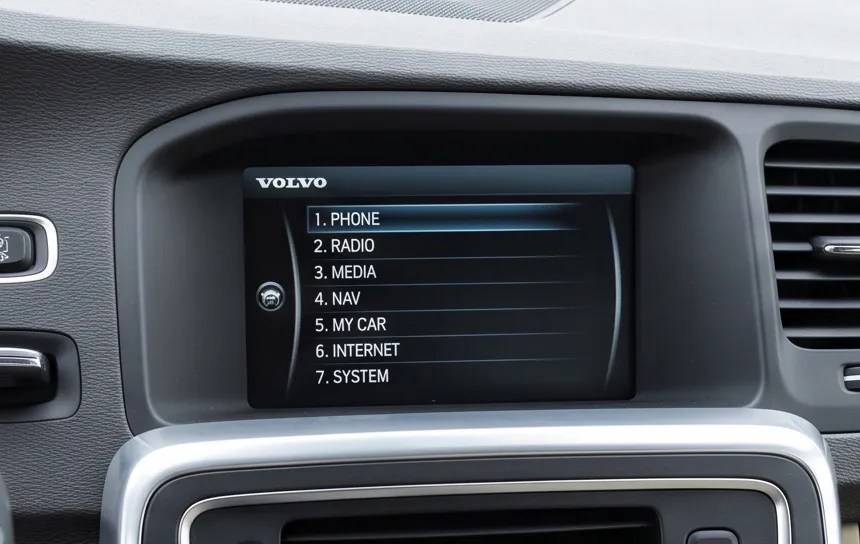
Volvo split its infotainment hardware across three eras that behave very differently, and this is where most owner confusion starts. A 2012 Volvo S60 runs a 5-inch horizontal RTI screen with no phone integration at all. A 2016 model wears the tall 9-inch Sensus portrait display, which does support CarPlay but only as a wired half-screen tile. From 2021 the brand moved to Google-based systems that ship wireless CarPlay from the factory. Only the first two groups benefit from a retrofit.
Which Volvo generation has CarPlay as standard
Volvo was an original launch partner for Apple’s infotainment integration, and support arrived in stages rather than all at once. In North America the 2016 XC90 was the first Volvo to carry it; the S60, V60 and XC60 followed for 2018; from 2019 it became standard across the range. European deliveries ran a year or two behind. The platform background is covered in the Volvo Cars model history. The pattern to remember: early cars gained CarPlay as a factory option, and the very earliest cars never received it.
| Volvo platform | Model years | Factory screen | CarPlay at delivery | Retrofit value |
|---|---|---|---|---|
| P2 / RTI | 2008–2014 (S60, V60, XC60) | 5–6 inch horizontal | None | High — adds the feature outright |
| P3 / Sensus Connected Touch | 2011–2018 (V40, S60, V60, XC60) | 7 inch horizontal | 2015+ on some variants | High — most units have no phone integration |
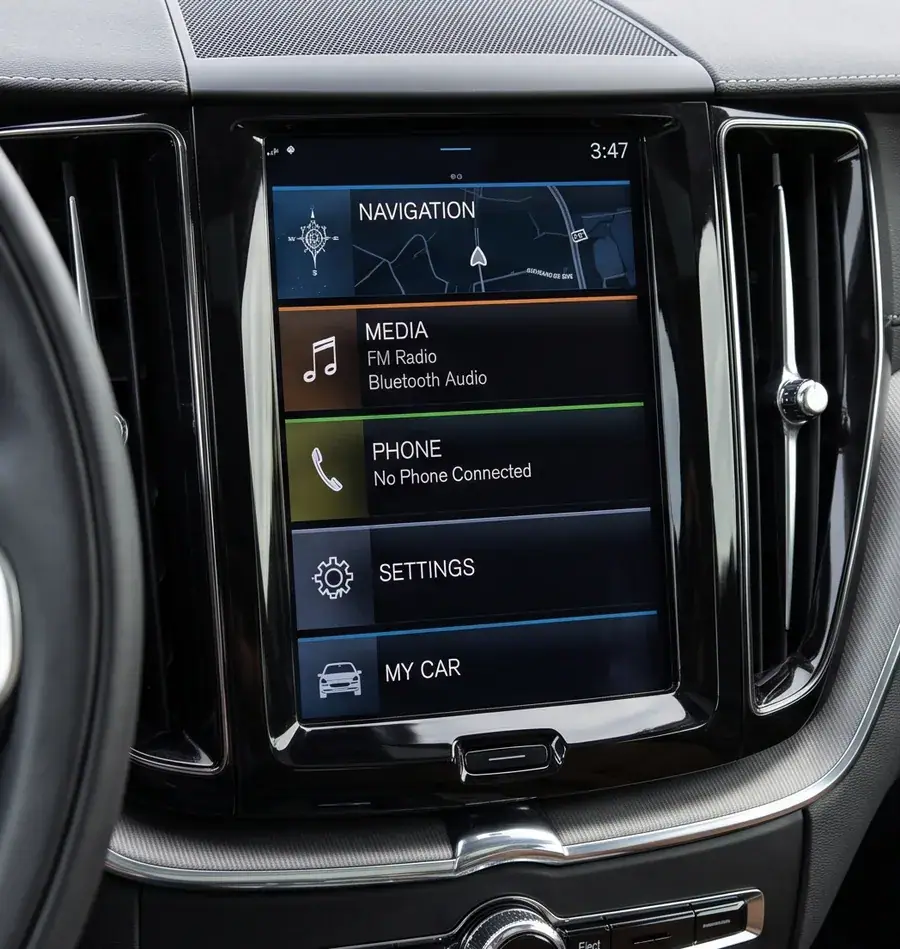
| SPA / CMA with Sensus | 2016–2022 (XC90, S90, V90, V40, XC40) | 9 inch portrait | Wired only, lower tile | Medium — adds wireless and full-screen area |
| Google-based (AAOS) | 2021 onward (XC40 Recharge, C40, 2022+ XC60/XC90/S90) | Portrait, Google-based interface | Wireless, standard | None needed |
The decision for an owner is simple enough: check the trim level and model year first, then look at the screen. If a CarPlay icon sits greyed out in the app tray, the car supports the protocol and only needs the wiring path opened up. If there is no phone option anywhere in the menu, the module adds a capability the car never had.
The half-screen problem on 9-inch Sensus cars
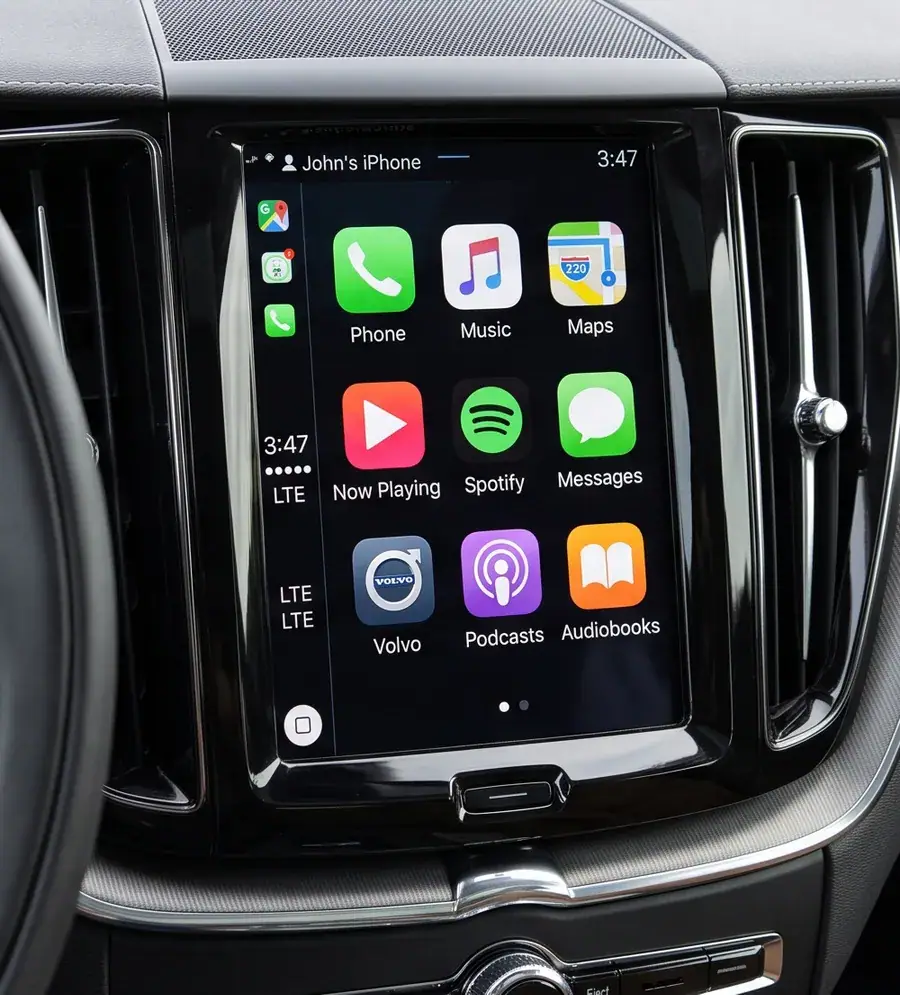
The 9-inch portrait screen is the reason most Volvo owners search for a retrofit in the first place. Factory CarPlay on that display renders as a small tile anchored in the lower portion, leaving the top half reserved for climate readouts. Turn the air conditioning up and the layout jumps. It is functional, but on a tall screen it wastes most of the display area.
A decoder module for the Sensus platform re-renders the interface across the full panel and drops the cable requirement. The screen content is generated by the module over the same LVDS cable the factory navigation already uses, so the panel itself is never removed and no bezel is disturbed. A comparison of fitment across the range is available on the vehicle compatibility page.
What the wiring actually involves
The Volvo harness is not a cable that goes into the socket in the glovebox. On the Sensus cars the module taps two points: the CAN bus pair behind the dashboard for wake-up, reverse trigger and vehicle data, and the original LVDS display cable at the back of the head unit. Audio joins the existing amplifier line, so the factory amplifier and any premium sound system keep working as they were designed to.
Two practical points save most of the time. First, the CAN wire colours are not identical across every model year, so the correct pins are confirmed by position rather than by colour coding before the plug seats. Second, the factory LVDS cable must be unplugged from the head unit and re-seated through the module harness — this is the step that turns a screen into a CarPlay screen. A driver-assistance camera option and an active-noise-cancellation trim both add harness variants, so the exact build matters before ordering.
The unit sits out of sight behind the trim, and the two Wi-Fi antennas are routed to the windscreen or headliner area rather than stuck to a metal bracket, which would absorb the signal. A full Volvo CarPlay module range covers the horizontal and portrait platforms separately.
Why the electronics inside matter more than the screen size
Picture quality on a factory screen is set by the link, not the panel. Video arrives over the LVDS cable from the decoder, so the decoder’s video pipeline determines whether the result looks clean. Modules built on an automotive-grade Sunplus chipset with a Linux embedded core hold a stable frame rate over long sessions, because the workload is fixed and there is no background application layer competing for resources the way a general-purpose mobile operating system does. That is also why these modules do not slow down after months of use.
The wireless link runs on 5GHz dual-band WiFi, alongside the 2.4GHz band. The 5GHz band is wider and cleaner, which matters inside multi-storey car parks and dense urban blocks where 2.4GHz is congested by other devices. Apple’s own CarPlay compatibility notes set out the requirements on the phone side; the decoder handles the vehicle side. Where fitted, HiCar and MirrorLink run from the same hardware.
What stays untouched
Because the module sits behind the factory interface rather than replacing it, the following remain exactly as delivered:
- The original centre console display, including the portrait Sensus glass
- The steering wheel controls, including the two-finger slide and volume behaviour
- The factory reversing camera and its guide lines, triggered through the CAN bus
- Climate control, seat memory and the original navigation for markets where it is fitted
- The factory amplifier routing, so premium audio is not downgraded
Switching between the original menu and CarPlay takes one press of the physical home key. A long press of about twenty seconds reboots the Sensus screen without affecting settings, pairings or radio presets — a useful step when a cable fault has left the display unresponsive.
Cost, time and what to ask before ordering
A retrofit takes roughly 40 to 90 minutes depending on the platform and trim. Earlier horizontal-screen cars need the full harness behind the dash; the 9-inch Sensus cars are faster because the LVDS connector is more accessible. For owners who do not want to open a dashboard themselves, the work is routine for any car audio installer.
Owners who want a written price before committing to a model should confirm the model year, the screen type and any camera or audio trim before ordering — those three details determine which harness is correct. Trade buyers sourcing several units can request the wholesale terms on the wholesale page.
Frequently asked questions
Does the Volvo S60 already have CarPlay?
From the 2019 model year it is standard. The 2018 S60, V60 and XC60 gained it as an option in most markets, while 2011–2014 cars on the horizontal screen generally do not have it at all. The 9-inch portrait Sensus screen supports wired CarPlay only.
Can the original Volvo screen be kept?
Yes. The module drives the existing panel through the factory LVDS cable. Nothing about the glass, the bezel or the surrounding trim changes, and the factory menu stays available at any time.
Does the retrofit disable the reversing camera?
No. The reverse trigger is read from the CAN bus and passed through to the factory display, so the camera image and its guide lines behave as they did before the install.
Does wireless CarPlay work without a cable?
Once the decoder is installed, the phone connects over 5GHz dual-band WiFi with no cable in the centre console. This is the main change owners on the 9-inch Sensus cars notice.
Will the steering wheel controls still work?
Yes. Volume, track skip and the menu buttons are handled through the existing CAN messages, and the two-finger scroll behaviour on the portrait panel is preserved.
What happens to the original navigation?
It remains in the car and can be selected from the menu at any time. CarPlay navigation simply takes over the display while it is active.
How long does the installation take?
Typically 40 to 90 minutes. The horizontal-screen platforms take longer because more trim has to come off to reach the bus connections.
Does this affect the factory amplifier or premium audio?
No. Audio is routed into the existing amplifier line, so the factory sound system, including premium-branded speakers, is used exactly as fitted.
A decoder module for the right Volvo platform turns an unconnected or half-screen head unit into a full-screen wireless CarPlay system without disturbing anything the car came with. Buyers who want a fitment confirmation before placing an order can request a quote and receive a reply within 12 hours; stock starts at 10 pcs with mixed models allowed, private label runs at 500 pcs per model and full OEM firmware programmes at 1000 pcs per model. Samples ship in 7–15 days and production orders of 500 pcs or more take 15–20 days. A sample charge is deductible from a first large-volume order, with payment by T/T or PayPal on 30% deposit and 70% against a copy of the bill of lading.
Need the Module From This Guide?
Wholesale from 10 pcs (mixed models OK), samples in 7–15 days (DHL/FedEx express). Fitment confirmation within 12 hours.
Request Pricing Check FitmentRelated Resources
- CarPlay Collections — browse by marque family (German, British, Italian, Japanese, luxury)
- CarPlay Fitment Checker — find the module for your car
- CarPlay Decoder FAQ — 34 answers on compatibility, install and wholesale
- CarPlay Retrofit Buying Guide — platform identification & selection
- Wholesale, Private Label & OEM Program — MOQ, lead times, payment terms
- All installation & technical guides