
Published 2026-10-13 · DIYCarPlay Engineering Team · 10 min read
CarPlay for Audi: Sourcing the Right Module Across MMI 2G, MMI 3G and MIB2/MIB3
Audi buyers should order by head unit generation, not by model name. MMI 2G, MMI 3G and MIB2/MIB3 use different LVDS video paths, different CAN wake-up handling and different screen-size dip-switch settings, so each family needs its own decoder SKU. Coverage spans 300+ vehicle models & series from 2006 to 2025.
Ordering CarPlay decoders for an Audi customer base by model name alone is where most returns start. An A6 produced in 2014 and an A6 produced in 2019 carry completely different infotainment hardware, and the harness that fits one will not wake the other. Wholesalers who stock by marque end up with dead inventory in three generations of the same nameplate.
The practical fix is simple: identify the head unit before anything is quoted, split the order by platform, and only then decide quantities. That is the process this guide follows — the three platform families, the fitment table behind each, what installation actually involves on each, and the commercial terms that apply once the SKUs are settled.
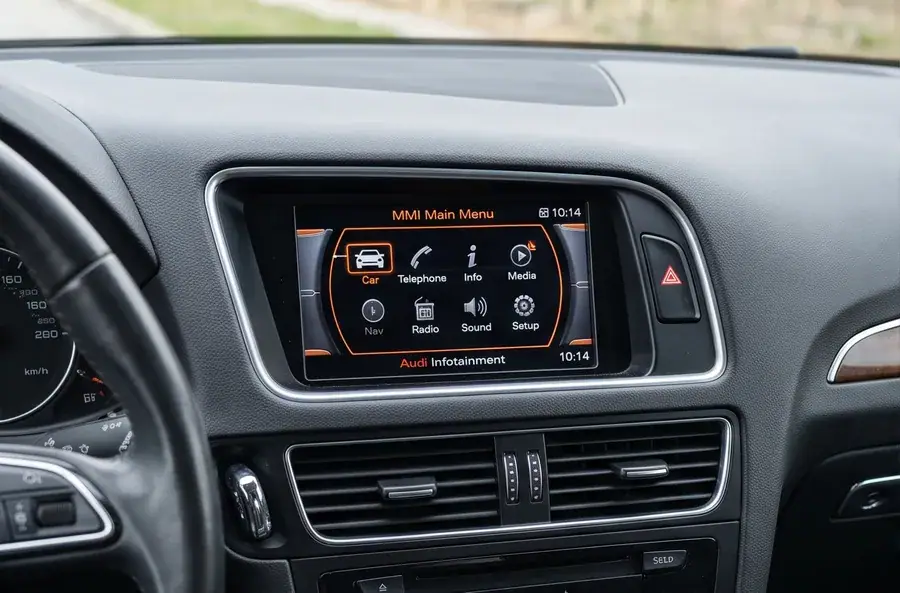
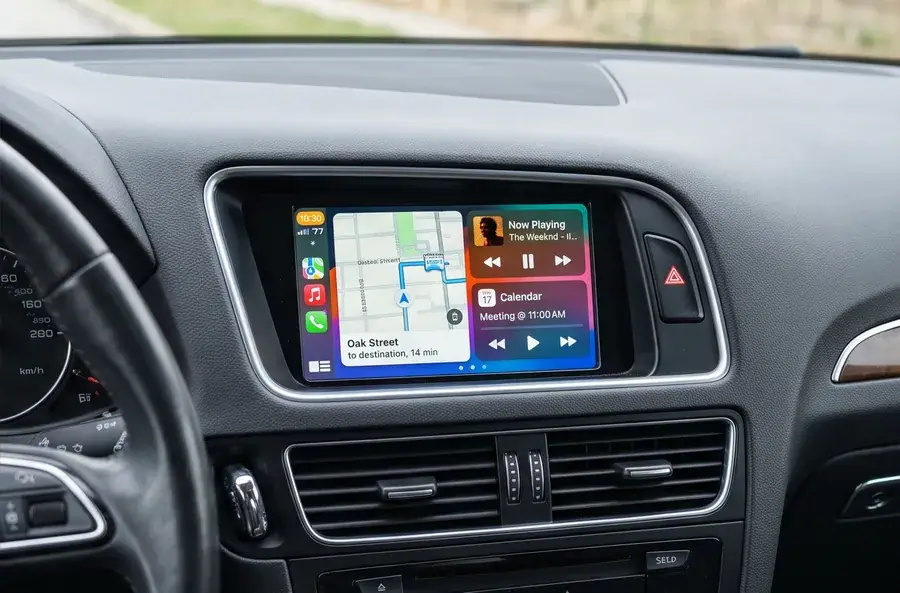
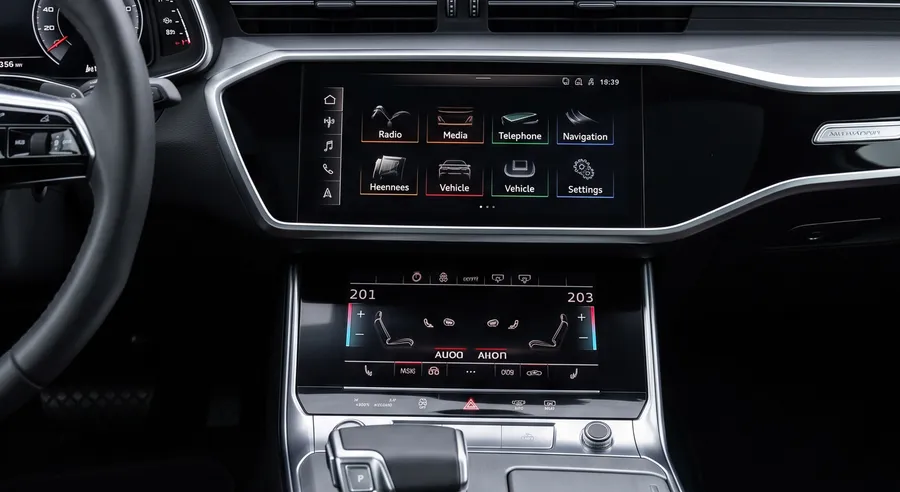
Three Head Unit Families, Three Separate SKUs
Audi renamed its infotainment system twice in the span that matters for retrofit work. The MMI 2G generation covers roughly 2009 to 2018, the MMI 3G / 3G+ generation covers a similar window with a different main board revision, and MIB2/MIB3 covers 2017 to 2025 on the larger executive models. All three run Linux internally, which is why a decoder built on embedded Linux integrates cleanly with each of them, but the physical and protocol layers are not interchangeable.
| Platform | Model years | Video path | Screen | Module |
|---|---|---|---|---|
| MMI 2G | 2009–2018 | LVDS via quadlock | 6.5" centre display | Audi MMI 2G decoder |
| MMI 3G / 3G+ | 2009–2018 | LVDS via quadlock | 6.5" or 7" display | Audi MMI 3G decoder |
| MIB2 / MIB3 | 2017–2025 | LVDS plus Ethernet data path | A6/A7/A8 dual display | Audi MIB2/MIB3 decoder |
The MIB2/MIB3 unit is the odd one out. It drives two screens at once, carries a data path beyond plain LVDS, and its factory rear camera trigger runs through a different message on the comfort CAN. It also uses dip-switch screen-size settings so one harness can cover A6, A7, A8 and Q7 MIB cars — a detail that matters when a distributor wants to hold a single part number instead of four.
Full platform specifications for every decoder are collected on the Audi module range page.
Fitment: Which Audi Takes Which Module
The tables below are the fitment data as it appears on each product page. Model years are given as ranges because Audi moved MMI generations mid-model-year on several chassis, and a buyer who treats 2018 as a single hardware year will mis-ship roughly one in ten orders.
MMI 2G — entry and mid-size models
| Model | Years | Notes |
|---|---|---|
| Q1 / A3 | 2012–2018 | 8" screen cars use MIB, not MMI 2G |
| A4 / A5 / Q5 / S4 / S5 (6.5") | 2009–2018 | 6.5" display only |
| Q5 (6.5") | 2012–2018 | Separate entry from the facelift |
| A6 / A7 / Q7 | 2012–2018 | Pre-MIB executive cars |
| A8 | 2012–2018 | Single 8" display |
MMI 3G / 3G+ — revised main board
| Model | Years | Notes |
|---|---|---|
| Q1 / A3 | 2012–2018 | Same body range, different board |
| A4 / A5 / Q5 / S4 / S5 (6.5") | 2009–2018 | Board revision decides the SKU |
| Q5 (6.5") | 2012–2018 | Entry MMI 3G variant |
| A6 / A7 / Q7 | 2012–2016 | Cut-off at 2016, not 2018 |
| A8 | 2012–2016 | Cut-off at 2016 |
MIB2 / MIB3 — executive and facelift cars
| Model | Years | Notes |
|---|---|---|
| A6 / A7 / A8 / Q7 | 2017–2025 | Dual display; dip-switch screen size |
A buyer-facing note worth flagging: an A6 from 2017 can be MMI 3G or MIB2 depending on trim and market. The MMI generation identification guide sets out how to tell them apart from the dashboard itself, and the platform differences are covered in detail in the MMI 3G versus MIB decoder comparison. Sending installers through that identification step before an order is placed is the cheapest way to reduce return freight.
What Installation Actually Involves on Each Platform
All three platforms install as plug-and-play harnesses with no wire cutting, but the work behind the trim is not identical. On MMI 2G and MMI 3G the installer opens the centre trim panel, releases the quadlock connector, taps the CAN comfort bus for wake-up and reverse trigger, and routes the original LVDS video cable into the decoder rather than into the head unit. The factory display, the rotary controller and every steering-wheel button stay in place.
MIB2/MIB3 adds the dual-display consideration. Both screens are driven, so the decoder has to present the correct resolution on each output and the installer sets the screen-size dip switches before the first power-up. The rear-view camera trigger comes from a comfort CAN message rather than the dedicated MMI 2G/3G line, which is why camera behaviour should be verified on a MIB car specifically rather than assumed from an MMI install.
Two functions get checked on every car regardless of platform, because they are the two that generate the most calls after delivery. The first is CAN wake-up: the head unit must wake from the door open without the ignition being cycled twice. The second is reverse trigger: engaging reverse has to bring up the factory or aftermarket camera within a second or two, not after a screen cycle.
None of this requires replacing the factory screen, and that is the core commercial argument. A buyer replacing displays loses the original interface, the original camera behaviour and the original button mapping in one decision. An installer fitting a decoder keeps all three and can reverse the install if a car is sold. The general approach is covered in the installation walkthrough, and the head unit check that precedes it is set out in how to identify a head unit before ordering.
Stability and Return Rate: Where the Engineering Sits
Return rate is driven by three things: the chipset, the wireless link and the operating system. Each is handled differently from an aftermarket Android-based head unit, and the difference is worth understanding before a buyer commits to a supplier.
Linux embedded, not a general-purpose OS
The decoding side of these modules runs embedded Linux rather than Android. That matters for a product that stays installed for years: Linux does not accumulate the app cache and background process backlog that makes Android-based units slow after a year of use. The Audi factory head units themselves are Linux-based, which is why original Audi hardware from 2012 still runs smoothly today.
Taiwan Sunplus automotive-grade chipset
Smoothness comes from the silicon, not from the operating system. These modules use an automotive-grade chipset from Taiwan-based Sunplus, the same supplier class that builds for OEM infotainment programmes. Automotive-grade parts are specified for operating temperature, vibration and supply longevity rather than for peak benchmark numbers, which is exactly what a module living in a dashboard needs.
5GHz dual-band WiFi (2.4GHz + 5GHz)
Wireless performance is where European, Australian and North American buyers tend to push hardest, and it is the most common source of early returns. These modules run dual-band WiFi on 2.4GHz and 5GHz. The 5GHz band carries noticeably more bandwidth and is far less congested in multi-level parking structures and dense apartment blocks, where 2.4GHz is shared with dozens of neighbouring networks. Keeping the factory screen in place means the streaming path ends at an LVDS cable, so the WiFi link is the only variable in image quality — which is why the radio is specified rather than left to whatever the cheapest available component happens to be.
Pre-shipment testing practice matters as much as the component choice. The process worth asking a supplier about is set out in the pre-shipment quality control guide, and the warranty and RMA terms are covered separately in the warranty and RMA article.
Commercial Terms for Audi-Bound Orders
MOQ structure
| Programme | Minimum | What is included |
|---|---|---|
| Stock order | 10 pcs | Mixing across MMI 2G, MMI 3G and MIB is allowed |
| Private label | 500 pcs per model | Distributor logo on the device, retail box, manual and warranty card |
| Full OEM | 1000 pcs per model | Firmware and branding customisation for the distributor's own programme |
The 10-piece stock entry with mixed platforms is the practical starting point for a distributor testing the Audi range, because the three platforms can share one shipment instead of forcing three separate minimums. How to split those pieces across SKUs is covered in choosing SKUs for a first container, and what a private label programme actually contains is broken down in the private label article.
Lead time, samples and payment
Samples ship in 7–15 days by DHL or FedEx express, and the sample cost is deductible from the first large-volume order. Stock orders also run 7–15 days. Private label production runs 15–20 days for 500 pieces or more per model, with Full OEM firmware work scheduled alongside. Quotations go out within 12 hours of a complete inquiry, including volume tiers and lead times for the specific platforms named.
Standard payment terms are 30% deposit with the 70% balance before shipment by T/T. PayPal is accepted for samples and small orders. Full export documentation and formal invoices are provided on every shipment. Freight terms and documentation requirements for importers are covered in the incoterms guide for car electronics importers. Current wholesale terms are published on the site.
Reference Standards
CarPlay itself is defined and supported by Apple, and the official compatibility documentation is the reference any distributor should be working from when answering customer questions: Apple's CarPlay support documentation. Vehicle-side platform information comes from the manufacturer's own material, available through audi.com. For a specific car, the vehicle fitment checker is the faster starting point.
FAQ
Can one decoder cover MMI 2G, MMI 3G and MIB cars?
No. The three platforms use different LVDS and data paths and need separate modules. A mixed 10-piece stock order can cover all three, but each car takes only its own platform's decoder.
Does the factory screen stay in place?
Yes. The factory display, rotary controller and steering-wheel buttons are retained, and the original menu can be switched back to at any time. No screen is replaced.
What happens to the factory rear-view camera?
Both factory and aftermarket cameras are supported. The reverse trigger is taken from the comfort CAN on each platform, including the different MIB message path, so the camera activates on engaging reverse.
What operating system runs inside the module?
Embedded Linux, not a general-purpose mobile operating system. There is no app cache accumulation and no degradation in responsiveness after extended use, so no memory or storage specifications apply to this architecture.
How is wireless quality handled in dense buildings?
The modules run dual-band 5GHz and 2.4GHz WiFi. The 5GHz band avoids the congestion typical of 2.4GHz in multi-level car parks and dense residential blocks.
What are the minimum order quantities?
Stock orders start at 10 pieces with mixed models allowed. Private label starts at 500 pieces per model, and Full OEM firmware customisation starts at 1000 pieces per model.
Send the target vehicle list, annual quantities and destination market through the inquiry form. A quotation follows within 12 hours, with platform split, volume tiers and lead times for the Audi generations named.
Need the Module From This Guide?
Wholesale from 10 pcs (mixed models OK), samples in 7–15 days (DHL/FedEx express). Fitment confirmation within 12 hours.
Request Pricing Check FitmentRelated Resources
- CarPlay Collections — browse by marque family (German, British, Italian, Japanese, luxury)
- CarPlay Fitment Checker — find the module for your car
- CarPlay Decoder FAQ — 34 answers on compatibility, install and wholesale
- CarPlay Retrofit Buying Guide — platform identification & selection
- Wholesale, Private Label & OEM Program — MOQ, lead times, payment terms
- All installation & technical guides