
Published 2026-10-28 · DIYCarPlay Engineering Team · 13 min read
Same Model Name, More Than One Platform Code: Why the Model Year Alone Picks the Wrong CarPlay Module
A wholesale CarPlay order is normally written as a badge, a model name and a model year, because that is what a customer gives over the phone. The catalogue covers 300+ vehicle models and series from model years 2006 to 2025, and a name like Q5 or Range Rover appears in it more than once. For most model lines one platform code carries the whole production run, and ordering by year is safe. For a defined set of model names it is not, and the error does not surface until a module is plugged into a car that happens to be the other generation.
That failure is expensive in a particular way, and the reason matters for how a distributor handles it. The module is not defective. It works exactly as it was built, on the platform it was built for. It is simply the wrong platform for the car standing in front of the customer, which means a warranty claim is not the remedy. The remedy is a return, and returning a small, low-value box is one of the least economic transactions in this trade.
What a platform code actually names
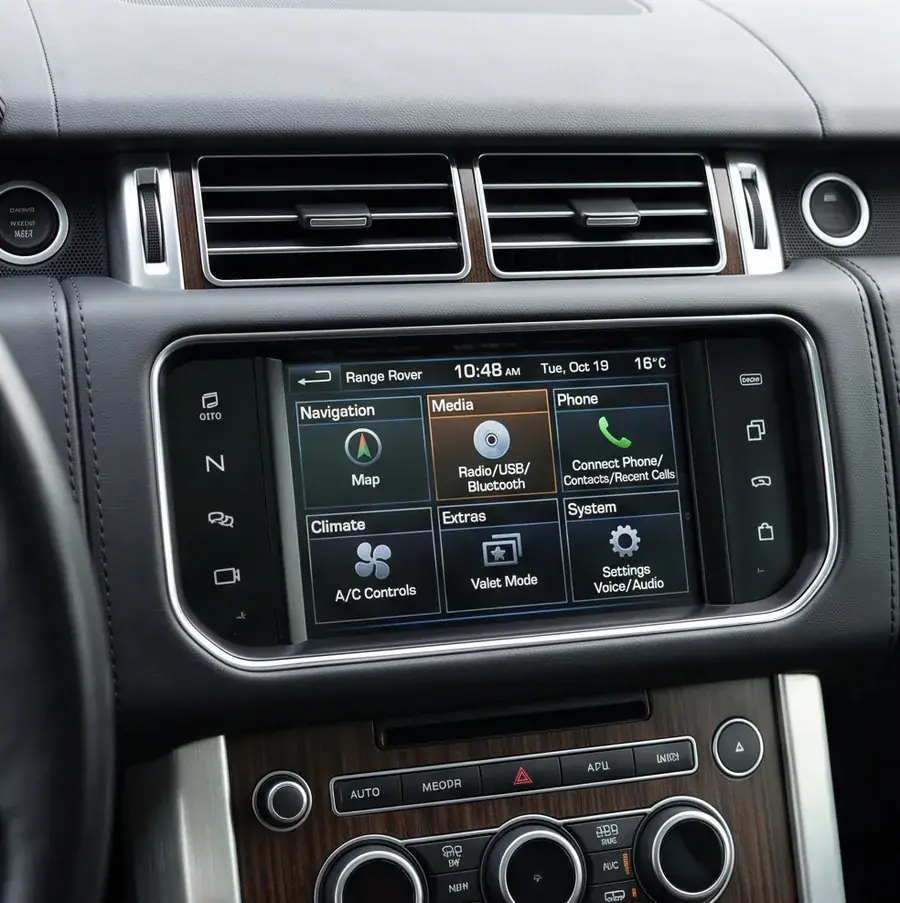
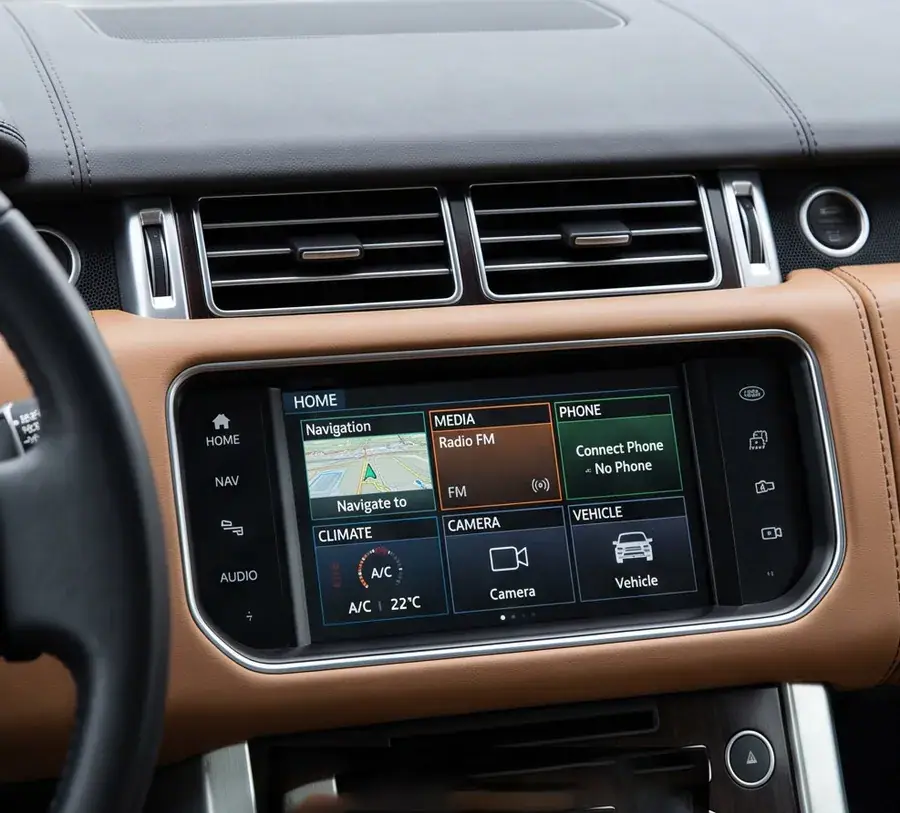
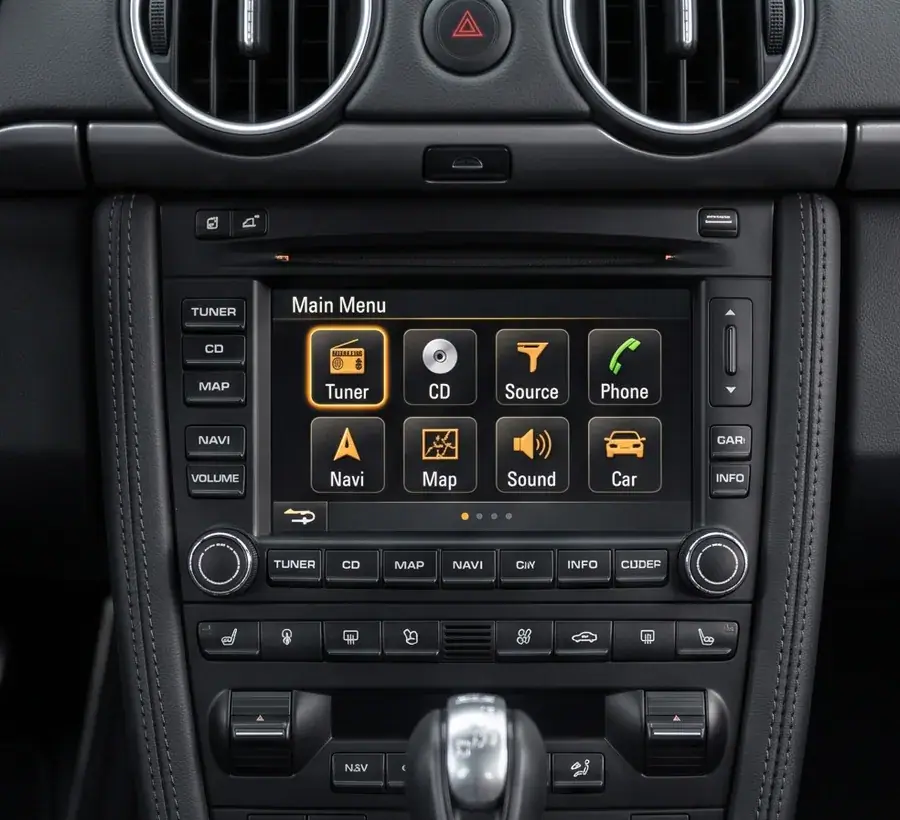
A platform code is a head-unit generation. It names the specific factory computer behind the centre display, and it determines the things a retrofit has to match: the harness termination, the video path, the CAN bus wake-up message the module listens for, and the screen-size setting a unit carries from the factory. Two cars with the same badge, same model and same year can sit behind two different codes, and the retrofit that fits one will not even wake the other.
What sits inside the module is not what varies between platforms. The unit runs Linux embedded on an automotive Sunplus chipset, pairs the phone over dual-band WiFi at 2.4 GHz and 5 GHz, and terminates into the factory display through the vehicle harness. It is a plug-and-play bridge: the factory screen, the factory host, the steering-wheel buttons and the factory reversing camera all stay in service, and nothing on the dashboard is replaced or coded. The electronics are common across the range; what differs is the connector, the protocol and the target generation, which is precisely what the platform code records.
Where the model year stops deciding
Counting each model name once, whether the fitment table lists it alone or inside a group such as A4 / A5 / Q5 / S4 / S5, 50 model names in this catalogue are covered by more than one platform code. The worst case is a name whose two codes cover exactly the same model years, so a year on the order sheet cannot narrow the choice at all. 10 of them carry identical model years under two codes.
| Model name | Codes | Model years in common | What actually decides it |
|---|---|---|---|
| Audi A1 and Q3 | MMI 2G and MMI 3G | 2012 to 2018 | The head-unit board revision behind the display |
| Land Rover and Jaguar Discovery, Range Rover, F-Pace, XF, XJ and F-Type | JR-2 and JR-3 | 2016 to 2021 | Display size: the smaller InControl Touch panel against the larger InControl Touch Pro panel |
| Porsche 911 | CDR 3.0 and PCM 3.1 | 2010 to 2016 | Whether the car carries the base radio or the navigation head unit |
| BMW MINI F56 | NBT and EVO | 2014 to 2016 | The iDrive generation fitted |
Land Rover and Jaguar is the widest case in that table, with six nameplates sharing one pair of codes across the same 2016 to 2021 run. The two systems are separate factory products with different screen sizes, and a distributor taking a Range Rover order from a model year alone has no way to tell which one is in the car. Jaguar's own documentation lists Touch and Touch Pro as separate systems, and that difference in the panel is what settles the code.
Where two codes share the same model years
The next group is 24 model names where two codes cover overlapping model years without covering identical ones. A year narrows the choice, but it does not settle it: the year still points at a band, and something inside that band has to be confirmed.
| Model name | Codes | Model years in common | What the buyer has to obtain |
|---|---|---|---|
| Mercedes-Benz A, B, C, E, ML and GL | NTG4.0 and NTG4.5/4.7/5.0 | 2013 | Build date |
| Mercedes-Benz A, CLA and GLA | NTG4.5/4.7/5.0 and HU6 | 2019 | Build date |
| Volvo S60, S90, V60 and XC60 | VO-2 and VO-3 | 2018 | Build date |
| Lexus IS and CT | LE-1 and LE-2 | 2015 | Build date |
| BMW 3 Series and 7 Series | CIC and NBT | 2012 | Build date |
| BMW X3 | CIC and NBT | 2013 | Build date |
| Rolls-Royce Phantom | RO-CIC, RO-NBT and RO-EVO | 2009 to 2012, and 2015 | Build date, and a three-code check |
| Nissan and Infiniti QX50, QX60, QX70, QX80 and Patrol | NI-1 and NI-2 | 2013 to 2018 | Head-unit revision |
| Audi Q5 | MMI 2G and MMI 3G | 2012 to 2018 | Head-unit board revision |
Mercedes-Benz A appears in two rows because it spans three codes across two handovers. Six of these rows meet in a single model year, so the exposure is one year wide and a build date closes it. Three rows are wider. The Nissan and Infiniti line overlaps across six model years, because both revisions run through the middle of the decade, and the Audi Q5 overlaps across seven. A nameplate order written on the year alone leaves a band of exposure rather than a single point, which is why those rows ask for the head-unit revision instead of a date.
Where the codes hand over instead of overlapping
The remaining 16 model names sit under codes whose runs do not share a model year, so a model year does place the car on a single code. The BMW 1 Series is the clearest example, running CIC to 2012, NBT to 2015 and EVO from 2016, and the same structure covers the BMW 2, 4, 5 and 6 Series with X4, X5 and X6, the Audi A6, A7, A8 and Q7, the Porsche Boxster, Panamera and Macan, and the Volvo V40. The risk moves to the handover years themselves, where a car built in one generation and sold in the next still needs the build date.
The 5 Series is the exception that shows why the build date still matters. Its runs jump from 2009 to 2012 and again to 2017, so a model year in between places the car nowhere in the fitment table at all. That is a different problem from the one a buyer is trying to solve, and it is solved the same way: read the head unit.
What a wrong code actually costs
The first cost is the one that hurts most: a mis-ordered module is not a defective product, so it does not travel back under warranty. Warranty terms are written around defects, and a unit that powers up correctly and simply addresses a different head unit is not one of them. The loss therefore sits with whoever ordered it.
The second cost is freight. A decoder module is a small, light box, and on a return leg the shipping cost is a large fraction of the goods value. Add customs re-entry, the handling on both sides, and the weeks a unit sits in a warehouse waiting to be diagnosed, and the arithmetic stops working. A single mis-identified code in a mixed batch can cost more to send back than the module was worth in the first place.
The third cost is the one that is hardest to put on an invoice. A wrong module is dead stock in the wrong place. It cannot be sold into the order that was placed, because that order wanted the other code, and a distributor who ordered JR-2 for a batch of Range Rovers cannot easily resell those units into the JR-3 cars that actually arrive. The stock is not scrap and it is not liquid either.
The fourth cost is paid by the installer and the customer. The dashboard has to be opened a second time to swap the unit, and the customer's car comes back with the trim off it. For a workshop that installs these units every week, a batch with the wrong code in it is not a returns problem, it is a reputation problem with the shops that recommended the part.
Ordering so the code cannot be wrong
None of this is a reason to stock fewer platforms. It is a reason to change what the purchase order says and to buy the evidence before the volume, and the evidence is cheap.
- Write the platform code on the order line. An order that reads "Q5, 200 units" has to be read back and interpreted by whoever picks it. An order that reads "Q5 2012 to 2018, MMI 2G, 200 units" does not. The code belongs on the purchase order in the same way the part number belongs there.
- Confirm from the head unit, not from the paperwork. The head unit reports its own generation in ways a buyer can photograph: the software or version screen in the settings menu and the layout of the home menu. Where two generations differ in the panel itself, the physical screen is the faster tell. The identification workflow sets out the checks per marque, and a photograph of the powered-on menu is usually enough to close a query without a return of the vehicle.
- Check whether the car already has CarPlay. Apple publishes the list of vehicles that support CarPlay and the conditions a wireless connection needs, and a nameplate on that list in the target year is a car that does not need a module. Sending one to a customer who already has wireless CarPlay is an order nobody will pay for. Apple's CarPlay support page is the reference for both halves of that check.
- Buy the exposed lines in a mixed opening order. Stock starts at 10 pcs with mixed models accepted in the same order, which is the cheapest instrument for finding out which code the local market actually contains. One small mixed order across the exposed codes, fitted locally, answers the question before a 500-piece private-label run is committed to a guess. Private label runs from 500 pcs per model and Full OEM firmware customisation from 1000 pcs per model, and those are the tiers where a wrong call is hardest to unwind.
- Put the code on the box. A carton labelled by compatible model, with a code and a barcode, is what stops a mixed pallet from being picked wrongly on the way out. The shipping carton is the last point at which a wrong code can be caught, and the last point is usually too late.
On terms, samples ship in 7 to 15 days by DHL or FedEx, and the sample cost is deductible from the first large-volume order. Private label production takes 15 to 20 days for 500+ pcs. The standard terms are a 30% deposit with the remaining 70% against a copy of the bill of lading before shipment by T/T. Quotations come back within 12 hours, with volume tiers and the lead time for each platform named on the request. Sending the platform code with the enquiry, rather than the model name alone, is what makes that 12-hour answer useful.
Frequently asked questions
Can I order CarPlay modules by model name and model year?
Only where one platform code carries the whole model line. For the 50 model names that sit under more than one code, and the 10 where both codes cover identical years, the year cannot decide the question on its own. The platform code has to come from the head unit.
Which model names are the most exposed?
The ones whose two codes cover the same model years. Land Rover and Jaguar leads that group with six nameplates across the same 2016 to 2021 run, followed by the Audi A1 and Q3, the Porsche 911 and the MINI F56. Those four groups are the ones where a model year narrows the choice to nothing at all.
What happens when the module arrives for the wrong platform code?
It does not work on the customer's car, and it is not a warranty case, because the unit is not defective. It comes back as a commercial return, and the freight on a small box is a large share of its value. This is covered in more detail in the warranty and returns terms, and the cross-border paperwork is set out in the customs treatment of a returned batch.
How do I confirm the platform code before a customer fits a module?
Ask for the head unit's software or version screen, or a photograph of the powered-on home menu. For the Land Rover and Jaguar lines the deciding factor is the display size, which is visible from the centre stack without any menu at all. Jaguar's InControl overview shows the two systems side by side.
Can I mix platform codes in one order?
Yes. Stock starts at 10 pcs and mixed models are accepted in the same order, which is the practical way to find out which codes a market contains before committing to a private-label volume.
Does the module replace the factory screen or the head unit?
No. The module is a plug-and-play bridge into the factory display. The original screen, the original host, the steering-wheel buttons and the factory reversing camera all stay in service, and nothing on the car is coded or cut.
Next step
The full fitment data for every platform code is on the module catalogue pages, and the fitment finder maps a specific vehicle to its code in three steps. For a batch that mixes exposed nameplates, the useful first move is a small mixed order across the codes in question, fitted on real cars locally, with the volume order placed once the split is known. Stock starts at 10 pcs with mixed models accepted in the same order, samples ship in 7 to 15 days by DHL or FedEx with the sample cost deductible from the first large-volume order, and we quote within 12 hours with volume tiers and per-platform lead times named. Send the vehicle list, the platform codes already established and the quantities involved through the inquiry form, and the quotation comes back with the exposure in the order identified line by line. The wholesale programme sets out the private-label and Full OEM structures in full.
Need the Module From This Guide?
Wholesale from 10 pcs (mixed models OK), samples in 7–15 days (DHL/FedEx express). Fitment confirmation within 12 hours.
Request Pricing Check FitmentRelated Resources
- CarPlay Collections — browse by marque family (German, British, Italian, Japanese, luxury)
- CarPlay Fitment Checker — find the module for your car
- CarPlay Decoder FAQ — 34 answers on compatibility, install and wholesale
- CarPlay Retrofit Buying Guide — platform identification & selection
- Wholesale, Private Label & OEM Program — MOQ, lead times, payment terms
- All installation & technical guides