
Published 2026-10-26 · DIYCarPlay Engineering Team · 17 min read
The Car Was Approved Without the Module: What EMC and Immunity Rules Mean for a Retrofit Harness
Electromagnetic compatibility has two halves, and a retrofit module has to satisfy both of them inside somebody else's car. The first half is emission: what the module radiates and conducts out of its own electronics, measured so that it does not degrade the receivers already installed in the vehicle. The second half is immunity: what the module does when the car's own electrical environment reaches it — alternator ripple, switch and relay transients, the field of a passing radar, a phone held in the same cabin. A module that passes only one of the two is a module that comes back.
The piece of regulation that decides who owns those two questions is CISPR 25, the vehicle and boat standard published by the International Special Committee on Radio Interference. The fifth edition, dated December 2021, runs from 150 kHz to 5 925 MHz and applies, in the committee's own wording, to devices intended for use in vehicles, including components that are added and connected to the vehicle harness or to an on-board power connector after delivery of the vehicle. That last clause is the entire aftermarket case in one sentence. A retrofit module is not a consumer product that happens to end up in a car; it is an added electronic sub-assembly, and the emission limits written to protect the vehicle's own GPS, radio, Bluetooth and Wi-Fi receivers apply to it exactly as they apply to a factory-installed head unit.
What CISPR 25 does not do is test whether the module survives. The standard is explicit that it does not cover the protection of electronic control systems against radio frequency emissions, nor against transient and pulse-type voltage fluctuations — both of those live in ISO publications. Emission and immunity are separate documents, separate test campaigns and separate reports. A supplier who offers one of them has answered half the question, and the half that is easier to answer.
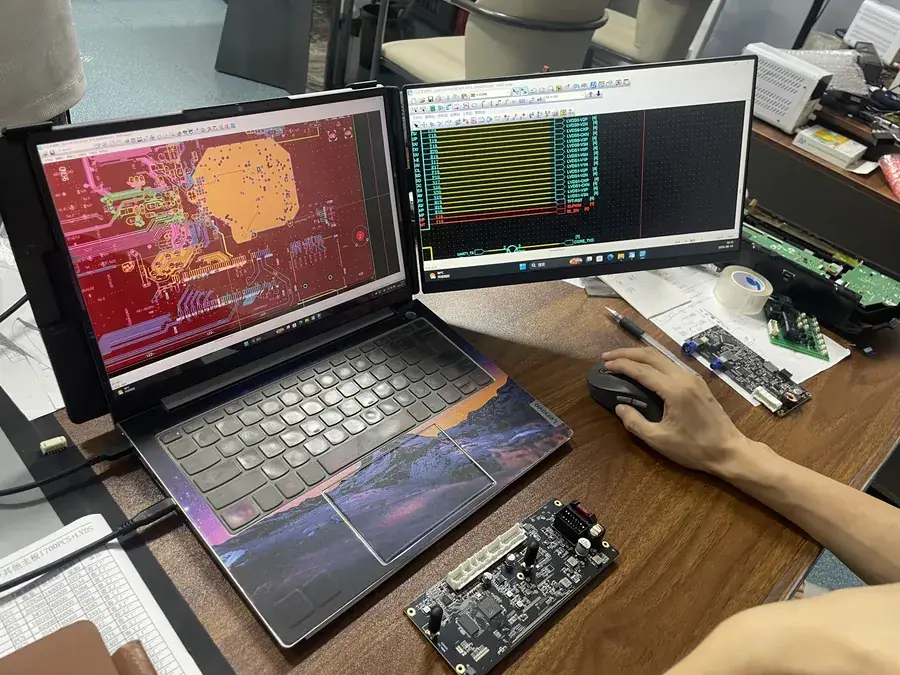
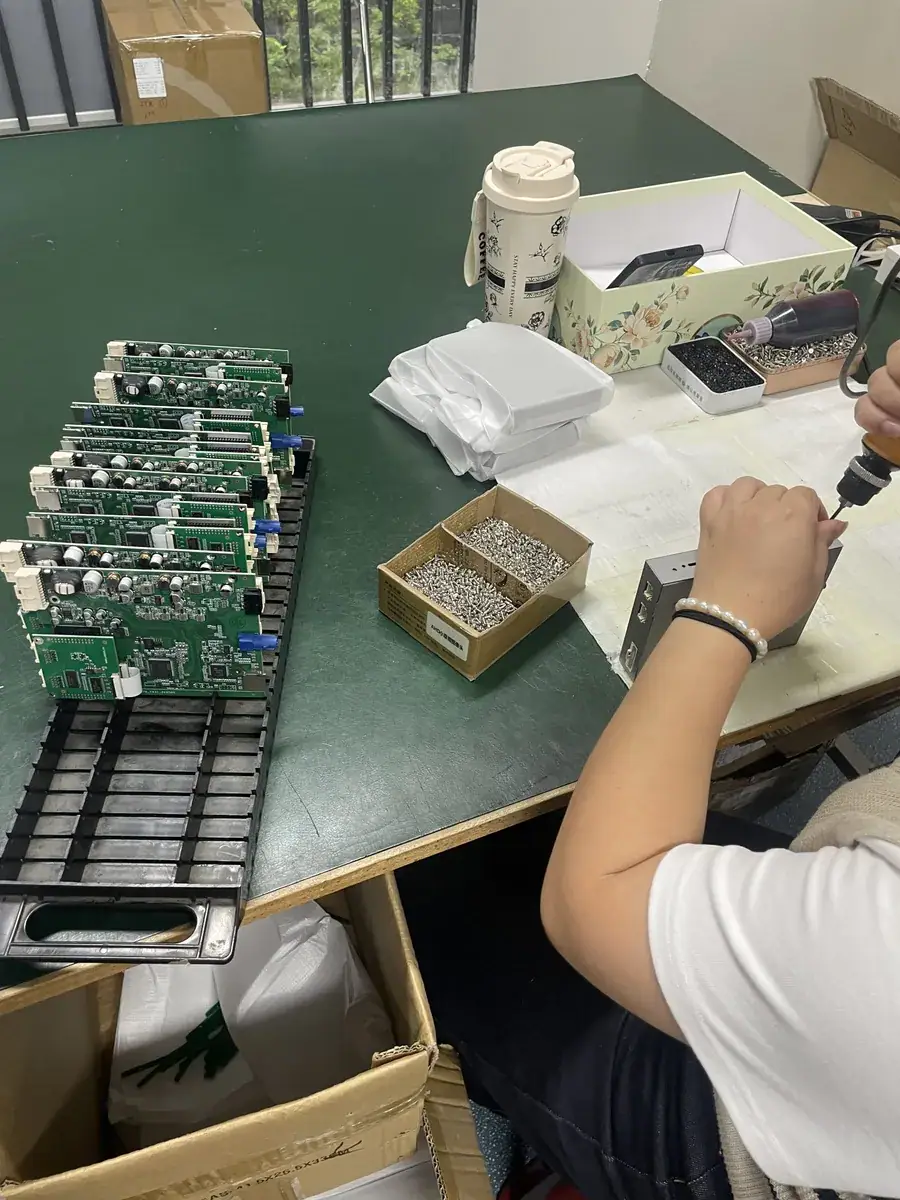
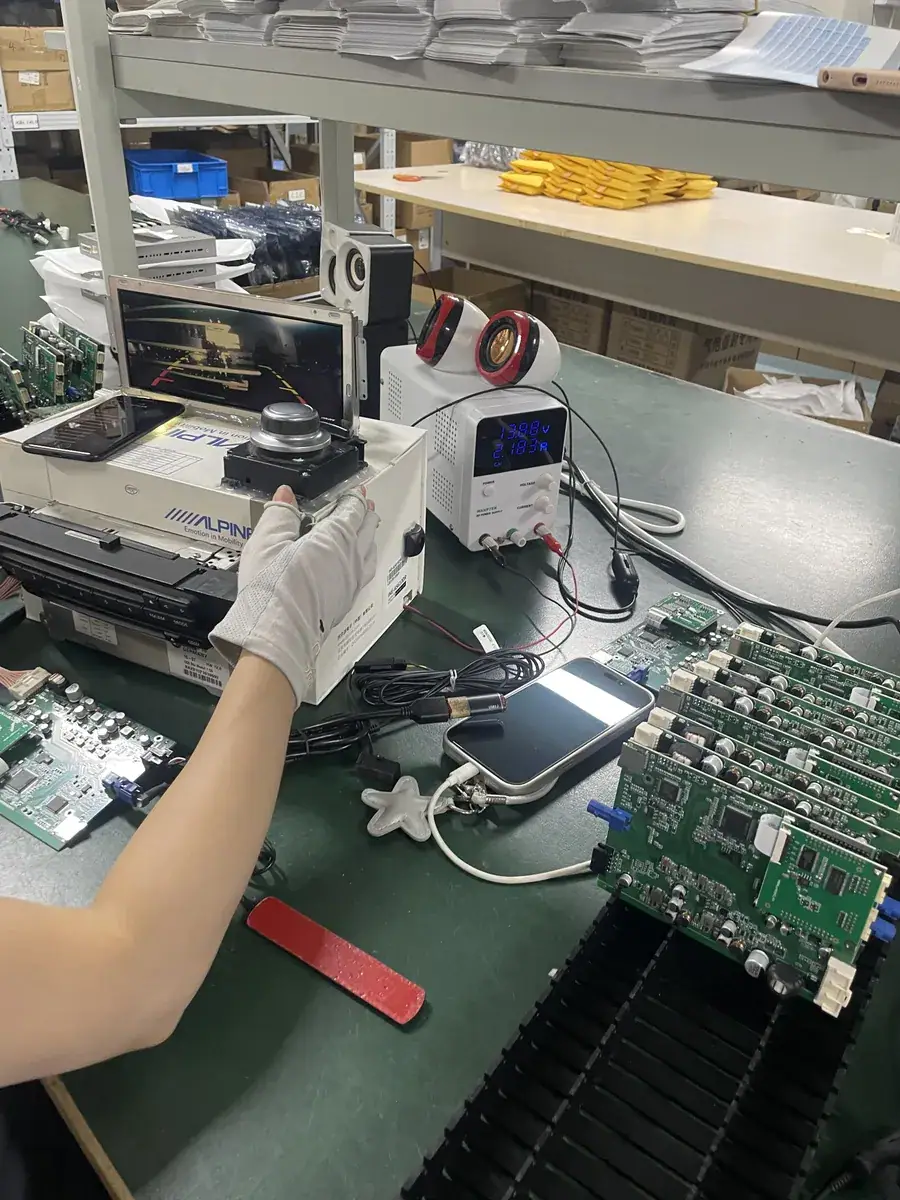
Emission and immunity answer different questions
The division matters commercially because the two halves have different failure modes and different remedies. Emission problems are found in a laboratory, with the module on a bench and the harness laid out to a fixed geometry. Immunity problems are found with the module doing its actual job while a field is applied or a transient is injected, so the functional status of the unit during and after each test has to be recorded as carefully as the numbers. One of the two is a measurement problem. The other is a behaviour problem.
| Question | What is actually measured | Governing document | Evidence a buyer should expect |
|---|---|---|---|
| What does the module do to the receivers already in the car? | Radiated and conducted emissions from the module, across the band where in-car receivers live | CISPR 25:2021, fifth edition, 150 kHz to 5 925 MHz | Component emission report, with quasi-peak and average readings per frequency band |
| What does the car do to the module? | Radiated field immunity, conducted injection into the harness, electrostatic discharge and supply transients | ISO 11452-2 and -4, ISO 10605, ISO 7637-2 | Immunity report recording the functional status of the module during and after each test |
| Does the vehicle still comply once the module is fitted? | Vehicle-level electromagnetic compatibility with the added component installed | UNECE Regulation No. 10, E-mark | Type approval or electronic sub-assembly approval covering the installed configuration |
| May the module be sold as a radio product on its own? | The radio transmitter itself, for market access as an independent product | Radio Equipment Directive 2014/53/EU and FCC Part 15 | Supplier declaration of conformity and test report for the radio configuration |
The setup underneath the emission numbers is prescribed rather than improvised, and the reason is worth understanding before anyone compares two reports. The device under test sits 50 mm ± 5 mm above a metallic ground plane, the harness runs straight along the front edge of that plane for 1 700 mm, and the measuring antenna stands 1 000 mm ± 10 mm away. The chamber's own ambient noise has to be at least 6 dB below the limit being applied, and the absorber has to attenuate better than −6 dB at normal incidence. The ground plane is bonded with straps whose length-to-width ratio does not exceed 7:1, spaced no more than 300 mm apart, with bond resistance held below 2.5 mΩ. On the conducted side there are two methods: a voltage method on the power leads through a 5 µH artificial network, and a current probe method on the signal leads, which is the one that matters for a CAN line.
Detection is done with peak, quasi-peak and average detectors, and the difference between them is not academic. Quasi-peak and average are the detectors that carry the evidence; a peak reading is fast, and useful for finding a problem, but it does not demonstrate conformity. The limits themselves are graded into five classes, with class 5 the most stringent. A report that quotes a single peak figure, or that describes the setup loosely, cannot be compared with another report at all.
One more editorial note belongs in this section. The fifth edition of CISPR 25 raised the upper frequency limit from 2.5 GHz to 5 925 MHz, added the bands that wireless services now occupy, and deleted the annex on TEM cells. The absorber-lined shielded enclosure is therefore the method of record for radiated emissions at component level, which is a change from the arrangement many older reports were written against.
What the module inherits from the car it is fitted into
Installing a module into a type-approved vehicle puts it inside a regulatory boundary that was drawn without it, and the boundary has a defined shape. UNECE Regulation No. 10 lists what it calls immunity related functions, and the list includes functions related to vehicle data bus functionality — specifically, functions whose failure would block data transmission on the vehicle data bus systems that carry information required for other immunity related functions to work. A retrofit module reaches into exactly that bus for wake-up and reverse detection, so whether it degrades that traffic is a question with a regulatory answer attached.
Three of the regulation's exceptions are worth understanding in detail, because they are the difference between a straightforward approval and an expensive one. The first concerns oscillators: where a vehicle, system or electronic sub-assembly contains no electronic oscillator operating at a frequency greater than 9 kHz, it is deemed to comply with the narrowband radiated emission requirements without testing. A wireless CarPlay module contains a 5 GHz radio and a switching supply, so the exemption is plainly unavailable. The second concerns the absence of immunity related functions, which allows an electronic sub-assembly to skip radiated immunity testing altogether. The third concerns switching and inductive loads, and it lets an assembly with no switches and no inductive load skip transient conducted emission testing on the supply line.
Then there is the transmitter clause, which is the part that catches a wireless module specifically. Radio transmitters are tested in transmit mode, and a laboratory doing this inside a screened chamber has to keep the radio talking for the duration of the run without the link timing out or dropping into standby. A network simulator or an equivalent arrangement is the usual answer, and it changes what the test actually looks like compared with a wired component. The session the module has to hold open is the one described in Apple's CarPlay setup documentation, where the phone pairs over Bluetooth and the video path runs over Wi-Fi with Auto-Join enabled. The regulation also treats the receiver side with a degree of pragmatism: the loss of function of a receiver during an immunity test, where the test signal falls inside that receiver's own bandwidth under the relevant international EMC standard, does not necessarily constitute a failure. A Wi-Fi and Bluetooth module gets read against its own exclusion band, which is a specific allowance rather than a general one.
The platform inside the module decides how much of this is difficult
Emission and immunity are not equally hard for every design, and the difference is mostly in the electronics rather than in the paperwork. The dominant unintentional emitter inside a wireless CarPlay module is the radio itself, running 5 GHz dual-band WiFi with 2.4 GHz alongside it, and the dominant victim is that same radio when a field arrives. Everything else in the box — the processor, the LVDS output driving the factory panel, the CAN transceiver, the audio tap — is quieter and better behaved.
Two choices on the platform side shape the outcome. The first is the chipset. An automotive-grade Sunplus part is characterised for the voltage and temperature range a vehicle actually presents, rather than assumed to tolerate it, which matters for a supply rail that sags at cranking and for a cabin that bakes in summer. The second is the operating system. A Linux-embedded build that performs one fixed function draws a flat, repeatable current and presents a spectrum that does not move while the test runs, which is exactly what a repeatable measurement needs. A general-purpose operating system keeps its own services running whether or not anyone is looking at the screen, and the emission profile then varies with what the vehicle is doing.
The retrofit architecture also keeps the vehicle's own assumptions intact, and that has an EMC consequence that is easy to miss. The factory screen, the factory host, the original buttons and the factory reversing camera all stay in place, so nothing large and new is added to the cabin. No new panel, no new touchscreen cable running to a display in the dash, no new audio path. Fewer conductors carrying fast edges means fewer places where a conducted disturbance can start, and a smaller physical addition in the cabin means less to radiate.
| Point of comparison | Retrofit module on the factory screen, Linux-embedded | Aftermarket Android head unit |
|---|---|---|
| Where the radio sits | Two antenna leads routed outside the head unit | Wi-Fi and Bluetooth antennas inside a new panel |
| What runs in the background | One fixed function, no application layer | Operating system services, application updates, a phone mirroring stack |
| Emissions while the link is up | Constant and repeatable | Varies with what the operating system is doing |
| Conductors added to the cabin | One short harness to a head unit that already has the connectors | New panel, touchscreen cable, amplifier path |
| Long-term behaviour in the car | Same response as on the first day | Background state accumulates across years of service |
An aftermarket Android head unit brings a general-purpose operating system into the dashboard, and that operating system keeps working whether or not anyone is using it. The comparison is worth making before a fleet of cars is committed to one approach, and neither route is wrong in the abstract.
What changed in June 2025
UNECE Regulation No. 10 was amended in June 2025, and the amendment reaches directly into the frequencies where a wireless module operates. Series 07 came into force on 12 June 2025, with a transition period running to 31 August 2029 during which the previous series and the new one run in parallel. From 1 September 2029, contracting parties are no longer obliged to accept approvals issued under the older series, so a product designed for the next decade needs to be qualified against the current text rather than against a report written a decade ago.
The headline change is the radiated immunity range, which extends from 20 MHz to 6 000 MHz at the absorber-lined shielded enclosure, up from the previous 2 000 MHz ceiling. Two new sub-bands come with it, with pulse modulation applied from 2 700 to 3 100 MHz and a further modulation scheme from 3 100 to 6 000 MHz that stands in for radar-like signals. The reverberation chamber method from ISO 11452-11 is now formally recognised as an alternative, frequency domain measurement techniques are permitted, the bulk current injection arrangement now requires a straight parallel run of at least 1 400 mm, and the transient pulse references have moved to the 2011 edition of ISO 7637-2 for pulses 1 to 3 while pulse 4 still points at the 2004 edition.
The numbers themselves are worth having. At vehicle level, the radiated immunity limit is 30 V per metre rms across 90 per cent of the band, with a minimum of 25 V per metre across the whole of it. At electronic sub-assembly level the figures are 25 V per metre in the free field, 50 mA for bulk current injection, and 62.5 V per metre in the TEM cell. For a supplier working to the current series, those are the target numbers a module has to be shown against.
What to ask a supplier before the first order
None of this requires a buyer to become an EMC engineer. It requires six questions, and a supplier who cannot answer them has not done the work.
- Which edition, and which band? The emission report should be against CISPR 25:2021, the fifth edition, covering through 5 925 MHz. A report written against the fourth edition stopped at 2.5 GHz and covers none of the band a 5 GHz radio occupies.
- Which detector? Ask for quasi-peak and average readings, not peak, and for the limit class the report was judged against. A peak-only figure is a troubleshooting artefact.
- Where is the immunity evidence? It is a different document from the emission report, and it should exist separately: ISO 11452-2 for radiated fields, ISO 11452-4 for conducted injection into the harness, ISO 10605 for electrostatic discharge, ISO 7637-2 for supply transients.
- Was the radio transmitting, and what exclusion band was applied? A report that does not say whether the module was in transmit mode, or which receiver exclusion band was used against the 2.4 GHz and 5 GHz bands, has skipped the question that decides the result for a wireless product.
- Is the approval an E-mark, or is it an exemption? Either answer is workable. A documented argument that the module carries no immunity related function is a legitimate position, and so is a type approval covering the installed configuration. What is not workable is silence.
- Which platform was the worst case? One module body serves 300+ vehicle models and series, and the harness differs between them. The evidence should name the platform the report was taken on and why that platform was the demanding one.
Worth adding to that list is what bench testing does and does not establish. Each module revision here is bench-tested against the actual head unit it ships for, which is what catches the functional problems: CAN wake-up, reverse camera trigger, LVDS timing, the audio route. That work verifies behaviour and it catches a great many wiring errors before a box is shipped. It does not substitute for a CISPR 25 emission report or an ISO 11452 immunity report, because those two documents are about the module's interaction with the electromagnetic environment rather than about its wiring to one particular head unit.
Frequently asked questions
Does an aftermarket CarPlay module need vehicle type approval?
It depends on the configuration and the market, and the useful answer is not a yes or a no but a description of the file. UNECE Regulation No. 10 applies to vehicles and to the electronic sub-assemblies installed in them, and aftermarket equipment that carries EMC-relevant functions is treated more strictly than a spare part. In practice a supplier should be able to say which route the product takes: a type approval for the electronic sub-assembly, a documented exemption, or a national approval scheme in the destination market. The obligation ultimately lands with whoever places the product on that market, which is why the answer needs to arrive with the quotation rather than after it.
Is a CISPR 25 report the same thing as CE or FCC certification?
No, and the two are routinely confused because both end in paperwork with a manufacturer's name on it. Radio conformity asks whether a radio may be sold as a product in a market, and that side is covered in the import guide for radio certification. CISPR 25 asks whether a component, once installed in a vehicle, degrades the receivers in that vehicle. A module can hold one and lack the other. A workshop that installs into European cars may be asked for both files, and a distributor moving stock between markets will find the two regimes do not substitute for each other in either direction.
Can the module's own wireless radio cause a failure?
Yes, and it is the reason the radio clause in the regulation exists. The transmitter is tested in transmit mode with the wanted emissions inside the necessary bandwidth disregarded, while the spurious emissions remain subject to the regulation. A module that radiates cleanly when idle is not thereby qualified, and the laboratory has to hold the link up through the whole run, which is why a network simulator shows up in the test plan.
Does the 5 GHz link make the product harder to qualify?
It moves the problem rather than creating it. The band that the module transmits in now sits inside the emission limits of the current CISPR edition, and it also sits inside the 6 000 MHz ceiling that the current series of the vehicle regulation tests radiated immunity to. On the other side, a 5 GHz link in a congested band pushes the radio to hold transmit longer, which raises the peak current draw and the length of the burst. That is a supply question as much as an EMC one, and it is why the platform choice and the wiring length matter as much as the paperwork.
What is the minimum order?
Stock starts at 10 pcs, and mixed models are accepted in the same order. Private label runs from 500 pcs per model, and Full OEM firmware customisation from 1000 pcs per model. Samples ship in 7 to 15 days by DHL or FedEx, and the sample cost is deductible from the first large-volume order. Private label orders take 15 to 20 days for 500+ pcs.
How are orders paid for?
The standard terms are a 30% deposit with the remaining 70% against a copy of the bill of lading before shipment by T/T. PayPal is accepted for samples and small orders. Quotations come back within 12 hours, with volume tiers and the lead time for each platform named on the request.
Next step
The vehicle approval boundary is drawn around what the factory installed, and an aftermarket module sits outside it by definition. The fitment checker confirms which platform codes cover a given vehicle, and each platform determines the harness that ships with the module. The EMC file for a platform is worth asking for at the same time as the sample, because it arrives with the platform rather than separately from it.
Send the target vehicle list, the quantities and the target market through the inquiry form, and a quotation comes back within 12 hours with platform codes, volume tier and lead time named for every vehicle on the list. Coverage spans 300+ vehicle models and series across model years 2006 to 2025, every platform is built on a Linux-embedded automotive-grade Sunplus chipset with 5 GHz dual-band WiFi, and the factory screen, the original buttons and the factory reversing camera stay in place. The same team can quote against a mixed-model opening order as readily as against a single platform, and the relevant documentation is available on request for the platforms named.
Need the Module From This Guide?
Wholesale from 10 pcs (mixed models OK), samples in 7–15 days (DHL/FedEx express). Fitment confirmation within 12 hours.
Request Pricing Check FitmentRelated Resources
- CarPlay Collections — browse by marque family (German, British, Italian, Japanese, luxury)
- CarPlay Fitment Checker — find the module for your car
- CarPlay Decoder FAQ — 34 answers on compatibility, install and wholesale
- CarPlay Retrofit Buying Guide — platform identification & selection
- Wholesale, Private Label & OEM Program — MOQ, lead times, payment terms
- All installation & technical guides