
Published 2026-11-06 · DIYCarPlay Engineering Team · 16 min read
The Chassis Code Is the Finest Key in the Fitment Sheet: What E87, F30 and F56 Settle That the Model Name Cannot
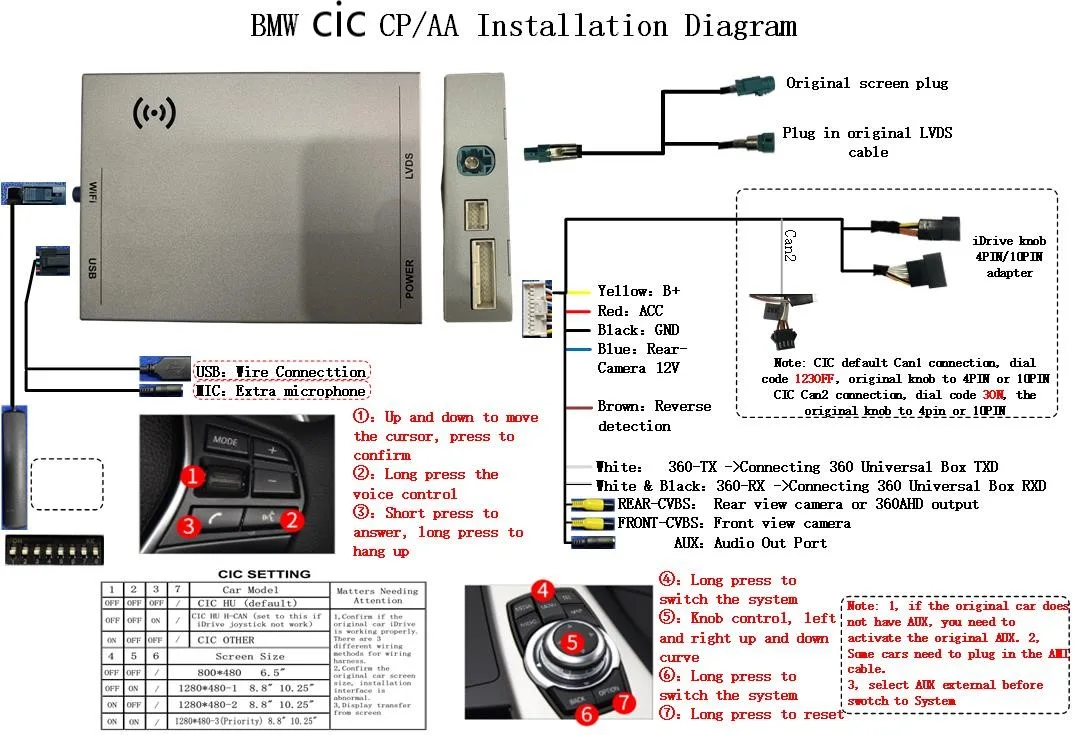
A platform code answers which hardware a unit is built for. A chassis designation answers which car that hardware goes into. The two are written in different alphabets and they are read off different parts of the vehicle, and in this catalogue the designation sits in brackets after the model name on 24 of the 76 code-and-model-line combinations covering 300+ vehicle models and series from model years 2006 to 2025. Those 24 lines carry 42 distinct designations, and most of them settle the platform code on their own without a year, a fitment sheet or a parts catalogue. Six of them do not, and those six are exactly where a purchase order gets written wrong.
The reason a designation is worth carrying on an order line at all is that the model name is not a key. Counting each model name once, 50 model names in this catalogue are covered by more than one platform code, and 10 model names whose year windows are identical under two codes cannot be separated by the year at all. A designation cuts through both of those problems, because it names one car body rather than a nameplate or a span of years.
What a chassis designation is, and why it is a finer key
A chassis designation is the manufacturer's own code for a specific car body. BMW writes them as a letter and two digits: E87 for the first-generation 1 Series, E90 for the fifth-generation 3 Series, F30 for the sixth-generation 3 Series, F56 for the second-generation MINI. The letter marks the era family and the number marks the model inside it. The designation does not change when a trim level changes, when a wheel size changes or when a badge is added, and it does not get reused across unrelated cars. That is what makes it a better key than the model name.
Two cars can both be sold as a 3 Series and share almost nothing. The nameplate runs across seven generations with different body shells, different electronics and different screen hardware behind it. The designation does not run across anything: it points at one body. This is why the marque's own parts literature is filed by designation rather than by nameplate, and why a workshop reading a build plate or a parts catalogue gets a more precise answer from the designation than from the model name printed on the sales brochure. It is also the level of detail that Apple's own list of CarPlay-compatible cars works at, where a car is named by marque, model name and model year and never by the internal designation.
On a fitment sheet the designation appears in brackets, which is where the catalogue records it. Of the 76 combinations, 24 carry a designation and 52 carry none. The 24 are all BMW lines: 24 of the 35 BMW combinations, out of 42 distinct designations across the whole catalogue. The other 18 brand groups in this catalogue record their lines by model name and model year alone, which is a fact about what the fitment data holds rather than about what those marques do or do not call their cars.
How a designation settles the platform code
Counting the designations themselves rather than the lines they sit on, 36 of the 42 resolve to exactly one platform code. For those, the designation is a complete order key on its own: a buyer who is told F30 knows the unit is the NBT-decoder and needs nothing else. The table sets out every line in the catalogue that carries a designation, with the codes those designations resolve to and the model years each line covers.
| Model line | Chassis designations | Platform code | Model years on this line |
|---|---|---|---|
| 1 Series | E87 | CIC | 2008 to 2012 |
| 3 Series | E90, E91, E92, E93 | CIC | 2009 to 2012 |
| 5 Series | E60, E61 | CIC | 2008 to 2009 |
| 6 Series | F12, F13 | CIC | 2010 to 2012 |
| 7 Series | F01, F02 | CIC | 2011 to 2012 |
| X1 | E84 | CIC | 2009 to 2014 |
| X3 | F25 | CIC | 2011 to 2013 |
| X5 | E70 | CIC | 2009 to 2013 |
| X6 | E71, E72 | CIC | 2009 to 2013 |
| Z4 | E89 | CIC | 2009 to 2013 |
| MINI | R55, R56, R60 | CIC | 2008 to 2012 |
| 1 Series | F20, F21 | NBT | 2013 to 2015 |
| 2 Series | F22 | NBT | 2013 to 2015 |
| 3 Series | F30, F31, F34, F80 | NBT | 2012 to 2015 |
| 4 Series | F32, F33, F36 | NBT | 2013 to 2015 |
| 5 Series | F07, F10, F11, F18 | NBT | 2012 to 2015 |
| 6 Series | F06, F12, F13 | NBT | 2013 to 2016 |
| 7 Series | F01, F02, F03 | NBT | 2012 to 2014 |
| X3 | F25 | NBT | 2013 to 2016 |
| X4 | F26 | NBT | 2014 to 2016 |
| X5 | F15, F85 | NBT | 2014 to 2016 |
| X6 | F16, F86 | NBT | 2014 to 2016 |
| MINI | F56 | NBT | 2014 to 2016 |
| MINI | F56 | EVO | 2014 to 2016 |
Read that table as a buyer's shortcut rather than a parts list. The 3 Series appears twice in the fitment data under a designation, and the designation is what separates the two: an F30 is NBT and an E90 is CIC. The third 3 Series line, the one covering 2016 onward, carries no designation at all, which is why it does not appear in the table.
The six designations that sit under two platform codes
A designation normally maps to one code, because one body was built with one head unit. Six do not, and each of them does so for a different reason. The table sets out what each one covers and how far the model year gets you on its own.
| Designation | Platform codes | Years on each line | What the model year does |
|---|---|---|---|
| F12 | CIC and NBT | 2010 to 2012 under CIC, 2013 to 2016 under NBT | Settles it: the two windows do not touch |
| F13 | CIC and NBT | 2010 to 2012 under CIC, 2013 to 2016 under NBT | Settles it: the two windows do not touch |
| F01 | CIC and NBT | 2011 to 2012 under CIC, 2012 to 2014 under NBT | Narrows it to one year, 2012 |
| F02 | CIC and NBT | 2011 to 2012 under CIC, 2012 to 2014 under NBT | Narrows it to one year, 2012 |
| F25 | CIC and NBT | 2011 to 2013 under CIC, 2013 to 2016 under NBT | Narrows it to one year, 2013 |
| F56 | NBT and EVO | 2014 to 2016 under both | Blind: the two windows are identical |
The pattern behind the exceptions is a generation handover inside one body. The 6 Series and the 7 Series were carried across a head-unit change without the body changing, so the same designation appears on both sides of that change. The X3 did the same thing one year later. The MINI F56 is the hardest case in the catalogue, because the two lines it sits on carry the identical 2014 to 2016 window: a MINI F56 bought in 2015 is either NBT or EVO and the year cannot say which. The EVO line for that car also lists 2014 to 2016, a span that begins a year before the EVO label's own 2015 start, which makes it the one line in the fitment data that sits outside the window printed on its code. For a F56 the only things that settle the code are the head unit itself, read from its own menu or from the diagnostic port.
That is a small set of exceptions and it is a bounded one, which is the practical point. A buyer working BMW inventory can carry the designation on the order line for the whole range, and add the model year for the three designations where the year narrows but does not settle, and read the head unit for the one designation where neither settles.
Where the designation stops helping
The limits are worth stating plainly, because they are what decides how much of an order line can be filled in this way. Designations exist on 24 of the 76 combinations and on 24 of the 35 BMW combinations. They do not exist on 11 of the 12 lines under the EVO code, so on a 2016-onward car the designation is not on the sheet and the nameplate and year carry the line on their own. And they do not exist on any line belonging to the other 18 brand groups, so for those marques the designation route is not available at all.
Measured against the problem the designation is meant to solve, the coverage is narrower still. Of the 50 model names covered by more than one platform code, 12 carry a designation on at least one of their lines and 38 do not. Of the 12 that do, four carry a designation that is itself split across two codes — the 6 Series, the 7 Series, the X3 and the MINI — and those are the same four the previous section covers. The other eight are the 1 Series, the 2 Series, the 3 Series, the 4 Series, the 5 Series, the X4, the X5 and the X6, and on each of them every designation present points at a single code.
Those eight still carry a catch. Each of them has a line under the EVO code covering the same nameplate from 2016 onward, and on every one of those lines the catalogue records no designation at all. So the designation settles the code on the older generations and goes quiet exactly where the nameplate is newest. A buyer who has a designation in hand can order against it; a buyer who has only a nameplate and a 2016-onward year still has to read the head unit.
The 10 model names whose year windows are identical under two codes make the same point from the other side. They are the MINI, the A1, the Q3, the 911, the Discovery, the Range Rover, the F-Pace, the XF, the XJ and the F-Type. Only the MINI carries a designation, and for the MINI the designation does not help either, because the F56 sits on both codes with the same window. The other nine have no designation in the fitment data at all. The overlap matrix set out in the earlier guide on model-year traps is the wider version of this: a designation shortens the lookup, it does not replace it.
For the marques that record no designation, the three documents that do settle a code are the build plate, the parts catalogue and the vehicle identification number, and the earlier guide on the three documents sets out how each of them is read. The vehicle fitment finder walks the same fitment data by model, by nameplate and by platform code, and it is the fastest way to check a line before it goes on a purchase order.
Three brackets that are not chassis designations
A bracket on a fitment sheet does not automatically hold a chassis code, and reading it as one produces a wrong answer. Across the catalogue there are 45 distinct bracketed qualifiers: 42 are chassis designations, and three are something else entirely. The Audi Q5 line carries a screen measurement of 6.5" in its brackets, and that same screen measurement appears on the Q5 line under MMI 2G as well as under MMI 3G, so the bracket does not resolve the code even as a screen size. The A6, A7 and Q7 line carries a measurement of 8", and the Honda Accord line carries a generation number of 10th gen rather than a body code.
None of those three is wrong on the sheet. They are simply not chassis designations, and the difference matters because only a designation resolves a platform code. A buyer who reads 6.5" as a body code and carries it onto an order line has carried a screen size, not a car.
What to write on the order line
For a BMW, the designation goes on the line next to the code, and the model year goes with it whenever the designation is one of the three that narrows but does not settle. A line reading F25 and 2012 is a CIC line; F25 and 2014 is an NBT line; F56 on its own has to be settled against the head unit before it ships. The designation is the field that comes off the build plate and out of the parts catalogue, so it is also the field that a workshop can check against the car in front of it, which is what keeps the fitment sheet and the vehicle agreeing at the point of fitting.
For every other marque in this catalogue, the line carries the model name, the model year and the platform code, and the fitment sheet travels with the goods. Nothing about that is a weakness in the approach; it is what the data supports, and writing a designation into a line where none exists would put a fact on the order that nobody can verify.
Whatever the marque, the platform code is what the unit is built against, and the code list is the same list the carton label is printed from. The BMW module index lists every code with the lines it covers, and the fitment data can be checked by model, by nameplate or by code before a pallet is committed.
Terms, lead time and what the unit itself is
What arrives against a code does not change with the way the code was chosen. The unit runs Linux in an embedded configuration on an automotive-grade Taiwanese Sunplus chipset, pairs the phone over dual-band WiFi at 2.4GHz and 5GHz, and terminates into the factory display through the vehicle harness as a plug-and-play connection. The factory screen, the factory host, the steering-wheel buttons and the factory reversing camera all stay in service, no dashboard trim is replaced and no coding is needed. The harness plugs into the factory connectors on the CAN bus, so the head unit keeps its own menus. The 5GHz band is what carries the picture when a car is parked in a structure where 2.4GHz is congested, which is why the dual-band arrangement matters more to a workshop doing a retrofit than the headline number of any single band does.
What holds the return rate down is fixed function on fixed hardware rather than peak performance. A unit that does one thing on one chipset has no background state to accumulate over the years it stays in a car, and that is the reason the Linux embedded approach is quoted the way it is rather than as a specification race.
Stock is available from 10 pcs with mixed platform codes in one order, so a buyer can test one code against one car without buying a pallet to find out. A private label programme runs from 500 pcs per model, and a Full OEM firmware build from 1000 pcs per model, with the same code list carried through to the carton label. Samples ship in 7 to 15 days by DHL or FedEx, and a private label run of 500 or more pcs takes 15 to 20 days from order to dispatch. Payment is 30% deposit with the 70% balance settled against a copy of the bill of lading, by T/T. A sample fee is credited against the first large-volume order, so the code a sample was built against does not have to be the final code for the sample cost to disappear. A quotation goes out within 12 hours, with volume tiers and the lead time for each platform named. Full terms sit on the wholesale, private label and OEM programme page.
Frequently asked questions
Does a chassis designation settle the platform code on its own?
For 36 of the 42 designations in this catalogue, yes. The designation points at one body, and that body was built with one head unit, so the code follows from it. The other six do not, and the table in the section above sets out what the model year does for each of them.
Why does the same designation appear under two platform codes?
Because the marque carried a body across a head-unit change. The 6 Series and the 7 Series were built with one generation of electronics and then with another without the body shell changing, so the designation stays the same while the code moves. That is also why the same model name appears under more than one code in the first place.
Can a chassis designation be confirmed from the car?
Yes, on the cars that carry one. The designation appears on the factory build plate and in the marque's own parts literature, so it can be read without a fitment sheet. That is what makes it worth putting on the order line: it is a field that a workshop can check against the vehicle in front of it, which is the same requirement the three-document check satisfies on the marques that publish no designation.
Do the other marques have chassis designations?
Most marques have an internal body code of some kind, but this catalogue does not record one for them, so their lines are written by model name and model year. The fitment sheet and the head unit are what settle a code on those cars, and the fitment finder carries the same data by model and by code so the line can be checked before it is sent.
Next step
Send us your target vehicle list, quantities and target market through the inquiry form. You will receive a quotation within 12 hours, including volume tiers and lead times for the platforms you named.
Need the Module From This Guide?
Wholesale from 10 pcs (mixed models OK), samples in 7–15 days (DHL/FedEx express). Fitment confirmation within 12 hours.
Request Pricing Check FitmentRelated Resources
- CarPlay Collections — browse by marque family (German, British, Italian, Japanese, luxury)
- CarPlay Fitment Checker — find the module for your car
- CarPlay Decoder FAQ — 34 answers on compatibility, install and wholesale
- CarPlay Retrofit Buying Guide — platform identification & selection
- Wholesale, Private Label & OEM Program — MOQ, lead times, payment terms
- All installation & technical guides