
Published 2026-10-25 · DIYCarPlay Engineering Team · 12 min read
The Generation That Never Had CarPlay: Sourcing Alfa Romeo Modules for the 2017–2019 Giulia and Stelvio
Alfa Romeo stopped fitting Apple CarPlay in its own cars before it started fitting them. That sounds backwards until the model years are laid out: the Giulia and Stelvio built between 2017 and 2019 carry a head unit that never had phone integration, while every Giulia and Stelvio from the 2020 model year onwards arrives with phone integration built into the dashboard. For a distributor, that gap is the whole commercial question on this marque. The 2017 to 2019 cars are the ones with no factory phone integration at all, and they are the only cars on which a retrofit module adds something the car does not already have.
The AL-1 platform code covers exactly that group. Giulia and Stelvio, 2017 to 2019, one code for both body styles, one head unit generation. A buyer who works from the badge alone will get it wrong in one of two directions. Ordering by the model name and the current year sends a customer with a 2020 car a module for a generation that already has CarPlay built in, and the car does not need it. Ordering on the assumption that every Giulia or Stelvio needs a retrofit sends a customer with a 2021 car a product with nothing to do, because the factory system handles it.
Neither of those mistakes is visible from a photograph of the badge. They are visible from the head unit, which is why the identification step has to come before the quotation on this marque rather than after it.
What actually changed between 2019 and 2020
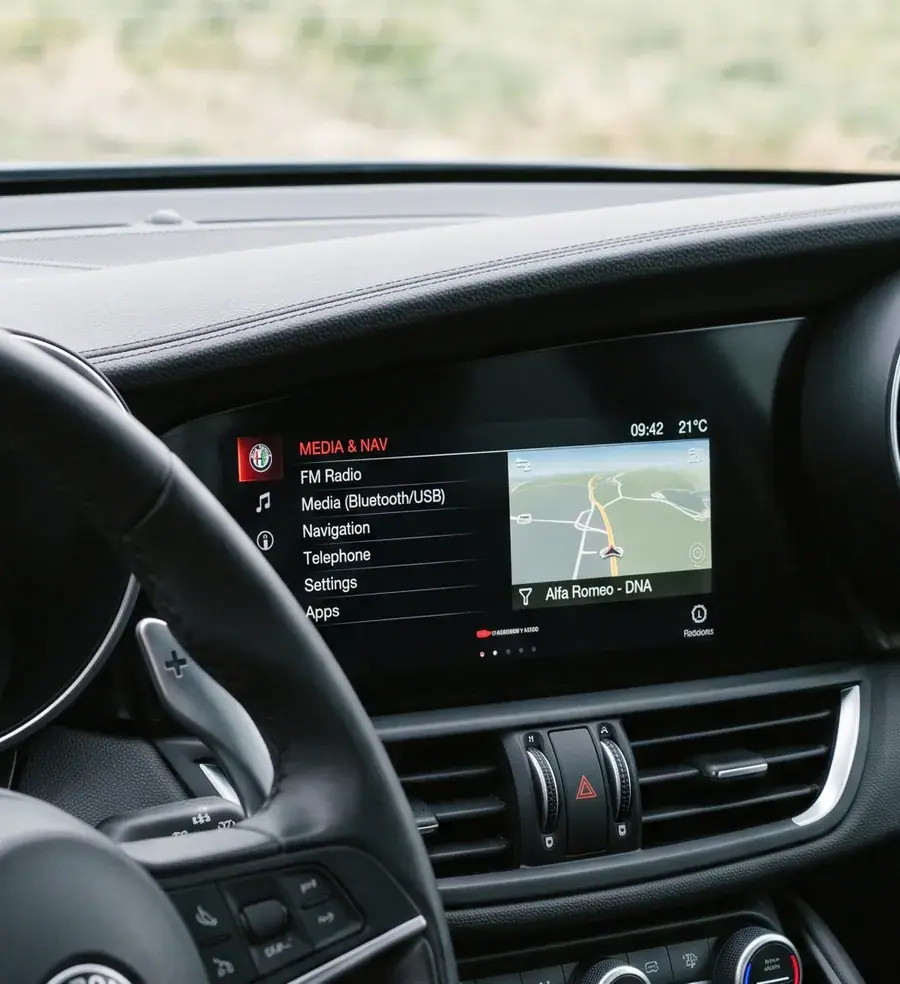
The 2017 to 2019 generation is not simply an older version of the current dashboard. It is a different class of interface. Cars.com's review of the 2020 update describes the earlier Alfa Romeo system as one that relied "exclusively on a dial controller", with the 8.8-inch screen not yet a touchscreen. Motor Authority's first-drive report of the same cars puts it more precisely: for 2020 "a new 8.8-inch touchscreen infotainment system replaces the 6.5- and 8.8-inch non-touchscreen units and adds a capacitive touchscreen along with a tile-like interface". The 2017 to 2019 cars therefore span two display sizes, 6.5-inch and 8.8-inch, and neither of them is a touchscreen. Both are driven by the rotary controller on the centre console.
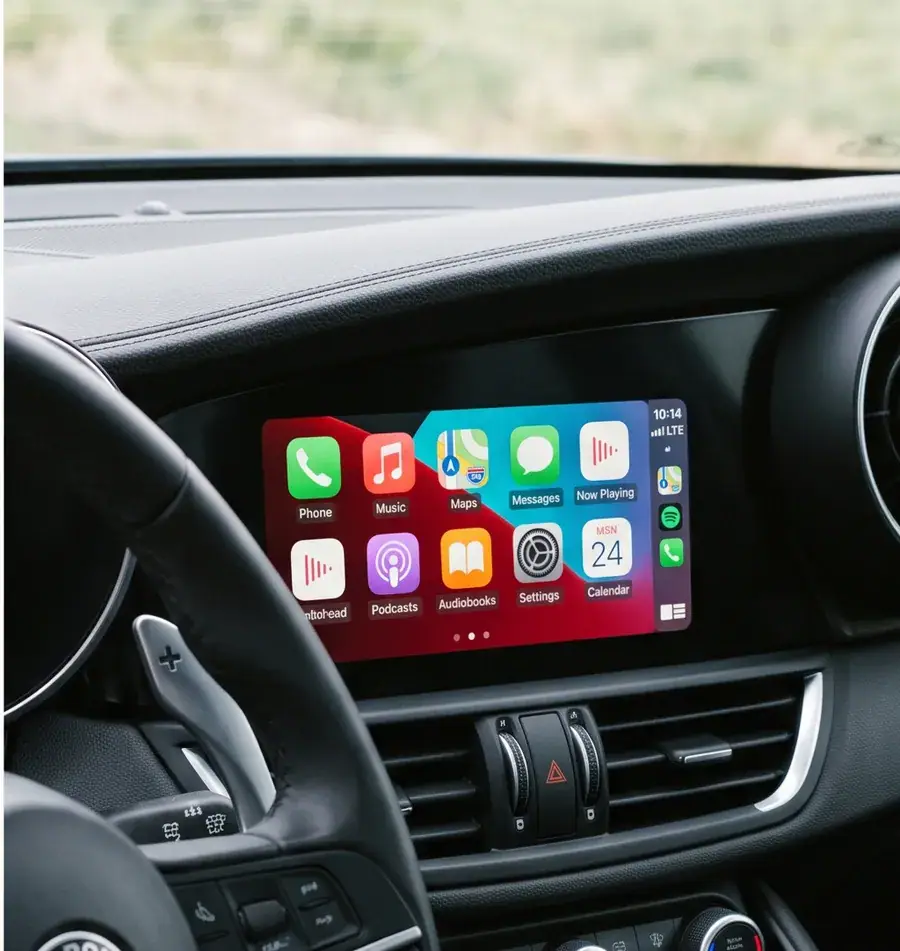
The 2020 cars brought a capacitive touchscreen with a tile-based home screen that can be rearranged by dragging, plus a 7.0-inch digital instrument display between the analogue gauges. Crucially for a retrofit buyer, the same Motor Authority report notes that the tiles "correlate with system functions like navigation, vehicle safety systems, and Apple CarPlay and Android Auto", and Cars.com confirms that on the 2020 cars both phone platforms are standard and use the full 8.8-inch display. Apple publishes the current list of vehicles and the phone requirements for CarPlay on its own CarPlay support page, which is the reference to check when a workshop wants to confirm what a car of a given year already supports.
That is the commercial divide. The generation before the facelift has no phone integration and a non-touch display driven by a dial. The generation after it has phone integration as standard equipment. A retrofit module is a meaningful product on the first group and an unnecessary one on the second, and the two groups look similar from the outside because the badge, the door handles and the body shape did not change.
There is a second reason the pre-2020 cars are worth attention to a distributor. Because the display is not a touchscreen, the rotary controller and the steering-wheel buttons carry more of the interface than they would on a car with a capacitive screen. That is a property of the factory hardware, and it is the reason the original controls stay in circuit after a retrofit rather than being bypassed.
The AL-1 fitment list and what falls outside it
The AL-1 is documented for the Giulia and the Stelvio across 2017 to 2019. The fitment is organised by head unit generation rather than by trim, because on this marque the trim badge does not determine what is in the dashboard. The table below sets out the boundary as a buyer needs it when writing an order.
| Model | Model years | Factory phone integration | What the module adds |
|---|---|---|---|
| Giulia | 2017–2019 | None | Wired and wireless CarPlay on the factory display |
| Stelvio | 2017–2019 | None | Wired and wireless CarPlay on the factory display |
| Giulia | 2020 onward | CarPlay and Android Auto standard, capacitive touchscreen | Not applicable; the factory system already covers this |
| Stelvio | 2020 onward | CarPlay and Android Auto standard, capacitive touchscreen | Not applicable; the factory system already covers this |
Two body styles sit on one code. For a distributor this matters more than it sounds, because a Stelvio and a Giulia of the same year share the harness and the firmware, so stock planning does not have to be split across two lines. It also means a mixed-model opening order of 10 pieces can include both without changing the platform.
The Giulietta, which shares the badge and predates the Giulia, is not on this list. It runs a different head unit generation and a different connection, and a request for one is confirmed from a photograph before anything is quoted rather than assumed from the marque.
Why the rotary controller stays in circuit
On most marques a retrofit leaves the physical controls to do what they did. On this one the argument is stronger, because the display is not a touchscreen. The rotary controller is the primary input device on a 2017 to 2019 Alfa Romeo, and a phone-projection interface that ignored it would be a worse experience on this hardware than on a car where the screen takes touch directly.
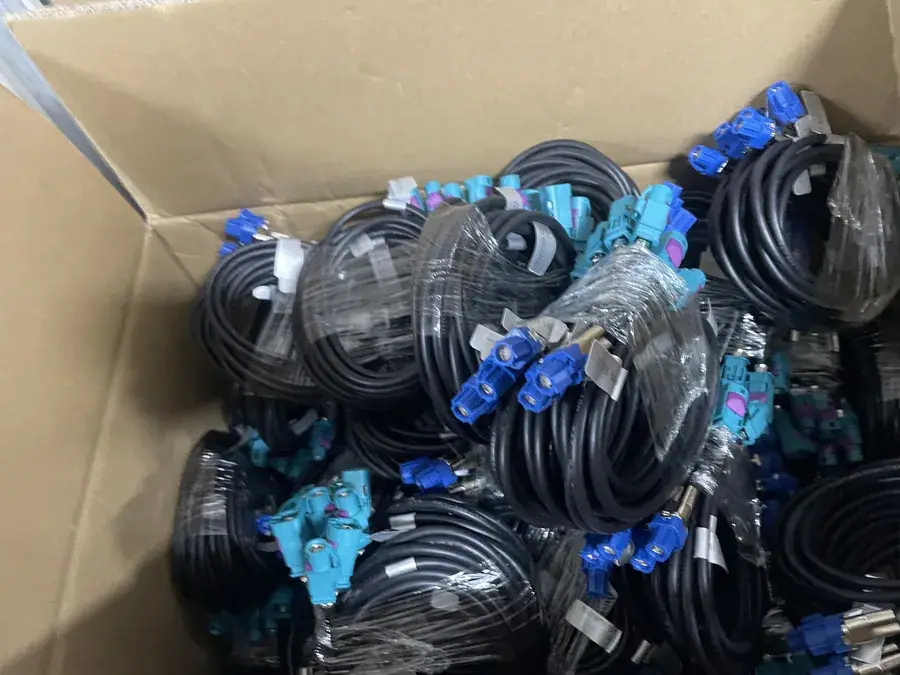
Keeping that controller in circuit means the original screen, the console rotary knob, the steering-wheel buttons and the factory camera all keep their functions. The unit sits behind the head unit and reads what the car already provides on the factory display link, then presents the phone interface on that same panel. The connection is plug-and-play: the harness plugs into the connector that was already there, nothing is cut and nothing is soldered, the trim goes back on, and the car can be returned to stock by removing the harness.
The camera path is worth specifying separately, because the factory reversing camera and the parking sensor display are part of the same head unit the module has to coexist with. The factory reversing camera path document sets out how that is handled across the range, and it is the document to have open when a workshop asks about camera behaviour on a specific car.
What sits behind the panel, and why it does not degrade
The unit runs Linux in an embedded configuration on an automotive-grade Sunplus chipset from Taiwan. Two properties of that combination matter for a buyer calculating return rates. There is no application cache to accumulate over years of use, so a unit fitted to a car that sits on a lot or runs daily in traffic behaves the same in its fifth year as on the day it was fitted. And the storage is not shared with the factory system, because no part of the factory system is replaced.
The wireless path uses 2.4GHz and 5GHz WiFi. The 5GHz band is the one that carries the picture, and it is also the one that matters in the concrete installation problems a workshop runs into: multi-storey car parks where 2.4GHz is congested, and short-range interference around other devices. A dual-band unit lets the connection settle on the cleaner band when conditions allow and fall back when they do not. The Wi-Fi Alliance sets out how the two bands behave in practice and why the higher one carries less congestion in a built environment. The antenna placement and dashboard interference article covers how the antennas are routed on this kind of installation.
Neither the operating system nor the chipset is a reason to buy in the first place. They are the reason a distributor does not have to price in a warranty tail on a batch of 500 units fitted to cars that will be sold on and driven for years.
What a buyer needs to have ready before quoting
Five items go into an Alfa Romeo enquiry that would not appear on a marque where the fitment is trivial:
- The model and model year of every vehicle on the order, so that anything built from 2020 onward is flagged rather than assumed.
- A photograph of the factory screen on each vehicle, because the head unit generation is the deciding factor and the build year alone is not reliable, as Alfa Romeo phased these units in over overlapping years.
- Whether the target car already carries factory phone integration, read from the screen and checked against the manufacturer's compatibility list.
- Whether the order is a mixed opening shipment or a single-platform run, since that is what sets the volume tier.
- For private label, the artwork to be approved before production is released.
The general method for the rest of the range is set out in the head unit identification guide, and the AL-1 platform page carries the fitment table in full. Coverage across the whole catalogue spans 300+ vehicle models and series from 2006 to 2025.
Commercial terms for an AL-1 order
| Term | Standard structure | What it means for this platform |
|---|---|---|
| Stock MOQ | 10 pcs, mixed models allowed within the minimum | Giulia and Stelvio share the AL-1, so a mixed opening order covers both body styles on one platform |
| Private label | 500 pcs per model | Logo on the device, packaging, manual and warranty card |
| Full OEM | 1000 pcs per model | Custom boot logo, UI layout, default language and hardware revision |
| Sample lead time | 7–15 days, DHL/FedEx express | Sample cost is deductible from the first large-volume order |
| Volume lead time | 15–20 days for 500+ pcs | Allowance for packaging artwork approval on a private label run |
| Payment | 30% deposit, 70% against a copy of the bill of lading by T/T; PayPal for samples | Sets the cash cost of the first order rather than the unit price alone |
| Quotation | Within 12 hours | A slow quotation is itself a signal about how the order will be handled |
Terms are the same as any other platform on the range, and the wholesale programme page sets out each tier in full. The MOQ, lead time and quality control guide covers what happens to a shipment between the factory and the workshop, and the warranty and RMA process sets out the claim route when a unit needs to come back.
On the volume question specific to this marque: a distributor who concentrates on AL-1 should expect the bulk of demand to come from the 2017 to 2019 cars, because that is the only group where the factory system does nothing. That demand is also concentrated in the used-car market, where the head unit is documented as fitted rather than assumed. A workshop that photographs the screen before quoting eliminates most of the two failure modes, and the two images in this article show what that screen looks like in each state.
Frequently asked questions
Which Alfa Romeo models does the AL-1 cover?
Giulia and Stelvio built between 2017 and 2019, on the head unit generation the code is built for. The build year alone does not settle it, because Alfa Romeo phased these units in over overlapping years, so the display and the menu layout on the screen are the reliable check. The fitment list on the Alfa Romeo range page is the authority, and anything not on it is confirmed from a photograph before an order is placed.
Does a 2020 Giulia need a retrofit module?
No. From the 2020 model year the factory touchscreen carries both CarPlay and Android Auto as standard, and both use the full 8.8-inch panel. The module is built for the generation that came before it, which had no phone integration and a non-touch display.
Can the original rotary controller still be used?
Yes. The console rotary controller and the steering-wheel buttons stay in circuit after the retrofit, which matters on this marque because the pre-2020 display is not a touchscreen and the physical controls carry more of the interface than they would elsewhere.
What operating system runs inside the unit?
Linux in an embedded configuration on an automotive-grade Sunplus chipset from Taiwan. There is no application cache to accumulate, and the unit does not share storage with anything on the factory system, because it does not replace any part of it.
Is the link wireless?
Both. The unit carries 2.4GHz and 5GHz WiFi, so the connection can settle on the cleaner band when conditions allow and fall back when they do not. Where a car supports CarPlay over a cable, the wired path remains available.
What is the minimum order?
From 10 pieces for stock, with mixed models accepted inside the same order. Private label starts at 500 pieces per model and Full OEM firmware customisation at 1000 pieces per model.
How long does a sample take?
7–15 days by DHL or FedEx express, and the sample cost is deducted from the first large-volume order. Testing on the vehicles the order is actually intended for is worth the wait on this marque, because the head unit generation decides whether the module applies at all.
Send the target vehicle list, the model year for each entry, and the quantities planned through the inquiry form. A quotation comes back within 12 hours with the fitment confirmed, the volume tier and the lead time that applies to the platforms named.
Need the Module From This Guide?
Wholesale from 10 pcs (mixed models OK), samples in 7–15 days (DHL/FedEx express). Fitment confirmation within 12 hours.
Request Pricing Check FitmentRelated Resources
- CarPlay Collections — browse by marque family (German, British, Italian, Japanese, luxury)
- CarPlay Fitment Checker — find the module for your car
- CarPlay Decoder FAQ — 34 answers on compatibility, install and wholesale
- CarPlay Retrofit Buying Guide — platform identification & selection
- Wholesale, Private Label & OEM Program — MOQ, lead times, payment terms
- All installation & technical guides