
Published 2026-11-05 · DIYCarPlay Engineering Team · 13 min read
Where a Platform Code Gets Its Name: Four Naming Families Across 39 CarPlay Codes and What Each One Can Settle
A platform code looks like a label. Three letters and a digit, printed on a carton and written on a purchase order, and that is usually the whole of it. Underneath that label sits a decision about what the code is allowed to mean, and the decision is legible in the name itself. Thirty-nine codes cover 76 code-and-model-line combinations across 300+ vehicle models and series from model years 2006 to 2025, and those 39 names do not all work the same way.
Sorted by where the name comes from, they fall into four families, and the family settles something a buyer needs to know before a pallet is ordered: how the code is confirmed once the goods arrive. Twelve codes carry the manufacturer's own name for the computer behind the display. Three are another marque's generation with a prefix attached. Seven shorten a system the manufacturer did name. Seventeen name the vehicle rather than the hardware.
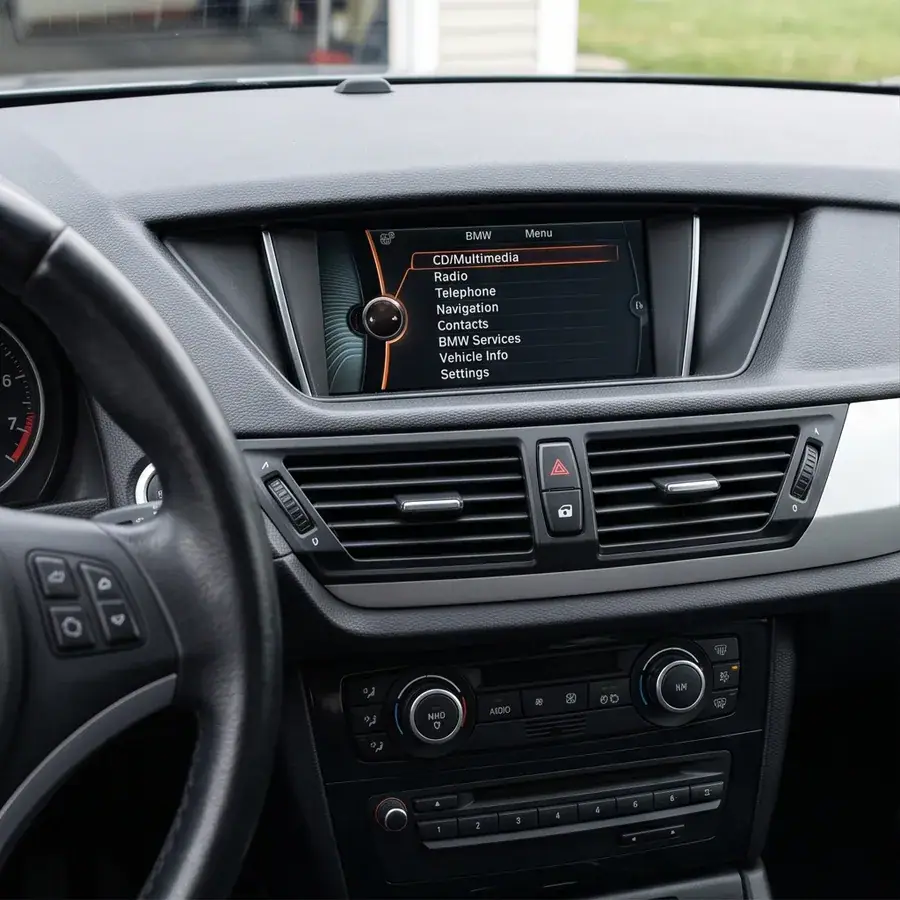
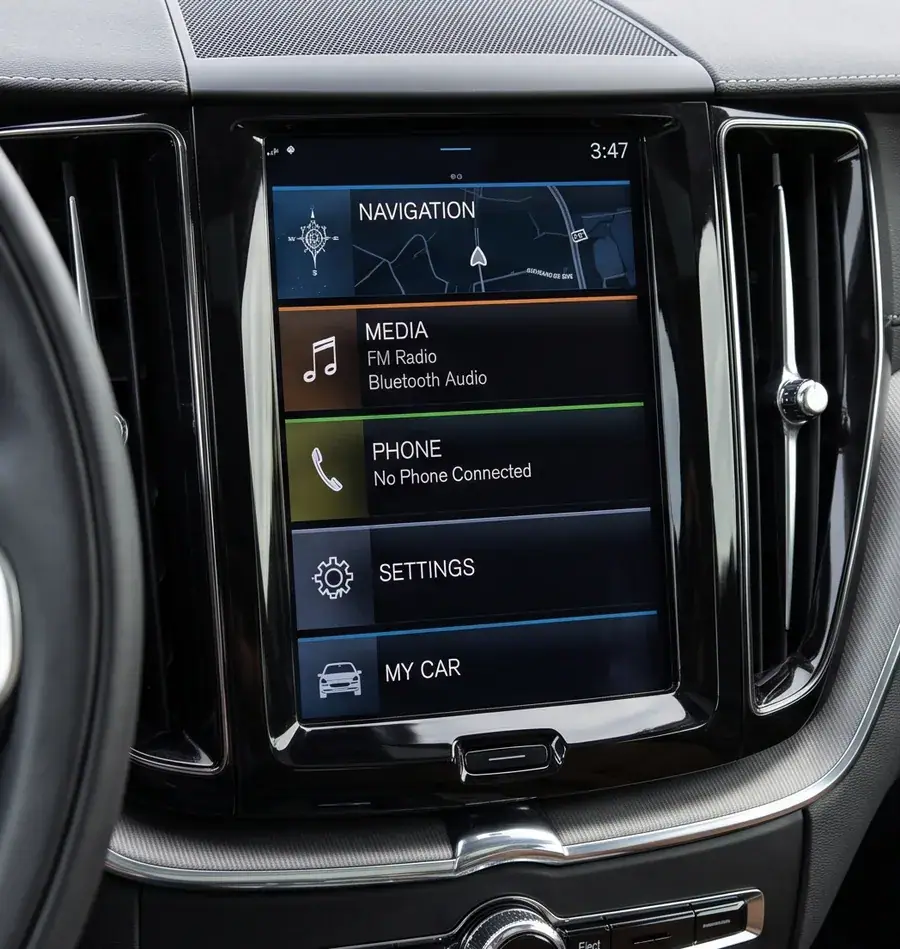
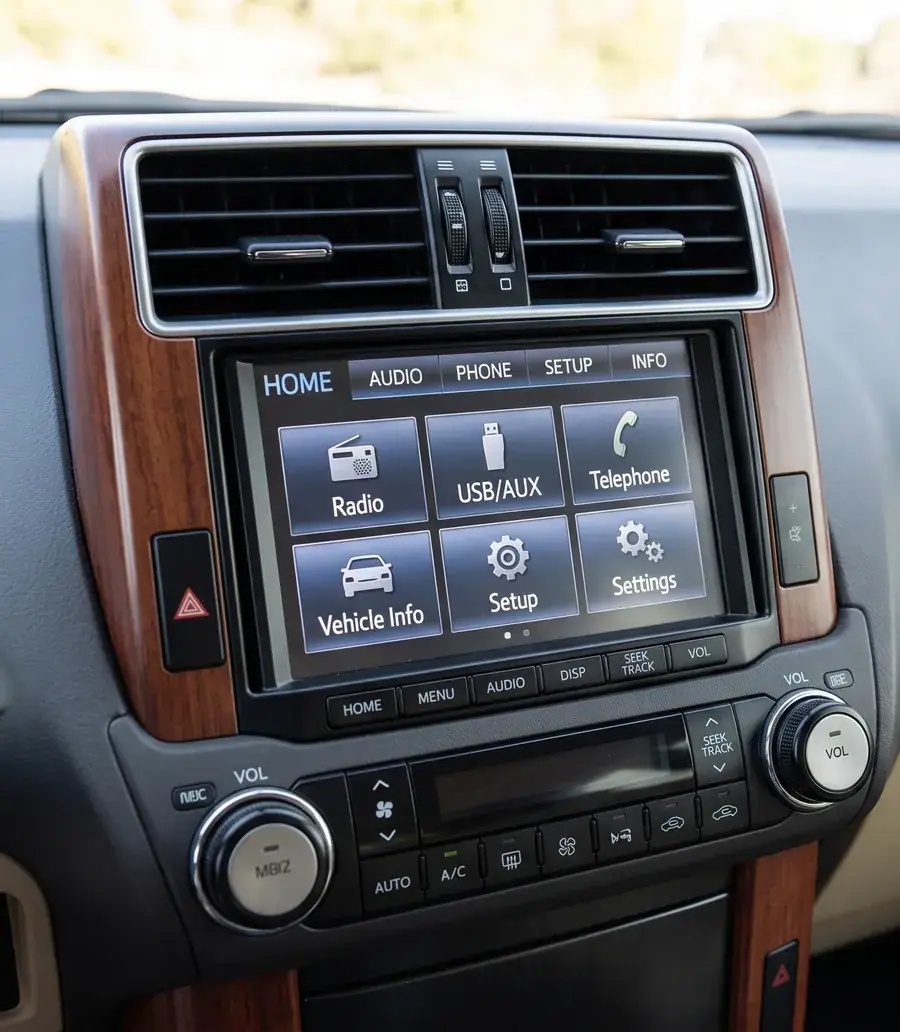
The family where the code is the manufacturer's own name
Twelve codes, across BMW, Mercedes-Benz, Audi and Porsche, are the marque's own designation for the head unit, spelled the way the marque spells it. This is the family a workshop can work from most easily, because the string on the order is the string that appears in the manufacturer's own service literature and, for most of them, on the vehicle itself.
That layer is the one manufacturers publish in their own terms, and it is the layer Apple also uses when it lists CarPlay availability by marque, nameplate and model year, which is why a fitment has to be stated in those terms as well as in platform codes.
BMW's three are the marque's own iDrive generation names: Car Information Computer, Next Big Thing and EVO, the last covering the ID5 and ID6 revisions. Mercedes-Benz's are COMAND names, running from NTG4.0 through the NTG4.5, NTG4.7 and NTG5.0 group to HU6. Audi's are MMI and MIB names. Porsche's are CDR and PCM names, with the PCM 4.0 and PCM 5.0 generations carried under one label.
| Platform code | Marque | The marque's own designation | Model years |
|---|---|---|---|
| CIC | BMW | Car Information Computer | 2008 to 2014 |
| NBT | BMW | Next Big Thing iDrive | 2012 to 2016 |
| EVO | BMW | EVO, revisions ID5 and ID6 | 2015 onward |
| NTG4.0 | Mercedes-Benz | COMAND NTG4.0 | 2007 to 2013 |
| NTG4.5/4.7/5.0 | Mercedes-Benz | COMAND NTG4.5, NTG4.7 and NTG5.0 | 2013 to 2019 |
| HU6 | Mercedes-Benz | HU6, the MBUX generation | 2019 to 2025 |
| MMI 2G | Audi | MMI 2G | 2012 to 2018 |
| MMI 3G | Audi | MMI 3G and 3G+ | 2009 to 2018 |
| MIB2/3 | Audi | MIB2 and MIB3 | 2017 to 2025 |
| CDR 3.0 | Porsche | CDR 3.0 | 2010 to 2016 |
| PCM 3.1 | Porsche | PCM 3.1 | 2010 to 2016 |
| PCM 4.0–5.0 | Porsche | PCM 4.0 and PCM 5.0 | 2017 to 2024 |
Forty-nine of the 76 code-and-model-line combinations sit in this family, which is 64.5% of the fitment sheet measured by line. For those lines a code is not shorthand for anything: it is the generation, and the generation is what is being ordered. The consequence for an order is the cheapest kind of verification there is, because a code read off the order can be checked against the car or against the marque's own material without reference to any fitment sheet. The one complication inside this family is the exception the guide to platform codes that cover more than one generation sets out, where a single code carries two or three factory generations under one label and the generation has to be settled on the vehicle before the goods are fitted.
The family derived from another marque's generation
Three codes belong to a second family: the Rolls-Royce RO-CIC, RO-NBT and RO-EVO. The prefix is a Rolls-Royce convention and the tail is a BMW generation, because the marque builds on BMW iDrive computers. The naming is worth separating from the fitment, because the string written on a purchase line for a Rolls-Royce names a generation that appears on a different marque's cars.
Three of the 76 combinations sit here, all from one marque, and the practical difference is about what a code can be checked against. A RO-CIC label is confirmed by finding a BMW CIC generation, not by finding anything called RO-CIC, because no vehicle carries that name. That makes this family the smallest in the catalogue and the least ambiguous in practice, since the tail resolves to a head unit that carries its own name on the car.
The family that shortens a system the manufacturer did name
Seven codes shorten a system that does have a factory name. Volvo's Sensus is called VO-1, VO-2 and VO-3 on a fitment sheet, the two JLR InControl variants are JR-2 and JR-3, McLaren's IRIS is MC-1, and Volkswagen's MIB is VW-1.
| Platform code | Marque | What the marque calls the same system |
|---|---|---|
| VO-1 | Volvo | Sensus, early |
| VO-2 | Volvo | Sensus, mid |
| VO-3 | Volvo | Sensus Connect |
| JR-2 | Land Rover / Jaguar | InControl Touch |
| JR-3 | Land Rover / Jaguar | InControl Touch Pro |
| MC-1 | McLaren | IRIS |
| VW-1 | Volkswagen | MIB |
These are the codes that read like the family's own names and are not. The name on the car and the name on the order line differ, and the difference has to be closed somewhere. It closes either in the fitment sheet or on the car, by looking at what the system actually is. Land Rover and Jaguar's own material names the two InControl variants, Touch and Touch Pro, and separates them by display size, so the display in front of the driver is what decides between JR-2 and JR-3, and the model year does not decide it at all. That makes this family the place where the hardest cases in the catalogue sit: of the 10 model names whose year windows are identical under two codes, six are here, and all six are the Land Rover and Jaguar names that run JR-2 and JR-3.
The family that names the vehicle instead of the hardware
Seventeen codes across 11 marques name something other than the computer behind the display. They name the car, the body line, a revision counter or the audio brand. Nothing that a car carries bears these strings, which means they resolve in exactly one place: the fitment sheet that ships with the order.
| What the code points at | Codes | Marques |
|---|---|---|
| The car model | BE-1, BE-2, LP610, LP700, AS-1, AS-2 | Bentley, Lamborghini, Aston Martin |
| The body line | TO-1, TO-2 | Toyota |
| A revision or generation counter | NI-1, NI-2, LE-1, LE-2 | Nissan / Infiniti, Lexus |
| The audio brand | JR-1 | Land Rover / Jaguar |
| Nothing internal to the marque | MA-1, AL-1, FE-1, HO-1 | Maserati, Alfa Romeo, Ferrari, Honda |
Three of those sub-types are worth separating for an order. When the code names the car model, as BE-1 and BE-2 do for the Mulsanne and the Bentayga, or LP610 and LP700 for the Huracán and the Aventador, or AS-1 and AS-2 for the DB11 and the Vantage, the code says which car and not which computer, and the fitment sheet is the only place the second fact is written down. When the code names a body line, as TO-1 and TO-2 do, the car has to be classified as an MPV or SUV line or a sedan line before the code can be chosen, and both codes carry the identical 2014 to 2018 label. When the code names a revision counter or an audio brand, as LE-1 and LE-2, NI-1 and NI-2 and JR-1 do, the fact exists nowhere except the fitment sheet.
Six marques carry a single code and nothing else: MA-1, AL-1, FE-1, HO-1 for the vehicle-named group, and MC-1 and VW-1 for the shortened group. In those marques a code carries no internal distinction, because there is no second code to be distinguished from, and the model year is enough on its own.
Where the four families sit against the overlap matrix
The earlier guides on this site map the catalogue by model year and by generation. Adding the naming families to that map changes where the risk sits. Counting each model name once, 50 model names in this catalogue are covered by more than one platform code. Of those, 31 sit under codes that are the manufacturer's own generation names, 18 sit under at least one code that shortens a named system or names the vehicle, and 1 sits under the derived Rolls-Royce codes.
The 10 model names whose year windows are identical under two codes split the same way, and the split is what matters. Four are family-one pairs: MINI under NBT and EVO, the A1 and Q3 under MMI 2G and MMI 3G, and the 911 under CDR 3.0 and PCM 3.1. In those, both codes are factory generation names and the deciding fact is a board revision or a choice between the base radio and the navigation head unit, neither of which either string shows. The other six are the family-three JR-2 and JR-3 pairs, where the deciding fact is the display size and the code is a shortened form of the factory name rather than the factory name itself.
The pattern is consistent enough to act on. Where a code names the manufacturer's own generation, the rival codes tend to differ in something the code cannot show, so the question has to be put to the car. Where the code is a shortened form or names the vehicle, the rival codes tend to differ in the model year or the body line, which are facts an order can carry. The overlap matrix sets out the year-based half of that in detail.
What to write on the order line
The naming family determines how much has to be written next to the code. For the twelve manufacturer-named codes, the code is enough, because a workshop can confirm the generation from the marque's own material. For the three derived codes, write the generation the tail refers to, since no vehicle carries the prefixed name. For the seven shortened codes, write the factory designation beside the code, because that is the string the car carries. For the seventeen vehicle-named codes, write the model line and, where the code names a body line or a revision, the fact that separates it.
That last group is where a mismatch turns expensive. A TO-2 order against a car from the MPV and SUV line is not a warranty claim, it is a return: the unit is not defective and it is not the wrong product for the code, the code was read off the wrong line. Nothing on that car says TO-2, so the fitment sheet is the only place the error can be caught, and the sheet has to travel with the order. The full fitment can be checked by model, by nameplate or by platform code on the vehicle fitment finder.
Terms, lead time and what the unit itself is
What arrives against a code does not vary with the naming family. The unit runs Linux in an embedded configuration on an automotive-grade Taiwanese Sunplus chipset, pairs the phone over dual-band WiFi at 2.4GHz and 5GHz, and terminates into the factory display through the vehicle harness as a plug-and-play connection. The factory screen, the factory host, the steering-wheel buttons and the factory reversing camera all stay in service, and no dashboard trim is replaced or coded. The harness plugs into the factory connectors on the CAN bus, so the head unit keeps its own menus. What holds the return rate down is fixed function on fixed hardware rather than peak performance, since a unit that does one thing on one chipset has no background state to accumulate over the years it stays in a car.
Stock is available from 10 pcs with mixed platform codes in one order, so a buyer testing one code against one car does not have to buy a pallet to find out. A private label programme runs from 500 pcs per model, and a Full OEM firmware build from 1000 pcs per model, with the same code list carried through to the carton label. Samples ship in 7 to 15 days by DHL or FedEx, and a private label run of 500 or more pcs takes 15 to 20 days from order to dispatch. Payment is 30% deposit with the 70% balance settled against a copy of the bill of lading, by T/T. A sample fee is credited against the first large-volume order, so the code a sample was built against does not have to be the final code for the sample cost to disappear. A quotation goes out within 12 hours, with volume tiers and the lead time for each platform named. Full terms sit on the wholesale, private label and OEM programme page.
Frequently asked questions
Can a platform code be confirmed from the car without a fitment sheet?
For the twelve codes that carry the manufacturer's own name for the head unit, yes. The string is the generation, and it can be read from the vehicle or from the marque's own service literature. For the other twenty-seven, the car carries the system name rather than the code, or carries neither, so a fitment sheet is part of the check.
Why do two codes for the same marque sometimes carry the same model years?
Because those codes split a generation on something other than the year. In the Land Rover and Jaguar case they split on display size, in the Toyota case on body line, in the Nissan and Lexus cases on a hardware revision or a generation counter. The year is the same on both codes because the year was never the thing that separated them.
Does the naming family change what a workshop has to check?
It changes what can be checked and what has to be sent with the goods. A manufacturer-named code is checked against the car's own system. A shortened code is checked against the factory designation written alongside it. A vehicle-named code cannot be checked against anything on the car, so the fitment sheet travels with the order.
Are platform codes interchangeable between marques?
No. Every code is specific to one marque's hardware, and the shared names in this catalogue are shared architecture rather than shared code. A head unit platform built for one group of marques still needs its own harness termination, video path and CAN bus wake-up message.
Next step
Send us your target vehicle list, quantities and target market through the inquiry form. You will receive a quotation within 12 hours, including volume tiers and lead times for the platforms you named.
Need the Module From This Guide?
Wholesale from 10 pcs (mixed models OK), samples in 7–15 days (DHL/FedEx express). Fitment confirmation within 12 hours.
Request Pricing Check FitmentRelated Resources
- CarPlay Collections — browse by marque family (German, British, Italian, Japanese, luxury)
- CarPlay Fitment Checker — find the module for your car
- CarPlay Decoder FAQ — 34 answers on compatibility, install and wholesale
- CarPlay Retrofit Buying Guide — platform identification & selection
- Wholesale, Private Label & OEM Program — MOQ, lead times, payment terms
- All installation & technical guides