
Published 2026-10-31 · DIYCarPlay Engineering Team · 13 min read
One Platform Code Can Cover Several Generations: What a Buyer Is Actually Ordering
A platform code in this catalogue is a purchasing label. It tells a distributor what to buy, what to print on a carton and what to write on a purchase order line. It does not always tell a workshop which factory head unit is sitting behind the dashboard in front of them. 39 codes sit over 300+ vehicle models and series from model years 2006 to 2025, and 5 of those 39 name more than one OEM generation. Two other marques split one generation family across two codes without the model year moving at all. The label a buyer orders against and the hardware a module has to match are two different things, and only one of them is written on the fitment sheet. That gap is where a pallet gets packed, a customer gets turned away and a unit comes back.
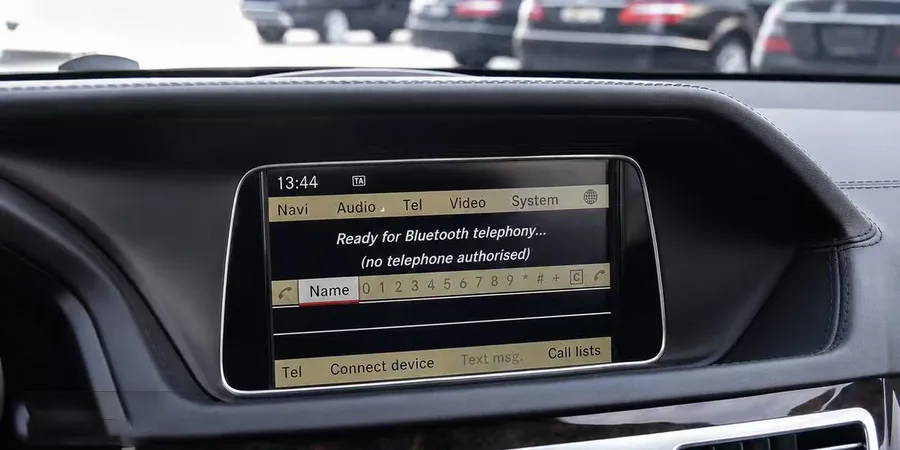
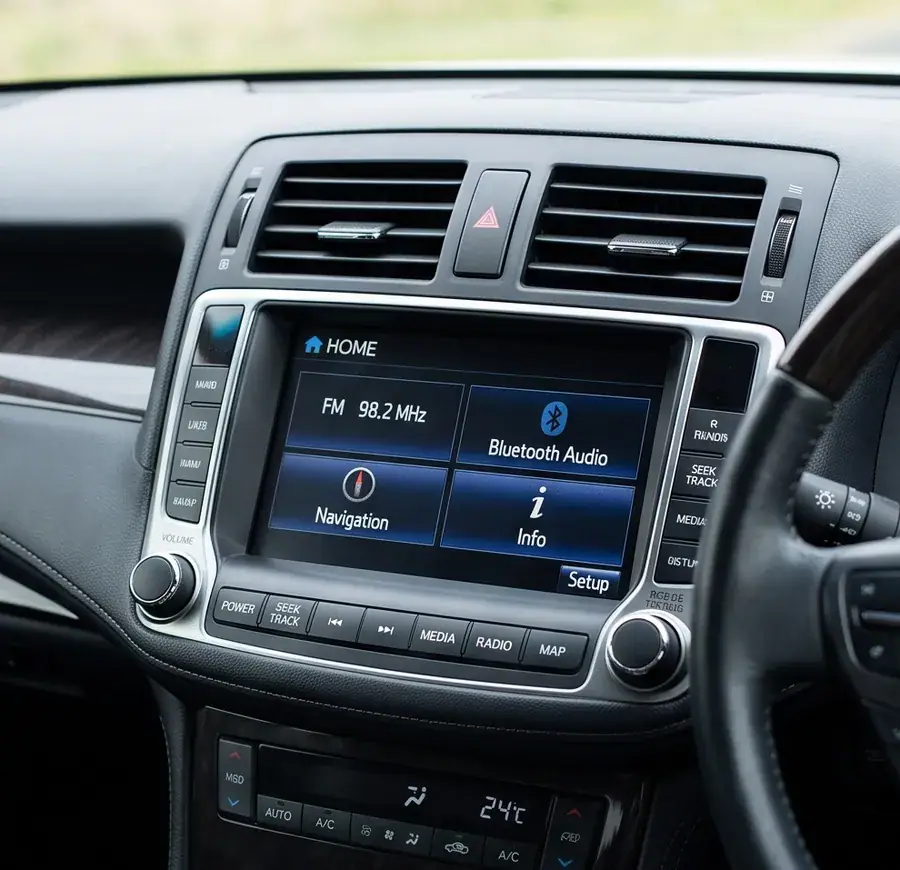
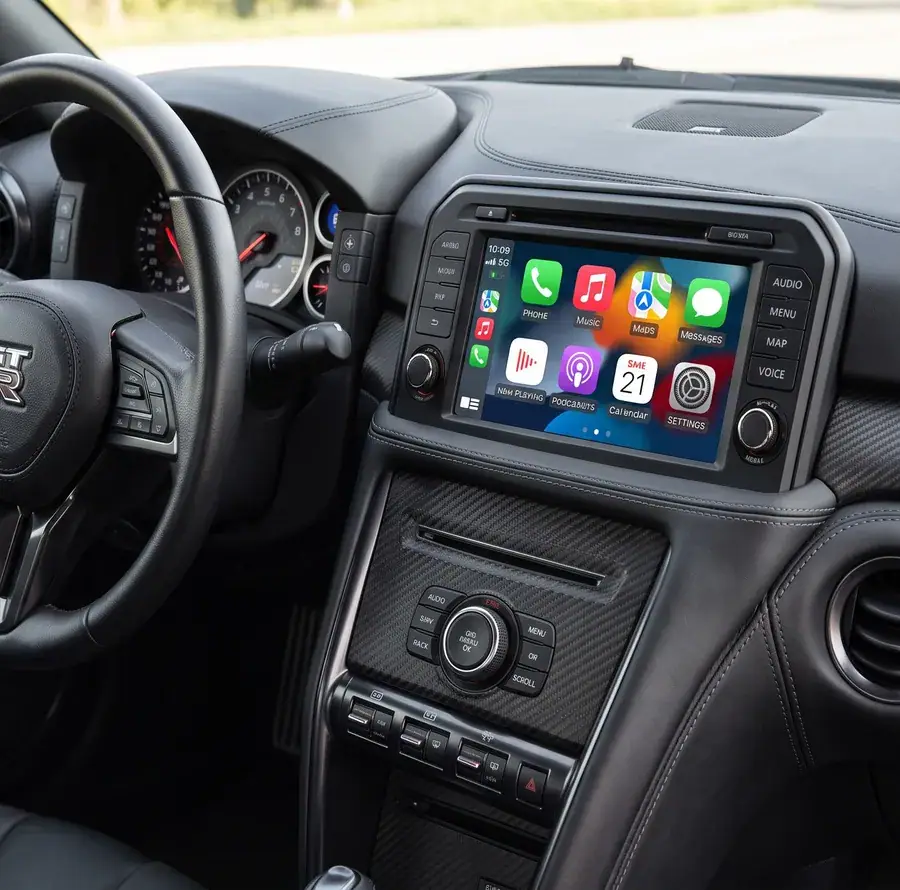
What a platform code actually names on the order
Every platform code in the catalogue corresponds to one orderable module, one carton label and one line on a purchase order. That is what makes the code useful commercially: a buyer can write a line per code and know exactly what will arrive. The code also fixes the engineering side of the retrofit, because the harness termination, the video path and the CAN bus wake-up message the module listens for are all tied to the factory computer behind the centre display. Swap the code and the harness does not reach the connector.
What a code does not do is settle which factory generation is in the car. In most cases the two are the same thing, and a code read off the car is a generation read off the car. In five cases they are not, and the fitment sheet silently merges two or three factory systems under one label. A buyer who treats the code as the generation will ship one module to a car that carries a different factory computer than the buyer imagined, and the module will be physically correct for its code and still wrong for that car.
The commercial consequence is not a fitting problem, it is a documentation problem. The module is not defective. It is the wrong unit for the generation the customer happens to own, which means a warranty claim is not the remedy and a return is the only one. A small, low-value box travelling across a border is one of the least economic transactions in this trade.
The five codes that carry more than one generation
The five codes below name more than one factory generation each. Read the year column carefully: it is the envelope across every generation underneath it, not a window for any one of them. That is the same trap the year label sets elsewhere in the catalogue, arriving here through a different door.
| Platform code | Marque | Generations under the label | Model years |
|---|---|---|---|
| NTG4.5/4.7/5.0 | Mercedes-Benz | NTG4.5, NTG4.7, NTG5.0 | 2013–2019 |
| EVO | BMW | ID5, ID6 | 2015– |
| MMI 3G | Audi | MMI 3G, MMI 3G+ | 2009–2018 |
| MIB2/3 | Audi | MIB2, MIB3 | 2017–2025 |
| PCM 4.0–5.0 | Porsche | PCM 4.0, PCM 5.0 | 2017–2024 |
The Mercedes row is the widest case in the catalogue. One code, three COMAND generations, eleven model names from A through GLE, all of it under a 2013 to 2019 label. A buyer who writes NTG4.5/4.7/5.0 on an order line is buying a single unit that has to satisfy three different factory computers, and the line itself carries no indication of which of the three the customer will have. The Mercedes-Benz NTG4.5/4.7/5.0 module covers all of them, which is exactly why the label has to carry the generation separately.
Audi carries two of the five. The MMI 3G code merges the 3G and 3G+ systems across eleven model names, from the A1 and Q3 to the A8, over the whole 2009 to 2018 span, while the MIB2/MIB3 module merges two further generations on the A6, A7, A8 and Q7 from 2017 onward. Those two codes overlap at the handover rather than meeting cleanly: the A6, A7, A8 and Q7 sit under MMI 3G to 2016 and under MIB2/3 from 2017, and the MIB2/3 label then runs on to 2025 while the MMI 3G label stops at 2018.
BMW's EVO code covers ID5 and ID6, the two hardware revisions of the same generation, and its label runs from 2015 with the MINI F56 sitting inside it from 2014. Porsche's PCM 4.0–5.0 code merges two PCM generations across the Boxster, Cayman, 911, Macan and Panamera, and it is the Cayman that appears for the first time here, because the two earlier Porsche codes never carried it.
Where the catalogue splits the other way
The same fitment data also runs in the opposite direction, and this is the direction a buyer is more likely to meet first. Some marques do not merge generations under one code. They take one generation family and cut it across two codes, and the cut does not follow the model year.
| Codes | Marque | What separates them | Model years |
|---|---|---|---|
| TO-1 / TO-2 | Toyota | MPV and SUV line against sedan and SUV line | 2014–2018 under both |
| NI-1 / NI-2 | Nissan / Infiniti | First revision against second revision | 2013–2018 in common |
| JR-2 / JR-3 | Land Rover / Jaguar | The smaller Harman display against the larger | 2016–2021 under both |
Toyota is the sharpest case. The TO-2 unit and the TO-1 unit carry identical 2014 to 2018 labels and are decided entirely by body line, because the factory head unit differs between the MPV and SUV line and the sedan and SUV line. A buyer who writes Toyota 2016 on an order line has not written a code. A buyer who writes Toyota 2016 Highlander has, and it is not the same code as Toyota 2016 Prado.
Nissan splits on hardware revision rather than body line. The first and second revisions run on overlapping model years from 2013 to 2018, and the NI-1 decoder and its revision successor cover the same model names across that overlap, with the GT-R appearing only on the first revision. Land Rover and Jaguar split the same 2016 to 2021 span on the display itself. Jaguar’s own InControl infotainment overview describes the two systems apart: Touch on an 8-inch touchscreen, and Touch Pro on a 10-inch one, with the navigation, Meridian sound and head-up display functions arranged differently between them. That is the difference the InControl identification guide sets out, and it is why the model year cannot pick the code.
The second axis: model names under more than one code
Both directions of the split exist at once, and they compound. Across the fitment sheet, 50 model names appear under more than one platform code, and for 10 of them the year windows are identical. A model name and a year therefore do not determine a code either, and the earlier guide to the overlap matrix sets out that half of the problem in detail. What follows is the half a purchase order runs into: the code you order is not always one generation, and one generation is not always one code.
Why the code is not enough on the order
The module itself does not change shape across the generations inside a code. It runs Linux in an embedded configuration on an automotive-grade Sunplus chipset, pairs the phone over dual-band WiFi at 2.4GHz and 5GHz, and terminates into the factory display through the vehicle harness as a plug-and-play connection. The factory screen, the factory host, the steering-wheel buttons and the factory reversing camera all stay in service, and nothing on the dashboard is replaced or coded. What changes between generations is what the module has to talk to: the connector behind the head unit, the LVDS video timing handshake, the CAN bus wake-up message it listens for and the screen-size setting the unit carries from the factory.
That is why the generation has to be settled on the car rather than on the paperwork. Where a code names more than one generation, the carton label cannot do the work, and the confirmation has to come from the unit in the dashboard. The version screen route reads the factory system out of the menu. The diagnostic port read settles it electronically in minutes on a car already in the bay. The VIN and build plate route settles it from paper, which is the one that matters when the car has not been opened and the head unit has never been photographed. Which route applies depends on what a buyer can get hold of, not on what the code says. Apple’s own CarPlay support guidance makes the same point from the other side: it tells a driver to confirm the car supports CarPlay and to ask the vehicle manufacturer when it does not, because the fitment question has to be answered for the specific car.
What to write where
For a buyer holding the five merging codes, three things are worth changing on the paperwork, and none of them cost anything.
Put the generation on the goods-in label, not just the code. A carton that reads NTG4.5/4.7/5.0 tells the workshop nothing about which COMAND generation is in the customer’s car. A carton that reads NTG4.5/4.7/5.0, generation confirmed by VIN, or NTG4.7 confirmed at goods-in, tells the workshop exactly what to check before the dash comes apart. The same applies to the EVO code and its two revisions, and to the MMI 3G code where 3G and 3G+ are separated by a facelift rather than a model year.
Ask each supplier to state, in writing, which generations a code covers. A quotation that lists codes without naming the generations underneath them is not comparable with one that does, because a code means a different width of coverage depending on the marque. This belongs on the same line as the platform code, the quantity and the lead time.
Triage returns at the generation level. When a unit comes back, the code on the box says which module it is and nothing about which generation failed with it. For the five merging codes, the generation has to be recovered from the car or the work order before the fault can be attributed at all. For the cross-border warranty process, that distinction decides whether a failure is a firmware pairing issue or a harness issue, and the two travel very differently.
And for the split codes, the rule is simpler: never let the model year pick the code. TO-1 and TO-2 share every model year they cover, and the line is decided by body style. NI-1 and NI-2 overlap for six model years and are decided by revision. A purchase list built on year alone will eventually put a TO-1 unit in a Highlander.
Ordering against the codes: terms and lead time
The commercial terms do not move with the generation question, but they move with the code, so they belong on the same quotation. Stock is available from 10 pcs with mixed platform codes in one order, so a buyer testing a code against a specific car does not have to buy a full pallet to find out. A private label programme runs from 500 pcs per model, and a Full OEM firmware build from 1000 pcs per model, with the same code list carried through to the carton label.
Samples ship in 7 to 15 days by DHL or FedEx, and a private label run of 500 or more pcs takes 15 to 20 days from order to dispatch. Payment is 30% deposit with the 70% balance settled against a copy of the bill of lading, by T/T. A sample fee is credited against the first large-volume order, so the code a sample was built against does not have to be the final code for the sample cost to disappear. A quotation goes out within 12 hours of the request, with volume tiers and lead times for the codes named.
The vehicle fitment finder walks the same platform data the fitment sheet is built from, and the wholesale terms page sets out the tier structure in full. For a buyer with a target list that mixes marques, the fitment sheet is the right place to find the code and the generation under it, in that order.
Frequently Asked Questions
Does a platform code cover more than one head unit generation?
In 5 of the 39 codes, yes. The NTG4.5/4.7/5.0 code covers three Mercedes COMAND generations, the EVO code covers the two BMW EVO revisions, and the MMI 3G, MIB2/3 and PCM 4.0–5.0 codes each cover two. The other 34 codes name one generation each, so for most of the catalogue the code and the generation are the same fact.
Can one generation be spread across two codes?
Yes, and that is the case where the model year helps least. Toyota splits its 2014 to 2018 infotainment generation across TO-1 and TO-2 by body line, Nissan splits across NI-1 and NI-2 by hardware revision, and Land Rover with Jaguar splits the same 2016 to 2021 span across JR-2 and JR-3 by display.
Is a wrong code a warranty claim or a return?
A return. The module is not defective and it is not the wrong product. It is a correct module for a code that does not match the generation in the customer’s car, so no fault can be attributed to it and a claim will not be settled. The cost is the return itself, which is why the generation is settled before the unit is packed rather than after.
Does the module replace the factory screen?
No. The factory screen, the factory host, the steering-wheel buttons and the factory reversing camera all remain in service, and nothing on the dashboard is replaced or coded. The module adds a projection layer to the display that was already there.
What has to be confirmed before a unit is packed?
The platform code and, where the code names more than one generation, the generation inside it. The version screen, the diagnostic port read and the VIN with the build plate all settle it, and the fitment sheet has to name the codes as well as the model names for a buyer to build the purchase list from.
Can platform codes be mixed in one order?
Yes, from 10 pcs. That makes a mixed order the practical way to test a code against a specific car before committing to a larger run of it.
Next step
Send us your target vehicle list, quantities and target market through the inquiry form. You will receive a quotation within 12 hours, including volume tiers and lead times for the platforms you named.
Need the Module From This Guide?
Wholesale from 10 pcs (mixed models OK), samples in 7–15 days (DHL/FedEx express). Fitment confirmation within 12 hours.
Request Pricing Check FitmentRelated Resources
- CarPlay Collections — browse by marque family (German, British, Italian, Japanese, luxury)
- CarPlay Fitment Checker — find the module for your car
- CarPlay Decoder FAQ — 34 answers on compatibility, install and wholesale
- CarPlay Retrofit Buying Guide — platform identification & selection
- Wholesale, Private Label & OEM Program — MOQ, lead times, payment terms
- All installation & technical guides